

What is hypertension?
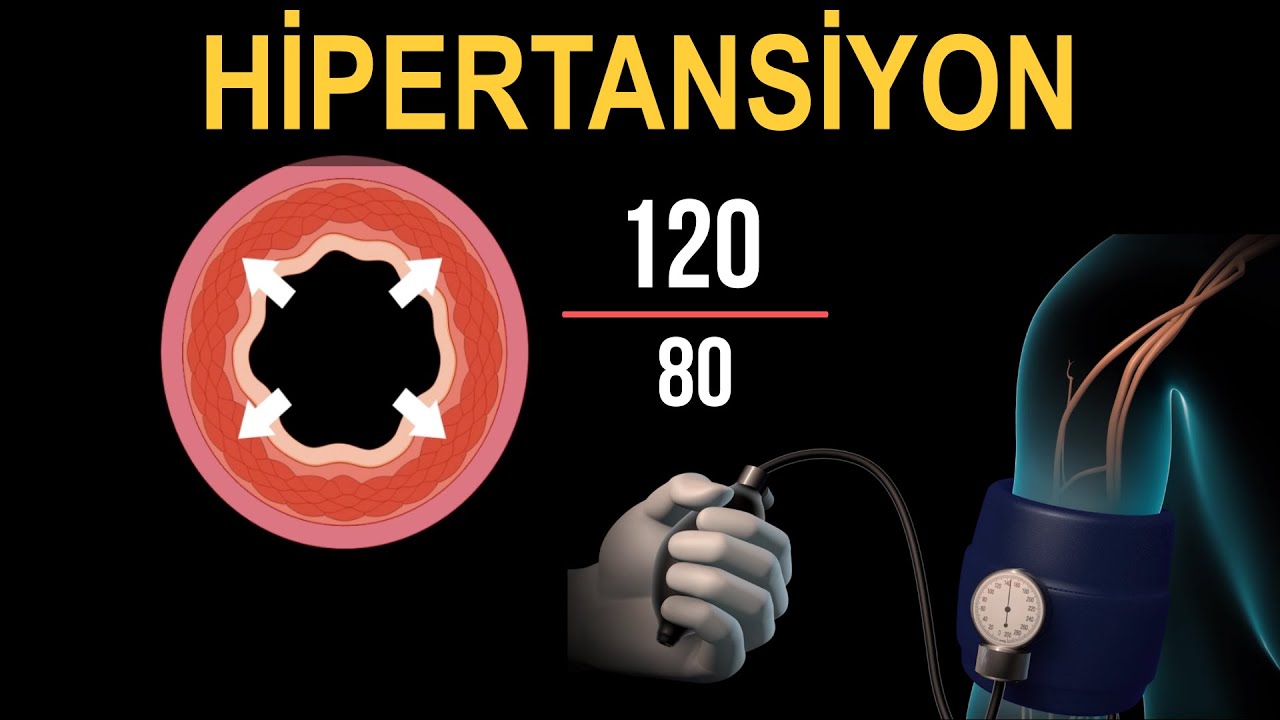
Blood exerts a certain amount of pressure on the walls of the vessels it flows through. This pressure provides the necessary driving force for blood flow. When the heart contracts to pump blood, the pressure increases, causing the vessel to expand; when the heart relaxes, the vessel width decreases and returns to its original state. High blood pressure, or hypertension in medical terms, is the name given to the condition where this pressure applied to the vessel wall is higher than normal. Among non-healthcare professionals, it is often simply referred to as blood pressure (tansiyon). Two numbers are used to express blood pressure: The first number is always larger than the second, and therefore it is called systolic blood pressure (large blood pressure). This is the value when the heart pumps blood and the vessel pressure temporarily increases. The second number is the value when the heart relaxes and is called diastolic blood pressure (small blood pressure); it indicates the basal pressure within the vessel. Technically, it is stated as, for example, 110/80 mmHg, but in daily use, it may be shortened to “11/8”. A systolic blood pressure higher than 13 or a diastolic blood pressure higher than 8 indicates that the blood pressure is high. Previously, the 14/9 threshold was more widely accepted; in other words, the threshold values have now changed. Hypertension occurs in some people due to reasons such as renal artery stenosis, hormonal disorders, and severe stress. However, in most people, the exact cause is not clear. It is thought to result from the interaction of genetic and environmental factors. In hypertension, either the vessel constricts due to certain chemically active substances and the pressure increases because it compresses the blood within, or the pressure increases because the blood volume is excessive even if the vessel is at a normal width. Generally, these two mechanisms work together.
Why is high blood pressure important?
- If hypertension is not controlled, organs are exposed to high blood pressure over the years and suffer damage. For example, to overcome the high pressure ahead of it to pump blood, the heart effectively “builds muscle,” and its walls thicken. While this adaptation is useful initially, in the long run, it unfortunately stiffens the heart, impairs its relaxation, and reduces the volume of the left ventricle available for filling with blood. Eventually, at the most advanced stage, the heart becomes fatigued, weakens, and begins to enlarge, resulting in the development of heart failure.
- Hypertension also paves the way for fat accumulation in the vessel walls. Therefore, hypertension is a major risk factor for vascular stenosis (narrowing of the vessels). This narrowing can occur not only in the heart but anywhere in the body, particularly in the legs.
- It can cause cracks in the vessels, leading to sudden blockages. If this occurs in the heart, it can result in a heart attack, and if in the brain, it can result in a stroke . Hypertension can also indirectly cause a stroke by leading to a rhythm disorder called atrial fibrillation (AF). In this rhythm disorder, a clot formed within the heart can travel through the bloodstream to the brain vessels and block them in some patients.
- Hypertension can also cause an aneurysm (ballooning) to form in the brain vessels or cause an existing aneurysm to rupture. This is a significant cause of brain hemorrhage. This type of aneurysm can also occur in the aorta. If it grows too large, it can rupture and be fatal.
- Hypertension can damage the vessels of the eyes and kidneys, impairing the functions of these organs.
In summary; although every organ can be damaged by hypertension, the heart, brain, aorta, eyes, and kidneys are particularly sensitive. However, it should be remembered that these are complications that may occur if hypertension is not controlled. Therefore, adhering to the healthy lifestyle summarized below is of great importance to ensure normal blood pressure. If these lifestyle changes do not work, or if blood pressure values are very high even at the beginning, blood pressure medication (antihypertensive medication) is started. Medications normalize blood pressure by acting on the mechanisms that increase it. That is, they either block the effects of chemical substances that constrict the vessels, ensuring they remain dilated, or they act on the kidneys to allow the excess fluid within the vessels to be excreted through urine.

How can you tell if your blood pressure is rising?
When blood pressure rises, symptoms such as headaches, dizziness, fatigue, chest pain, shortness of breath, and an irregular heartbeat may occur. However, most people with high blood pressure actually have no symptoms at all. In other words, the absence of symptoms does not mean that blood pressure is normal. The only sure way to determine whether blood pressure is high is to measure it with a blood pressure monitor.
At what level does a sudden rise in blood pressure become dangerous?
Tansiyon aniden yükselmişse ölçümde çıkan değerin kaç olduğu acil servise gitmenin temel kriteri değildir. Daha önemli olan ve tehlikeyi belirleyen etken, o anda hipertansiyona eşlik eden bir şikayetin olup olmamasıdır. Tansiyon normal sınır değeri aşmışsa ve aynı zamanda aşağıdakilerden herhangi biri mevcutsa beklemeden acil servise gidilmelidir:
- Göğüs ağrısı
- Nefes darlığı
- Görme bozukluğu
- Konuşma bozukluğu
- Şiddetli baş ağrısı
- Denge kaybı
- Kol ve bacaklarda uyuşma, duyu veya güç kaybı
- Bayılma
Is blood pressure measured on the left arm or the right arm?
If blood pressure is being measured for the first time, measurements should be taken from both arms. The reading in one arm is usually slightly higher than the other; this is normal. Whichever arm yields the higher value is the one that should be used for all future measurements, as the true blood pressure is the value detected in that arm. However, a difference of more than 20 mmHg in systolic blood pressure between the arms is not normal (For example; left arm 155/75 mmHg, right arm 120/70 mmHg; meaning 155-120 = 35). In this example, the higher value, the one in the left arm (155/75 mmHg), is accepted as the true blood pressure. In such cases, the blood pressure in the right arm may appear falsely low because blood flow is reduced due to stenosis. Therefore, whether there is stenosis in the right arm vessel of this individual should be investigated using various imaging tests (Doppler ultrasound, computerized tomography, etc.).
What should you keep in mind when measuring blood pressure?
- Devices that measure from the wrist have a high probability of error. Therefore, prefer automatic devices that measure from the upper arm.
- If you are stressed, anxious, in pain, or need to use the restroom, your blood pressure may appear temporarily high. Repeat the measurement once these conditions have passed.
- Do not exercise, smoke, or consume caffeine-containing beverages such as tea or coffee before the measurement.
- Do not take measurements while wearing clothes that tightly constrict your arm.
- Rest for a few minutes before the measurement.
- Sit comfortably with your back supported.
- Place your arm freely on an object like a coffee table so that the cuff of the blood pressure monitor (the part that wraps around the arm and inflates) is at the same level as your heart.
- Do not talk during the measurement.
- Take at least two measurements and calculate the average of these two. If you have an anxious personality, the first measurement may be very high due to stress. In this case, consider the average of the 2nd and 3rd measurements. Wait 1-2 minutes between measurements.
References
- Jones DW, Ferdinand KC, Taler SJ, et al. 2025 AHA/ACC/AANP/AAPA/ABC/ACCP/ACPM/AGS/AMA/ASPC/NMA/PCNA/SGIM Guideline for the prevention, detection, evaluation and management of high blood pressure in adults. Hypertension. 2025 Oct;82(10):e212-e316.
- McEvoy JW, McCarthy CP, Bruno RM, et al. ESC Guidelines for the management of elevated blood pressure and hypertension. Eur Heart J. 2024 Oct 7;45(38):3912-4018.
- Libby P, Bonow RO, and Mann DL, eds. Braunwald’s heart disease: A textbook of cardiovascular medicine, 12th ed. Philadelphia PA: Elsevier; 2022.