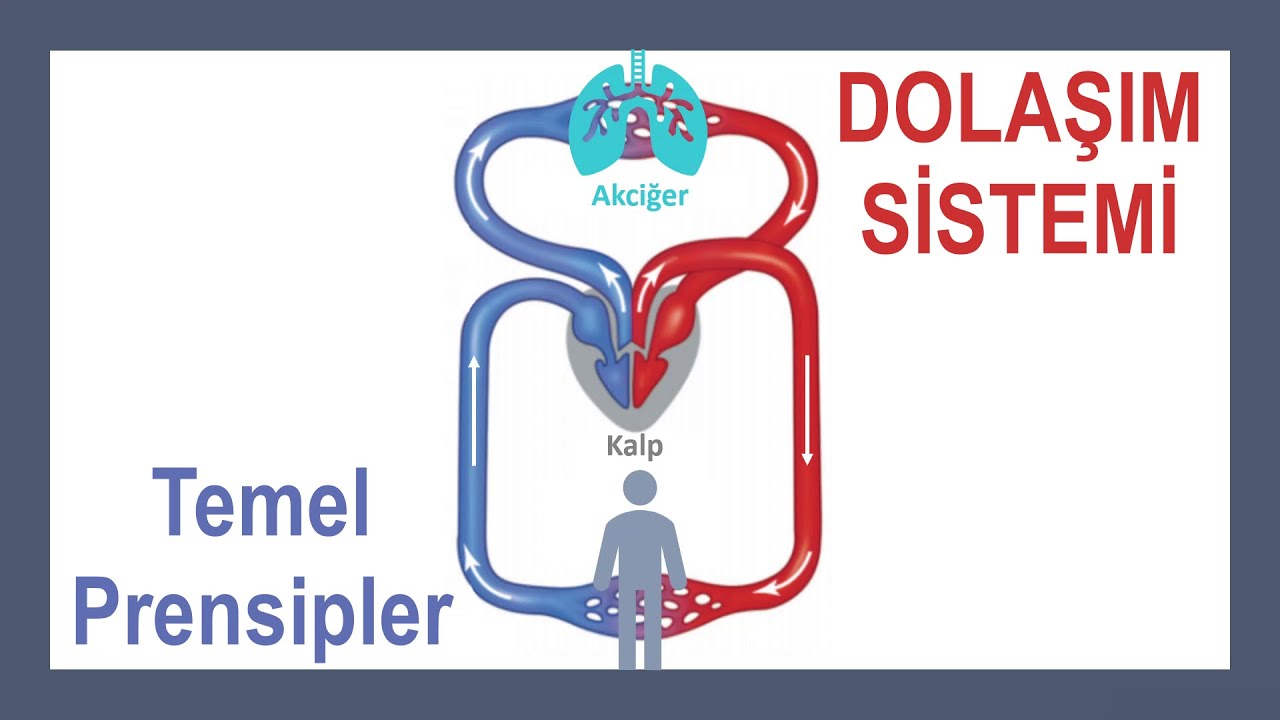
As you know, tissues need oxygen and nutrients for a person to survive. Oxygen comes from the lungs and is delivered to the entire body via the arteries, which are colored red in the video above. Blood that has used its oxygen returns to the lungs to receive oxygen again via the veins, shown in blue in the video. To ensure this movement of blood, two separate pumps are required in both vascular systems. One pump takes oxygenated blood from the lungs and sends it to the body; the other pump collects the blood that has used its oxygen and sends it to the lungs. One of these pumps is on the right, and one is on the left. They are actually neighbors, separated from each other by a septum. In other words, the heart is a single organ, but it actually consists of two separate pumps. The upper spaces, or chambers, of the heart are called atria; the lower spaces are called ventricles. Both the right and left sides have their own atria and ventricles (Note that since we are looking at the heart from the front, the side that is the right to us in the video is actually anatomically the left).
Heart Cycle
As you can see in the video above, blood that has used its oxygen reaches the right side of the heart through two large veins coming from the upper and lower parts of the body. The first stop is the right atrium. When it is completely filled with blood, the valve here (tricuspid valve) opens and the blood empties into the right ventricle. When the right ventricle is completely full, this time it contracts and pumps the blood inside. The blood moving through the right ventricular outflow tract causes the valve here (pulmonary valve) to open. The blood passing through here goes to both lungs to receive oxygen (One point to note here is that these same functions occurring on the right side take place on the left side at the same time). In the lungs, carbon dioxide is removed from the blood and replaced with oxygen. The oxygenated blood returns to the heart via a total of 4 pulmonary veins, 2 from the right and 2 from the left, but this time to the left side. The left atrium fills with blood, the valve here (mitral valve) opens, and the blood empties into the left ventricle. When the left ventricle is completely full, it contracts and pumps the blood inside. This time, the blood passes through the left ventricular outflow tract and causes the last valve here (aortic valve) to open. From there, it is distributed to the entire body through the body’s largest artery, the aorta. All of this happens in a coordinated manner thanks to the heart’s electrical system. Approximately 5 liters of blood circulate this way per minute. This cycle of the heart repeats an average of 100,000 times a day. This means that an 80-year-old person’s heart has beaten approximately 3 billion times without ever stopping.
WHY THIS WEBSITE?
Informing a patient in a short and clear language, backed by scientific data, is of great importance for treatment success. Because a well and correctly informed patient makes a conscious choice between the different treatment methods offered for such a vital organ as the heart (surgical or non-surgical). This way, hope increases, anxiety decreases, and the patient develops accurate expectations about the outcome. This website was created for this purpose by Prof. Sukru Akyuz, MD.