
What is coronary artery disease?
The heart cannot use the blood directly in the cavities it contains. Like other organs, it obtains oxygen through its own special vessels. The first vessels that branch off from the aorta, which distributes the blood pumped by the heart to the body, also belong to the heart and course on the outside of the heart, that is, over it. In medicine, they are called “coronary arteries.” The heart has two main vessels: one is the right main vessel and the other is the left main vessel. The left main vessel is called LMCA in medicine; the right main vessel is called RCA. LMCA is a short but wide vessel and divides into two branches: LAD and CX. Since each of these two branches is as large as the right main vessel, they are sometimes also called main vessels. For this reason, in everyday life, the expression “a total of three main vessels, two on the left and one on the right” can also be used. Some people develop gradually increasing fat accumulation in their vessel walls over the years. If these accumulations (plaques) increase greatly, the area through which blood passes in the vessel narrows. That is, the inner surface of the heart vessels becomes more or less protruding. This is called “coronary artery disease.” Coronary artery disease is synonymous with “heart vessel disease.” Among the general population, it is also known as “vessel hardening” and “heart vessel occlusion.”

How many types of coronary artery disease are there?
There are two main types of coronary artery disease: Chronic coronary syndrome: B Over the years, the lumen of the artery gradually narrows. Eventually, it no longer allows sufficient blood flow, and the patient begins to experience symptoms.B The most common symptom is chest pain or a sensation of discomfort in the chest that occurs during physical activity but not at rest. Patients report that their symptoms did not begin suddenly; rather, they have been present for weeks or months (chronic) for weeks or months. A commonly used synonym is “stable coronary artery disease”. Acute coronary syndrome: This form develops suddenly; that is, it encompasses emergency situations. Heart attack types fall into this group. The most common type of heart attack occurs as follows: A plaque in the coronary arteries suddenly ruptures, and the clot that forms to repair this tear suddenly (acutely) blocks the artery, inadvertently obstructing blood flow to the heart.

What are the symptoms of coronary artery disease?
The symptoms of coronary artery disease vary from person to person depending on the severity of the condition. Some people experience no symptoms at all. While some may have mild episodes of chest pain during physical activity (exercise), others may experience severe chest pain even while at rest. Symptoms may not be noticeable at first or may only appear when the heart is beating very fast, such as during exercise. As the narrowing of the arteries progresses, less blood reaches the heart tissue, and symptoms begin to appear more severely and more frequently. Chest pain is the most common symptom of coronary artery disease. Some people mistake it for heartburn or indigestion. It may feel like pressure, burning, or tightness in the chest. Some patients describe it not as pain but as a feeling of discomfort. They might say, “It feels like someone is sitting on my chest” or “It feels like my chest is being squeezed in a vise.” Chest pain typically occurs in the middle or left side of the chest. Exercise or stress can trigger the symptoms. The pain usually subsides a few minutes after the triggering event ends. In some people, the pain may be brief or sharp; it may be felt in the neck, arm, or back. In some patients, there may be no sensation of pain at all, and shortness of breath may be more prominent.
What is angina?
If chest pain is caused by the heart tissues not receiving enough oxygen, it is called “angina.” In other words, angina is a specific type of chest pain.
What does the percentage of narrowing in the artery mean?
Generally, a narrowing of up to 40% of the vessel’s diameter does not cause problems, as sufficient blood flows through the remaining 60% of the lumen. However, when the narrowing exceeds 70%, blood flow almost always decreases. In cases of moderate narrowing (40–70%), blood flow varies from person to person; it may be sufficient in some and insufficient in others. In such cases, whether blood flow has decreased is measured and clarified using tests such as MPS (scintigraphy), IVUS (intravascular ultrasound), or FFR.
What is the difference between narrowing of the arteries and blockage of the arteries?
If there is a narrowing in a blood vessel, there is still a small opening through which blood can flow, even if only in small amounts. In the case of a blockage, however, the vessel is completely closed. Thanks to this small opening in the narrowing, or through the connection to capillaries in the case of a blockage, the affected heart tissue can receive enough oxygen to survive, even if it cannot fully maintain its functions. A blockage can be soft or hard in structure. The blockage in a heart attack is caused by a clot and is therefore soft. For vessels that have been blocked for more than 3 months, the term (CTO: Chronic Total Occlusion) is used. CTOs are quite hard.

What causes coronary artery disease? What are the risk factors?
- Age: As age increases, the frequency of coronary artery disease increases. Vessels age too.
- Gender: Men generally have a higher risk of coronary artery disease. However, the risk also increases in women after menopause. But the accuracy of this information is not clear.
- Family history: Genetics is important in coronary artery disease. Especially if a parent or sibling has heart vessel disease, the risk increases. This is briefly called “family history.”
- Smoking: Even passively inhaling cigarette smoke increases the risk.
- Hypertension: Uncontrolled hypertension hardens vessels and increases risk.
- Diabetes (Sugar disease): It increases risk both through the direct effect of high blood sugar and indirectly through triggering many risk factors.
- High cholesterol: A greatly increased level of bad cholesterol (LDL) in the blood or a very low level of good cholesterol (HDL) accelerates fat accumulation in the vessel wall. High triglyceride levels also increase risk, although not as much as LDL.
- Irregular sleep: Sleeping too little and sleeping too much both increase risk.
- Alcohol: In the past, it was thought that consuming small amounts of alcohol, especially wine, might be beneficial for the heart. However, according to new scientific data, it is probably best not to use alcohol at all. This is the recommendation of the latest (2021) European Society of Cardiology “Guideline on the Prevention of Cardiovascular Disease.”
- Unhealthy diet: Especially foods containing trans fats, salt, and sugar increase risk.
- Obesity
- Sedentary lifestyle
- Chronic stress
- Chronic kidney failure
- Autoimmune diseases
- High homocysteine level
How does stress harm the heart?
The changes that occur in our bodies when we experience stress normally protect us from its harmful effects. However, this is essentially an adaptive trait developed to cope with short-term stressors in nature. If stress persists, it can actually be harmful. If cortisol—the hormone released during stress—remains at high levels in the blood for an extended period, it can raise blood sugar, cholesterol, and blood pressure. Additionally, people under stress tend to smoke more as a way to cope. All of these are risk factors for atherosclerosis. Stress also directly disrupts the function of blood vessel walls, making it easier for fat to accumulate and blood clots to form.
How is coronary artery disease diagnosed?
- EKG (Electrocardiography): This test measures the electrical activity of the heart. Your doctor may request this test to determine whether you have had a heart attack or to evaluate whether there are any signs indicating heart vessel occlusion. It also shows heart rhythm problems.
- Stress test (Treadmill): If symptoms do not occur at rest but develop during exertion-demanding situations such as walking or climbing uphill, your doctor may ask you to have a stress test. During this test, EKG electrodes are attached to your chest and the heart’s electrical activity is monitored during exercise. It is not used as frequently nowadays. Because it is wrong in nearly one out of every five people. That is, it can show the absence of a problem when there is one, or the presence of a problem when there is none.
- Nuclear stress test [Myocardial perfusion scintigraphy (MPS)]: This test is similar to a stress test, but in addition to EKG recordings, a film of the heart is also taken. The patient is given a radioactive substance. Images of the heart at rest and during stress are compared. Damaged areas of the heart or areas where blood flow is reduced cannot use the given radioactive substance very well. This allows the location of problematic areas to be identified. In summary, it examines not directly the heart vessels, but indirectly the tissues supplied by the vessels.
- Echocardiography (Heart ultrasound): It produces an image of the heart with the help of sound waves. Movement decreases in areas receiving insufficient blood and can be detected with echocardiography. Sometimes, the patient’s heart is accelerated with exercise or medication, stressed, and hidden problems not present at rest are revealed. This method is called “stress echo.”
- Virtual angiography (CT angiography): A special dye (contrast material) is administered through the arm vessel. When the dye reaches the heart, images of the heart are obtained with the help of X-rays. Heart vessels that would normally not be visible with X-rays alone become visible thanks to the dye, and it becomes clear whether there is narrowing. Unlike previous tests, it is not “indirect” but “direct” in showing vessels. Today, it is the most recommended test for heart vessel examination. However, it should not be forgotten that there are situations in which each test can and cannot be performed, and doctors try to request the most appropriate test by taking these into account.
- Angiography (Coronary angiography): Thanks to long, flexible tubes, that is, catheters sent into the heart, dye is administered directly into the heart vessels. This way, quite clear images are obtained. It is also called cardiac catheterization. When necessary, it also allows transition to treatments such as balloons and stents. It is the reference test in the diagnosis of heart vessel disease.
What are the complications of coronary artery disease?
The most important complications are as follows: Heart attack Heart failure Heart rhythm disorder Death
How is coronary artery disease treated?
Anyone with heart or blood vessel problems, whether mild or serious, should first and foremost adopt a healthy lifestyle. These points are summarized below:

What medications are used to treat coronary artery disease?
Drugs used to eliminate chest pain or similar symptoms caused by coronary artery disease either expand vessels in areas other than the narrowing, including collateral vessels, to increase blood flow (and thus oxygen supply) or provide economical use of oxygen. For oxygen conservation, they either prevent the heart from beating unnecessarily fast or change intracellular metabolic pathways in a positive direction. As a result, the heart accomplishes a lot of work with little oxygen. These drugs are:
- Beta blockers: These drugs slow down the heart rate; or rather, they normalize it. This helps reduce complaints such as chest pain. They also help keep blood pressure under control.
- Calcium channel blockers: These drugs have a similar mechanism of action to beta blockers.
- Nitrates: They work by expanding heart vessels. Long-acting ones have effects throughout the day. Short-acting ones in the form of sublingual tablets or sprays are used to quickly eliminate chest pain.
- Ranolazine: It is a new generation drug group. Its mechanism of action is not clear, but it probably works by providing economical use of oxygen.
- Trimetazidine: Its mechanism of action is also not clear, but it probably works by providing economical use of oxygen. It is thought to be less effective than ranolazine.
Other drugs are aspirin and cholesterol-lowering drugs. However, their use purpose is different. Neither has a direct effect on symptoms such as chest pain; their main effects are shown by reducing the risk of heart attack and death.
- Aspirin: Aspirin is a blood-thinning drug; that is, it reduces the tendency of blood to clot.
- Cholesterol-lowering drugs: Regardless of cholesterol level, they help reduce fat accumulation in the vessel wall causing narrowing. The most important of these drugs are statins (atorvastatin, rosuvastatin, pitavastatin, etc.).
How is a stent implanted?
Stent procedure is performed to keep narrowed or occluded heart vessels open. It is a non-surgical method. A hair-thin wire is advanced to the heart through catheters sent to the heart via the wrist or leg (groin) vessel. By inflating a balloon that slides over it, the plaques causing narrowing are pushed to the sides, the area inside the vessel is widened, and then a scaffold (stent) is placed in this area to prevent recollapse (occlusion).

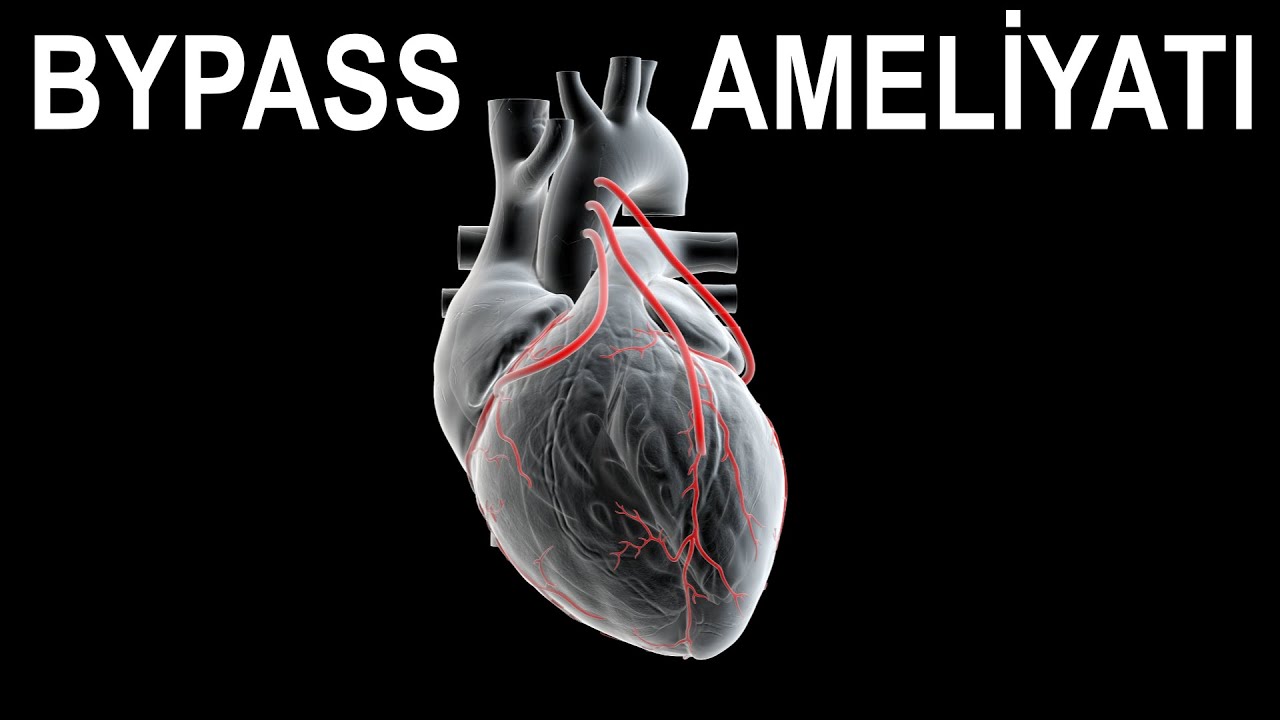
What is bypass surgery?
Bypass surgery (CABG) involves attaching a bypass graft to a narrowed or blocked artery. This restores adequate blood flow. Bypass grafts are typically taken from the chest and leg.
What should people with heart disease eat?
Remember that the Mediterranean diet recommended by international guidelines is actually suitable for everyone, whether they have cardiovascular problems or not. The difference for a heart vessel patient is that they need to follow these rules more strictly (See References).
- Eat a diet rich in vegetables and fruits. Make sure they are fresh and in season.
- Consume more nuts (unsalted and raw) such as walnuts, hazelnuts and almonds, fish, legumes (dried beans, red beans, chickpeas, lentils) and fiber-rich foods.
- Do not eat too much bread. However, not eating bread at all is not correct. Prefer whole wheat bread instead of white bread.
- Reduce sweets and sugary drinks (cola, soft drinks, fruit juices, etc.); if possible, eliminate them from your life. Ask for water or mineral water with your meals.
- Stay away from processed meats (sausages, soudjouk, salami, etc.). Actually, stay away from processed everything.
- Use little salt; do not exceed 5 grams per day.
- Avoid fast-food products, snacks such as chips and cookies.
- Prefer low-fat or fat-free dairy products.
- Do not use trans fats like margarine. Make your food with healthier fats such as olive oil or sunflower oil.
- Do not consume animal fats (saturated fats) like butter in large amounts. Actually, this subject has become somewhat controversial with new data. That is, not consuming it at all is probably not correct. For example, you can consume butter at breakfast. There is no problem with eating eggs.
- You can eat up to about 500 grams of lean red meat per week. However, we do not recommend eating organ meats.
- You can also drink herbal teas, black tea and coffee twice a day; but more than that may cause palpitations.
- Although plant-based diet is generally thought to be healthier, do not fall into the misconception that every plant-based food is beneficial and every animal-based food is harmful. For example, remember that white flour and refined sugar, which are known to be harmful, are plant-based foods; while fish, which is known to be beneficial, is an animal-based food.
- We also recommend reading our article titled “Can Herbal Treatment Open Vessels?“
Can narrowed blood vessels improve?
Although lifestyle modifications and medication can rarely cause plaque in the artery walls to regress, their primary benefit lies in strengthening the plaques to reduce the likelihood of rupture, or—even if regression does not occur—at least preventing rapid progression. In short, the primary goal is not to reverse the narrowing of the arteries but to prevent its progression.
Stent or bypass?
Cardiac surgeons and interventional cardiologists are two distinct groups of doctors who treat vascular conditions. While cardiac surgeons address vascular issues through surgery (bypass), interventional cardiologists resolve the same issues using non-surgical methods (complex stent procedures). We recommend reading our detailed article on this important topic.

Prof. Dr. Şükrü Akyüz is an interventional cardiologist. His professional interest is the treatment of heart diseases with non-surgical methods. Opening complex vessel occlusions with special stenting methods without surgery is also included in these treatments.
References
- Virani SS, Newby LK, Arnold SV, et al. AHA/ACC/ACCP/ASPC/NLA/PCNA Guideline for the management of patients with chronic coronary disease. Circulation. 2023 Aug 29;148(9):e9-e119.
- Vrints C, Andreotti F, Koskinas KC, et al. ESC Guidelines for the management of chronic coronary syndromes. Eur Heart J. 2024 Sep 29;45(36):3415-3537.
- Byrne RA, Rossello X, Coughlan JJ, et al. ESC Guidelines for the management of acute coronary syndromes. Eur Heart J. 2023 Oct 12;44(38):3720-3826.
- Rao, S, O’Donoghue, M, Ruel, M. et al. ACC/AHA/ACEP/NAEMSP/SCAI Guideline for the management of patients with acute coronary syndromes. JACC. 2025;85 (22):2135–2237.
- Visseren FLJ, Mach F, Smulders YM, et al. ESC Guidelines on cardiovascular disease prevention in clinical practice. Eur Heart J. 2021 Sep 7;42(34):3227-3337.
- Arnett DK, Blumenthal RS, Albert MA, et al. ACC/AHA Guideline on the primary prevention of cardiovascular disease. Circulation. 2019 Sep 10;140(11):e596-e646.