
Which artery is the carotid artery?
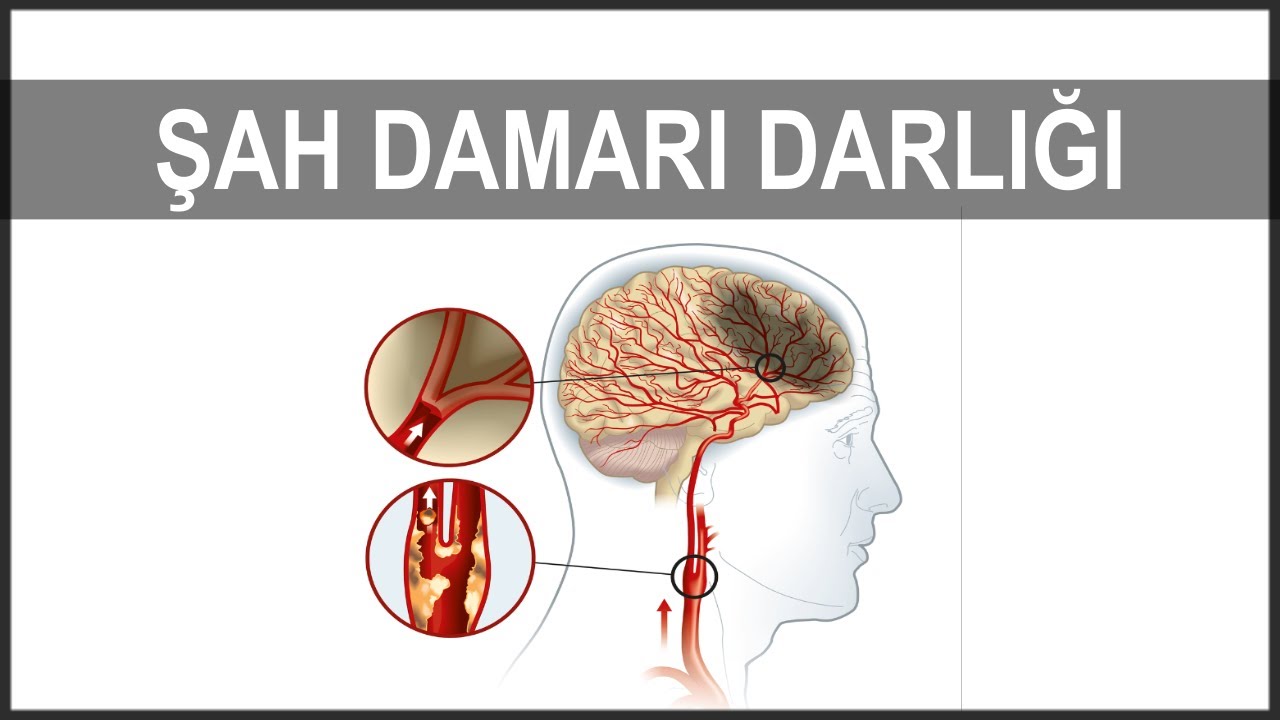
The carotid arteries are the largest vessels that provide blood to the brain. In medical terminology, they are called the “carotid arteries.” There are two carotid arteries, one on the right and one on the left of the neck. The pulses of these vessels can be easily felt a few cm below the earlobe, on the side-back of the neck. For this reason, they are also colloquially referred to as “neck vessels.”
What is carotid artery stenosis?
In some people, fat and calcium accumulate on the walls of the carotid arteries over the years. This protrudes inward into the vessel cavity, and after a certain point, the area through which blood can flow freely narrows. This condition is called “carotid artery stenosis”; medically known as “carotid artery stenosis.”
Why is carotid artery stenosis important?
A severe narrowing in the carotid artery can cause a temporary or permanent stroke (paralysis). A stroke can develop due to many reasons, such as bleeding related to high blood pressure or a blood blot originating from the heart; however, the most common underlying cause of stroke is narrowing in the carotid artery.
What is a stroke?
A stroke occurs through a mechanism similar to a heart attack; it is the damage to a specific region of the brain resulting from a lack of oxygen when a vessel is suddenly blocked by a blood clot. The terms “stroke” and “paralysis” (in this context) are synonymous. The protruding area causing the narrowing in the carotid artery can suddenly rupture due to various reasons. The body’s mechanisms recognize this rupture as a wound and attempt to close and repair it by forming a clot. However, fat fragments from within the ruptured area and the newly formed clots can be swept away by the blood flow into the brain, where they can get stuck and block the brain vessels at points where they become thinner. Brain cells, which have very limited tolerance for oxygen deprivation, cease to function if there is no collateral vessel system and if the vessel is not opened quickly; consequently, the body parts controlled by that specific brain region stop working. In short, if a sudden vascular occlusion occurs in a heart artery, it is called a “heart attack”; if it occurs in a brain artery, it is called a “stroke.” Therefore, a stroke is essentially a “brain attack.”
What is a transient ischemic attack (TIA)?
If a stroke lasts for a few minutes or a few hours and then completely resolves, it is called a “transient ischemic attack” (TIA). The probability of a person who has had a TIA suffering a permanent stroke is 10 times higher compared to someone who has not had a TIA.
What are the symptoms of carotid artery stenosis?
The narrowing in the carotid artery progresses gradually and, unfortunately, usually provides no symptoms at all until a temporary or permanent stroke develops. The most common of these symptoms that develop suddenly are as follows:
- Unilateral numbness or weakness in the face, arm, and/or legs (for example; loss of strength in the right arm and right leg while the left side is normal)
- Inability to speak
- Inability to understand
- Blindness
- Loss of balance
How do you intervene when someone is having a stroke?
- Ask the person who is feeling unwell to raise both arms at the same time; does one arm drift downward?
- Ask them to make a smiling gesture; is one side of their face drooping?
- Ask them to repeat a simple sentence; is their speech strange or slurred compared to normal?
If such symptoms are present, do not wait to see if they pass over time; call emergency services (112) immediately. This is because the later the treatment is initiated, the greater the likelihood of brain damage and resulting permanent disability.
How is carotid artery stenosis diagnosed?
Unfortunately, most patients have no symptoms until they suffer a temporary or permanent stroke. In other words, in most cases, the diagnosis is made only after a problem has occurred. Sometimes, it is detected during screening tests for those with risk factors such as hypertension, diabetes, and high cholesterol, or for those who already have blockages in their heart or leg arteries.
- Doppler ultrasound: This is a device that produces images using sound waves. It is generally used as a screening method. If a narrowing is detected in the vessel with ultrasound, it must be confirmed with one of the other tests below, which have higher accuracy rates.
- Magnetic resonance imaging (MRI): This is a device that produces images based on the principle of a magnetic field. It is primarily used to examine brain tissue due to its power in detecting even small damages in the brain.
- Computed tomographic angiography (CT): This works using radiation (X-rays). Its ability to produce clear images is better than ultrasound and MRI.
- Classical angiography: The clearest images are obtained with carotid angiography. However, it is performed by sending a catheter into the patient’s body (to the entrance of the carotid arteries); therefore, its risk is higher than other tests. It is primarily used for procedural planning during the opening of a carotid artery narrowing with a stent.
What is the difference between “stenosis” and “occlusion” in the carotid artery?
If there is stenosis in a vessel, there is still a small opening through which blood can pass, even if just a little (at most 99%). In an occlusion, however, the vessel is completely closed (100%). In common parlance, the word “occlusion” (blockage) is frequently used instead of “stenosis,” although it is not entirely accurate. However, in carotid artery issues, this difference is important; because in these two cases, the treatment approach is different, as you will read below.
How is carotid artery stenosis treated?
Anyone with a problem in their carotid artery, whether mild or serious, should first adopt a healthy lifestyle. These are summarized below:

After emphasizing that healthy living recommendations should be implemented in any case, the answer to the following question is sought: “Is just giving medication enough, or should we additionally open the vessel with surgery or a stent?” There is no benefit to the patient in opening vessels where less than 50% of the vessel diameter is narrowed; medical therapy is sufficient. This is because the probability of stenosis of less than 50% causing a problem is lower than the probability of a problem occurring (e.g., a blood clot) during the surgery or stenting procedure performed to open the vessel. In other words, a risk-benefit analysis is actually performed, and the less risky option is chosen. Doctors make the decision on whether or not to open stenoses between 50% and 99% according to the patient’s specific clinical condition.
- Medications: Regardless of the degree of carotid artery stenosis, most patients are prescribed a low-dose blood thinner (Examples: Coraspin 100 mg, Ecopirin 100 mg, or Plavix 75 mg, etc.) and a cholesterol-lowering medication (atorvastatin, rosuvastatin, pitavastatin, etc.). The blood thinner is used to prevent potential clot formation, while the cholesterol medication is used to reduce fat accumulation on the vessel wall, thereby decreasing the likelihood of the stenosis progressing further.
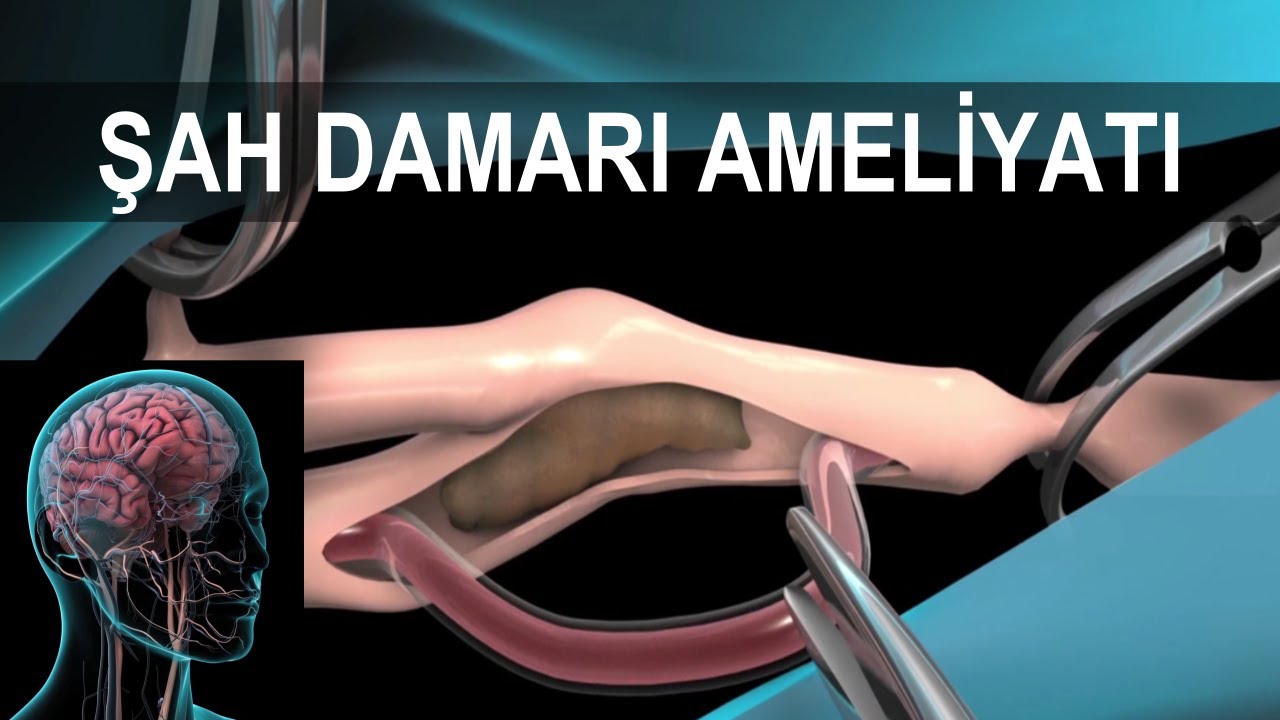
- Surgery: Carotid artery surgery is performed by vascular surgeons. The operation can be performed under general anesthesia or by numbing only the neck area. The surgeon makes an incision in the patient’s neck, stops the blood flow before and after the narrowing using clamp-like instruments, opens the vessel wall where the fat has accumulated, and if necessary, temporarily places a tube (shunt) to ensure blood flow to the brain (which is not always required). Then, the surgeon removes the fatty tissue that narrows the vessel from the inside, removes the tube, sews on a patch if necessary, and finally closes the incisions.
-
Non-Surgical Method (Stent): The opening of the carotid artery using a non-surgical method, namely stenting, is performed by interventional radiologists or interventional cardiologists. The procedure is carried out in a catheterization laboratory via the leg (groin) or the wrist. First, a wire is passed through the narrowing in the carotid artery, and a filter is placed beyond the narrowing. This filter is a type of net that reduces the risk of stroke during the procedure by catching fatty particles that may break loose while intervening in the narrowing (especially during ballooning) and preventing them from traveling to the brain (the risk of stroke during the procedure is approximately 3%). Next, a balloon is advanced over the wire and inflated at the level of the narrowing. This partially opens the narrowing. After removing the balloon, a stent is placed. The stent is a special nitinol metal mesh that automatically expands until it touches the vessel wall once released from the catheter, ensuring the vessel remains open. Finally, the necessary checks are made, the filter and catheters are removed, and the procedure is completed.

Prof. Dr. Şükrü Akyüz is an interventional cardiologist. One of his areas of expertise is opening carotid artery stenosis non-surgically with a stent (Carotid stenting).

How is carotid artery blockage treated?
Opening stenoses of up to 99% in the carotid artery with surgery or a stent can be considered (including 99%). In cases of 100%, namely occlusions, the only option is medical therapy. Scientific studies have shown that opening a completely blocked carotid artery with surgery or a stent provides no benefit to the patient. The probable reasons for this are that that specific region of the brain has already been permanently damaged due to the lack of blood flow caused by the blockage, or that the probability of technical complications during the vessel-opening operation/procedure is much higher in an occlusion compared to a stenosis.
Will the narrowing in the carotid artery resolve on its own?
Unfortunately, it won’t go away on its own.
What happens if the narrowing in the carotid artery is not opened?
If treatment is not received after suffering a temporary or permanent stroke, 1 in every 4 people will suffer another stroke within two years. This is a high probability. The risk for a patient who has no history of stroke but has narrowing in the carotid artery is lower. However, as the percentage of narrowing increases, the risk also increases.
What should patients with carotid artery disease eat?
Remember that the Mediterranean-style diet recommended by international guidelines actually applies to everyone, whether they have vascular problems or not. The difference for a carotid artery patient is the need to follow these rules more strictly (See References).
- Eat a diet rich in vegetables and fruits. Ensure they are fresh and in season.
- Increase consumption of nuts like walnuts, hazelnuts, and almonds (unsalted and raw), fish, legumes (dry beans, kidney beans, chickpeas, lentils), and fibrous foods.
- Do not eat too much bread. However, eating no bread at all is not correct. Prefer whole wheat bread over white bread.
- Reduce sweets and sugary drinks (cola, soda, fruit juices, etc.); if possible, remove them from your life. Ask for water or mineral water with your meal.
- Stay away from processed meats (sausages, sucuk, salami, etc.). In fact, stay away from everything processed.
- Use less salt; do not exceed 5 grams daily.
- Stay away from fast-food products and snacks like chips and biscuits.
- Prefer low-fat or non-fat dairy products.
- Do not use trans fats like margarine. Cook your meals with healthier oils such as olive oil or sunflower oil.
- Do not consume too much animal fat (saturated fats) like butter. Actually, with new data, this issue has become somewhat controversial. That is, consuming none at all is probably not correct. For example, you can consume butter at breakfast. There is also no harm in eating eggs.
- You can eat up to 500 grams of lean red meat per week. However, do not eat offal.
- You can drink herbal teas, black tea, and coffee up to twice a day; however, more may cause palpitations.
- Although a plant-based diet is generally considered healthier, do not fall into the misconception that every plant-based food is beneficial and every animal-based food is harmful. For example, remember that white flour and refined sugar, known to be harmful, are plant-based, while fish, known to be beneficial, is an animal food.
- We also recommend reading our article titled “Can vessels be opened with herbal treatment?“

Examples of our carotid artery stenting cases
References
- Mazzolai L, Teixido-Tura G, Lanzi S, et al. ESC Guidelines for the management of peripheral arterial and aortic diseases. Eur Heart J. 2024 Sep 29;45(36):3538-3700.
- Libby P, Bonow RO, and Mann DL, eds. Braunwald’s heart disease: A textbook of cardiovascular medicine, 12th ed. Philadelphia PA: Elsevier; 2022.