
What is bypass surgery?
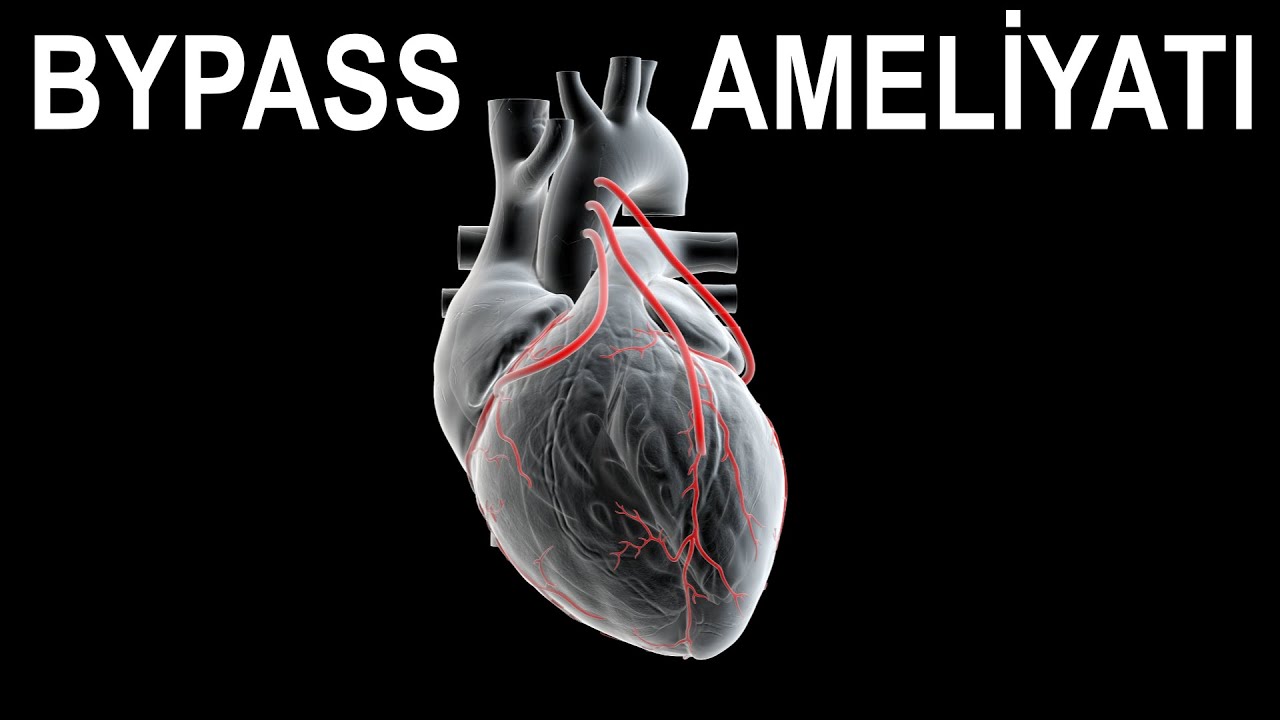
Bypass surgery is one of the treatments applied in opening coronary artery occlusions. In this surgery, there is no direct intervention to the narrowing in the vessel; a spare vessel taken from the patient is attached before and after the narrowing. Thus, blood flow to the area before the narrowing reaches through the patient’s own natural coronary artery; while blood flow to the area after the narrowing reaches through the attached spare vessel.
What does “bypass” mean?
Bypass means “to go around“. The abbreviation for the medical name of bypass surgery is CABG. The bypass vessel that is implanted is also called a graft.
Who is eligible for bypass surgery?
Bypass surgery is generally preferred in patients with:
- Narrowing or occlusion in more than one main vessel
- Narrowing or occlusion in the left main vessel (LMCA)
- Those not suitable for treatment with stent
- Those who develop narrowing again inside previously placed stents
- Rarely, those whose vessels cannot be opened with emergency stenting during a heart attack

Artificial blood vessels (grafts) used in bypass surgery
How can you tell if your coronary arteries are blocked?
The most definitive way to determine whether there is a blockage in the coronary arteries is to undergo angiography (coronary angiography). While direct angiography is recommended for some patients, others are advised to undergo other tests first ( cardiac scintigraphy, virtual angiography, etc.) may be recommended. This decision is based on the type and severity of symptoms, the heart’s pumping capacity, and the patient’s other characteristics. However, the final decision regarding bypass surgery is made after reviewing the angiography images.
What are the risks of bypass surgery?
Possible risks (complications) are as follows:
- Bleeding during or after surgery
- Heart attack
- Heart failure
- Heart rhythm disturbance
- Blood accumulation in the heart lining and compression of the heart (pericardial tamponade)
- Inflammation of the heart lining (acute pericarditis)
- Permanent stiffening of the heart lining (constrictive pericarditis)
- Infection at the chest incision site (in the skin or bone)
- Infection inside the chest cavity (mediastinitis)
- Lung infection (pneumonia)
- Kidney failure
- Blood clot to the lung (pulmonary embolism)
- Temporary or permanent swelling (edema) of the leg from which the vessel was taken
- Chronic itching or discomfort sensation due to wires in the breastbone
- Permanent scars at the incision sites
- Depression and anxiety disorder
- Forgetfulness
- Difficulty thinking clearly
- Stroke
- Death
The probability of developing the most serious complications such as stroke and death is generally low (1%). However, the probability of any complication developing actually varies considerably from patient to patient. Risk is higher in the following situations:
- The patient’s general health condition being poor before surgery.
- The patient being very debilitated, meaning unable to perform even ordinary daily tasks without assistance.
- The need for the surgery to be performed urgently.
- The presence of other additional problems in the heart (For example; severe valve insufficiency or weak heart pumping power, that is, heart failure)
- The presence of other additional problems in other organs (For example; COPD, cirrhosis, chronic kidney failure, Alzheimer’s disease, carotid artery narrowing, etc.)
You may be justified in being concerned about these risks; but remember: serious complications from these rarely develop. What is important is whether bypass surgery is truly necessary. If the surgery decision has been made in accordance with current scientific data and guidelines and your surgeon has sufficient experience, avoiding this operation and doing nothing actually means exposing yourself to much greater risks such as heart attack and death. However, if you still cannot overcome your fears and do not want bypass surgery, do not leave yourself untreated; remember that most patients’ vessels can be opened with non-surgical methods (complex stenting). For more detailed information, we recommend reading our article titled “Stent or Bypass?“.
What tests are performed before bypass surgery?
Not all of the following tests may be requested in every patient. Sometimes additional tests not mentioned here may also be requested.
- Blood test
- EKG (electrocardiography)
- Echocardiography (heart ultrasound)
- Stress test (treadmill)
- Cardiac scintigraphy (nuclear test)
- Virtual angiography (CT angiography)
- Carotid artery ultrasound
- Angiography (coronary angiography)
It is also very important that you are informed about what to expect while preparing for surgery and what you need to do before and after the surgery. For example, before surgery your doctor will ask which medications you are taking. Your doctor will tell you which medications to continue and which to stop. Sometimes your doctor may also ask you to start a new medication.
How long does bypass surgery take?
Bypass surgery typically lasts between 3 and 6 hours. The duration depends on the type of bypass surgery, the number of arteries to be bypassed, and other factors.
How is bypass surgery performed?
The patient is first put to sleep under general anesthesia in the operating room and connected to a ventilator. The skin, subcutaneous tissues, and breastbone are cut and the chest cavity is opened. The patient is connected to a heart-lung machine and the heart is stopped. While the heart is not working, the heart-lung machine provides the pumping and oxygenation of blood. During this time, the vessels to be used in the bypass are removed and attached to the heart vessels. After the vessels are attached, the heart is restarted and blood now begins to flow beyond the narrowing in the vessel through its new route. If no problems are found, the patient is now separated from the heart-lung machine and the chest cavity is closed by joining the breastbone with metal wires. This is the method applied in classic bypass surgery; it is a type of open-heart surgery.
What is a heart bypass?
Thanks to technology, alternative surgical methods have been developed. If you noticed, in the classic method, bypass is performed after the heart is stopped. But in suitable cases, bypass can also be performed while the heart is beating, that is, without stopping the heart. Off-pump bypass is the name given to this method, in which while the heart continues to beat, only the vessel point where sutures will be placed is stabilized with a special instrument and the bypass vessel is sutured to this point. The main advantage of off-pump bypass compared to the classic method where the heart is stopped and a heart-lung machine is used is that it reduces the risk of stroke in patients with calcified aorta and allows patients with serious lung disease to be weaned from the ventilator sooner after surgery. The disadvantage of off-pump bypass is that not every case is technically suitable. This method can generally be applied only if there is a problem in one or two vessels, the heart’s pumping power is normal, there is no previous history of heart surgery, there is no significant obesity, and the anatomy is appropriate.
What is a mini-bypass?
In bypass surgery, a partial incision in the chest instead of a full one can also be preferred. This method is called minimally invasive bypass surgery. In short, it is known as MIDCAB (minimally invasive direct coronary artery bypass). This surgery can be performed with the heart stopped or while the heart continues to beat (off-pump).


What is a closed bypass?
Minimally invasive bypass surgery is known among the public as closed bypass. Actually, even though it is small, since an incision is ultimately made in the chest, it is still a type of open-heart surgery.
What is robotic bypass surgery?
Another method for bypass surgery is robotic bypass surgery (robotic surgery). In this procedure, several small incisions are made in the chest, and the robot’s arms are inserted into the chest through these incisions. The surgeon does not touch the patient directly; instead, they perform the surgery by remotely controlling the robot’s arms from a corner of the operating room.
Are off-pump and robotic bypass surgeries better than conventional bypass surgery?
The main advantages of closed bypass and robotic bypass compared to the classic method are less scarring from an aesthetic perspective and shorter recovery time. The disadvantages are that these methods require special instruments, are more expensive, and require the surgeon to have received special training and have sufficient experience in these methods. However, the procedure performed on the heart in these methods is the same as that performed in classic bypass; therefore, the medical benefit provided to the heart is the same. The probability of developing most serious complications such as death and stroke is also similar to that in classic bypass (See References).
I don’t want bypass surgery, can’t my vessels be opened with a stent?
The main reasons bypass surgery is recommended to patients are: bifurcating vessels, left main vessel (LMCA), excessively calcified vessels, and complex occlusions such as chronic total occlusions (CTO)… Most patients with these problems can also be treated with stents. For this important topic, we recommend reading our detailed article titled “Stent or Bypass?“ and watching our example case videos on the same page.


Thanks to advancing technology, today an experienced interventional cardiologist whose professional interest is complex procedures can open complex vessel occlusions with stents as well. Stent provides the same benefit as bypass surgery in most patients for whom bypass surgery is decided. That is, in these patients both bypass surgery and stent are equally effective; neither is wrong. However, in some patients bypass surgery is still necessarily required (See References).
For serious decisions such as treatment selection, we recommend that you get a second opinion from a different physician. It is important that you request the most current scientific evidence for the recommended treatment to be presented in understandable language, along with references.


Prof. Dr. Şükrü Akyüz is an interventional cardiologist; since he is not a surgeon, he does not perform surgery. His professional interest is the treatment of heart diseases with non-surgical methods. Opening complex vessel occlusions with special stenting methods without surgery is also included in these treatments.

Can bypass grafts become blocked?
In bypass surgery, the likelihood of the grafts (vessels) narrowing or becoming blocked gradually increases over the years. In 1 out of every 10 cases, grafts become blocked within 1 month. This is often due to technical shortcomings. The likelihood of blockage varies depending on the type of graft. Arterial grafts (taken from the chest and arm) become blocked in only 1 out of every 10 people within 10 years. In other words, arterial grafts function for at least 10 years in 90% of cases. In contrast, venous grafts (taken from the leg) become blocked in 5 out of every 10 people within 10 years; in fact, half of these blockages occur within the first year. In summary, the use of arterial grafts provides the best long-term results in terms of vessel patency (See References).
What should you be mindful of after bypass surgery?
If any of the following occur at your incision sites (chest, arm, or leg), you should inform your doctor:
- Bleeding
- Progressively increasing chest pain
- Fever
- Nausea or vomiting
- Shortness of breath
- Inflamed discharge at the incision site or progressively increasing redness
- Speech disturbance or similar stroke symptoms
- If symptoms you had before surgery, such as chest pain or shortness of breath, recur, rest for a few minutes or take sublingual medication. If your chest pain does not go away despite resting or taking sublingual medication, go to the nearest emergency room or call 112.
- Quit smoking; do not just reduce it.
- Do not use alcohol; at least reduce it [In the past, it was thought that consuming small amounts of alcohol, especially wine, might be beneficial for the heart. However, according to new scientific data, it is probably best not to use alcohol at all. This is the recommendation of the latest (2021) European Society of Cardiology “Guideline on the Prevention of Cardiovascular Disease”].
- Do not gain weight; if you are overweight, reduce your weight with a healthy diet and exercise program.
- Keep your cholesterol level under control (by watching what you eat and using medication).
- If you have diabetes (sugar disease) and hypertension, keep them under control.
- Exercise regularly; at least avoid elevators, driving everywhere, and sitting continuously.
- Use your heart medications regularly (especially blood-thinning medications).
- Pay attention to what you eat (Details are discussed below).

What should people who have had bypass surgery eat?
Remember that the Mediterranean diet recommended by international guidelines is actually suitable for everyone, whether they have cardiovascular problems or not. The difference for a stent patient is that they need to follow these rules more strictly (See References).
- Eat a diet rich in vegetables and fruits. Make sure they are fresh and in season.
- Consume more nuts (unsalted and raw) such as walnuts, hazelnuts and almonds, fish, legumes (dried beans, red beans, chickpeas, lentils) and fiber-rich foods.
- Do not eat too much bread. However, not eating bread at all is not correct. Prefer whole wheat bread instead of white bread.
- Reduce sweets and sugary drinks (cola, soft drinks, fruit juices, etc.); if possible, eliminate them from your life. Ask for water or mineral water with your meals.
- Stay away from processed meats (sausages, soudjouk, salami, etc.). Actually, stay away from processed everything.
- Use little salt; do not exceed 5 grams per day.
- Avoid fast-food products, snacks such as chips and cookies.
- Prefer low-fat or fat-free dairy products.
- Do not use trans fats like margarine. Make your food with healthier fats such as olive oil or sunflower oil.
- Do not consume animal fats (saturated fats) like butter in large amounts. Actually, this subject has become somewhat controversial with new data. That is, not consuming it at all is probably not correct. For example, you can consume butter at breakfast. There is no problem with eating eggs.
- You can eat up to about 500 grams of lean red meat per week. However, we do not recommend eating organ meats.
- You can also drink herbal teas, black tea and coffee twice a day; but more than that may cause palpitations.
- Although plant-based diet is generally thought to be healthier, do not fall into the misconception that every plant-based food is beneficial and every animal-based food is harmful. For example, remember that white flour and refined sugar, which are known to be harmful, are plant-based foods; while fish, which is known to be beneficial, is an animal-based food.
- We also recommend reading our article titled “Can Herbal Treatment Open Vessels?“
What will the recovery process be like after bypass surgery?
This process varies depending on many factors, such as the patient’s overall health, the extent of the surgery, and the surgical technique used. In the early postoperative period, the patient is typically kept in the intensive care unit for 1–2 days, followed by an average of 5–7 days of ward care. During the first few days, heart rate, respiratory function, fluid balance, and wound healing are closely monitored. The risk of complications is reduced through breathing exercises, mobility, and anticoagulant medications. After discharge, it is crucial for patients to avoid strenuous physical activity, take their medications regularly, and not miss their doctor’s appointments, especially during the first few weeks. While the healing of the sternum takes approximately 1 month, overall recovery may take 2–3 months. During this process, adopting lifestyle changes (such as eliminating risk factors like smoking and poor nutrition) and, if possible, participating in rehabilitation programs are crucial for long-term outcomes (such as preventing recurrent arterial blockages and heart attacks).
How long do people who have had bypass surgery live?
After surgery, most people feel better and have no complaints for years. However, over time, newly placed vessels can become occluded and a stent or a second bypass surgery may be necessary. It is difficult to predict how many years the patient will live. This period can be short in some patients (for example, in cases with serious problems in one of their other vital organs) such as a few years, while in some patients life expectancy is the same as in healthy people. By looking at the statistics of previous patients with the same characteristics, estimated percentages can be given. The most important factors negatively affecting this statistic are: Technical inadequacy in surgery, the patient being elderly, heart failure, heart valve disease, the presence of serious diseases in other organs, hypertension, diabetes, high cholesterol, smoking, medication non-compliance, and lack of social support.
References
- Virani SS, Newby LK, Arnold SV, et al. AHA/ACC/ACCP/ASPC/NLA/PCNA Guideline for the management of patients with chronic coronary disease. Circulation. 2023 Aug 29;148(9):e9-e119.
- Vrints C, Andreotti F, Koskinas KC, et al. ESC Guidelines for the management of chronic coronary syndromes. Eur Heart J. 2024 Sep 29;45(36):3415-3537.
- Byrne RA, Rossello X, Coughlan JJ, et al. ESC Guidelines for the management of acute coronary syndromes. Eur Heart J. 2023 Oct 12;44(38):3720-3826.
- Rao, S, O’Donoghue, M, Ruel, M. et al. ACC/AHA/ACEP/NAEMSP/SCAI Guideline for the management of patients with acute coronary syndromes. JACC. 2025;85 (22):2135–2237.
- Stefanini GG, Alfonso F, Barbato E, et al. Management of myocardial revascularisation failure: an expert consensus document of the EAPCI. EuroIntervention. 2020 Dec 4;16(11):e875-e890.
- Lawton JS, Tamis-Holland JE, Bangalore S, et al. ACC/AHA/SCAI Guideline for coronary artery revascularization. J Am Coll Cardiol. 2022;79:e21-e129.
- Libby P, Bonow RO, and Mann DL, eds. Braunwald’s heart disease: A textbook of cardiovascular medicine, 12th ed. Philadelphia PA: Elsevier; 2022.