
What is a stent?
A stent is a tube-shaped scaffold used in the treatment of coronary artery blockages. It is made from metals such as chromium, cobalt, and platinum. Following angiography (coronary angiography), your doctor may recommend that a stent be inserted. The most common reason for this recommendation is that a narrowing or blockage was detected in your heart vessels during the angiography. The stent procedure ensures that the vessel remains open. In most cases, the reason for performing angiography is that patients suffer from chest pain. Once the narrowing is opened, the chest pain also disappears. Chest pain may have been present for a relatively long time, or it may have started suddenly. Therefore, while a stent is placed in some people in a planned manner, i.e., under non-emergency conditions, it is placed in others during emergency situations such as a heart attack. A heart attack develops as a result of the sudden blockage of the heart vessels, frequently by a clot. If the vessel is not opened urgently through a stent procedure, heart tissues begin to die, and permanent damage may develop. This can result in heart failure. Heart failure can also develop in non-emergency cases, but it is relatively rarer. In such instances, the primary reason for placing a stent is to eliminate symptoms such as chest pain.


Opening the stent by inflating the balloon below
What tests are performed before a stent procedure?
An ECG is performed before the procedure. Blood tests are also done to check for bleeding risk, kidney function, and the presence of infection.
How is a stent inserted?
- When you enter the angiography room, you will be asked to lie on a movable table similar to a stretcher. You will be connected to monitors with various cables to track your vital functions such as pulse, respiration, and blood pressure. An intravenous (IV) line will be opened on your arm or the back of your hand to provide fluids and medication when necessary.
- The area where the catheter will be inserted (groin or wrist) may need to be shaved just before the procedure. This area will be wiped with disinfectants to prevent infection. These solutions may be slightly cold. Afterward, your entire body will be covered with a thin sterile drape.
- Most doctors provide an intravenous sedative to reduce your stress. Then, the area where the catheter will be placed is numbed. Within a few minutes, the entry catheter (sheath) is placed in your wrist or groin vein. All catheters, wires, balloons, stents, and other devices to be used during the procedure are sent to the heart through this entry catheter. These materials are changed from time to time. During this process, a camera that emits X-rays will move around you, allowing your doctor to obtain images. This is done to ensure better visualization of different parts of the same vessel from various angles. Every time the dye that makes the vessels visible is administered, you may experience a sensation similar to a hot flash; this is normal and there is no need to worry.
- Most people do not feel any pain during the procedure. Some sensitive individuals may experience nausea or chest pain due to the effect of the dye given to the heart vessels or because the balloon inflated to open the vessel temporarily blocks blood flow. However, this is temporary and resolves quickly.
- The indispensable step to open the vessel is to send a wire as thin as a hair through the narrowing or blockage to the other side of the vessel. This wire is used to deliver the balloon or stent to the problem area. Usually, before placing a stent, a deflated balloon is first sent to the narrow area and inflated. This ensures that the relatively thicker stent can pass through the narrow area, helps determine what diameter stent should be used by taking the balloon diameter as a reference, and allows for additional methods to be applied beforehand if an area hardened by calcification cannot be opened even with a balloon. Although some patients think the procedure is done by “bursting the balloon,” the goal is to open the vessel only by inflating it without bursting it; moreover, the bursting of the balloon carries risks and is not desired by doctors except in exceptional cases. When the vessel expands, the balloon is deflated and removed, but the wire is left in place. In the next stage, a stent is placed to prevent the vessel area opened by the balloon from deflating or collapsing again—that is, from becoming blocked. A stent of matching diameter and length to the narrow area is selected. The stent is mounted on a deflated balloon. When the balloon underneath is inflated, the stent expands and opens, separates from its balloon, and adheres against the vessel wall. Afterward, the stent’s balloon is withdrawn, and the stent is left in the vessel.
How long does the stent procedure take?
Generally, it takes 40-60 minutes. However, this duration can vary depending on the characteristics of the vessel and how many vessels will receive a stent. While a procedure performed on a straightforward vessel can be completed in 30 minutes, a complex case may take 3-4 hours.
Is the patient sedated during stent placement?
Only the vascular entry site will be numbed so that you do not feel pain. You will remain awake throughout the procedure. However, relaxing medications may be administered to ease your tension. These may make you feel slightly drowsy; this is normal.
What are the risks of stent placement?
As with any interventional procedure, there are certain risks associated with stenting. Each of the serious complications occurs in 2 out of every 1000 people. The risk actually varies from person to person. For example, emergency procedures performed during a heart attack or procedures performed on patients with other serious co-existing diseases are riskier, even when performed by the most experienced physicians. Procedures for complex cases (left main coronary artery, bifurcation lesions, severely calcified vessels, or chronic total occlusions – CTO) also carry higher risks. Possible complications include:
- Leg or wrist artery damage: Serious bleeding or blockage may develop in the leg (groin) or wrist artery. Consequently, blood transfusion or emergency vascular surgery may rarely be required.
- Heart rhythm disturbances: Short-term rhythm disturbances that resolve on their own are common during the procedure but are of no significance. Rarely, emergencies that impair consciousness and require medication or electroshock can occur.
- Kidney failure: The dye called contrast agent, which allows us to obtain images during the procedure, impairs the kidneys in 5 out of every 100 patients. The risk is even higher for those who already have kidney problems. For example, in advanced-stage kidney failure, the risk is five times higher. Although kidney impairment may develop, it usually resolves completely with intravenous fluid support. Sometimes, temporary dialysis may be required. The need for permanent dialysis is extremely rare.
- Allergy: Rarely, an allergy to the contrast agent can develop. It may manifest as itchy skin rashes; this is a temporary condition. Very rarely, allergic reactions can be serious enough to obstruct breathing. All necessary equipment for such emergencies is available in the angiography suite.
- Heart attack: If the patient’s coronary arteries are very fragile, the catheter may damage these vessels. This can lead to a blockage of the coronary arteries, effectively causing a heart attack. In such cases, a stent must be placed immediately to open the vessel. Very rarely, emergency heart surgery (bypass) may be required.
- Coronary artery tearing (dissection) or perforation (rupture): These problems develop rarely. In most cases, the issue is resolved with emergency interventions performed during the procedure. Very rarely, emergency heart surgery (bypass) may be required.
- Stroke: Small pieces of fat or clots detached by the catheter touching fragile areas of the vessels used to reach the heart can rarely escape into the brain vessels. This can cause temporary or permanent stroke.
You may be right to be concerned about these risks; but remember: these complications rarely develop. What matters is whether the stent is truly necessary. If a stent decision has been made in accordance with current scientific data and guidelines, avoiding this procedure actually means that you may be exposing yourself much more to risks such as heart attack and death.

Is bleeding possible after a stent procedure?
After the stent procedure, your nurse will regularly check the catheter entry site (your groin or wrist). One of the most important issues to watch for is bleeding. To prevent bleeding, the following steps are taken:
- If the procedure was performed through the wrist, a bracelet-like compression device (either screw-type or air-inflated) is placed on your wrist. Your nurse will remove it after 2-3 hours and wrap your wrist with a sterile bandage.
- If the procedure was performed through the groin, the vascular entry site can be closed immediately with special groin closure devices. This allows you to stand up and walk after just 1 hour. However, if these devices cannot be used due to economic or supply reasons, you must first lie flat on your back for 4-6 hours. After this period, the entry catheter is removed manually, and manual pressure is applied for about 15-20 minutes to ensure bleeding control. Once it is confirmed there is no bleeding, you must lie flat for an additional 4-6 hours. This means you will be lying on your back for a total of 8-12 hours. During this time, some doctors request a heavy sandbag be placed over the patient’s groin area to prevent bleeding. Although it is thought that this reduces bleeding by applying pressure, that is not the primary mechanism; its purpose is to ensure the leg’s movement is restricted. Personally, I (Prof. Dr. Şükrü Akyüz) prefer not to use a sandbag if I am sure the patient understands they must not move their leg. Indeed, current medical recommendations are now in this direction. This is because if bleeding occurs from the groin artery, the bleeding area may be missed as it remains hidden under the sandbag, delaying necessary intervention. This can have serious consequences, including life-threatening risks. Furthermore, the sandbag significantly compromises patient comfort and leads to a poor experience.
- Despite the above applications, bleeding can rarely still occur. In this case, you will either see the bleeding directly or feel a sensation of warmth in your groin. It is very important that you apply manual pressure to the bleeding site without losing time and then inform your nurse.
When can I be discharged after a stent procedure?
After the stent procedure is completed, you will be taken either to the coronary intensive care unit or directly to the inpatient ward, depending on the complexity of the procedure performed. Usually, you are required to stay in the hospital for one night. We may consider discharging you on the evening of the procedure day or sometimes a few days later. We adjust this based on the complexity of the procedure and your clinical status.
When can physical activities be resumed after stent placement?
You should avoid heavy lifting for the first week. The timeframe for driving, flying, returning to work, and resuming sexual intercourse varies from patient to patient; you can ask your doctor when you can resume these activities. For most people, this period is one week.
Can the stent become dislodged?
No, the stent will not move or dislodge. If the stent diameter is chosen to match the vessel diameter and the stent is found to be stable during the procedure, it cannot move later.
Can the stent be felt in the body?
No. After the procedure, some patients experience a stabbing pain in the left side of their chest and mistake it for a stent insertion. However, what is felt is either psychosomatic pain due to anxiety or pain resulting from the stent stretching the vessel wall. These sensations—if any—usually resolve within a week.
Will the stent remain in the body for life?
Yes. It is not possible to remove the stent. However, this causes you no harm.
Will blood thinners be needed after stent placement?
Yes. You will use the blood-thinning medications that we started before the stent procedure for several months, and sometimes for several years. We determine these durations based on the balance between the risk of bleeding and the risk of heart attack. Once this period has passed, one of the two medications will be discontinued, and you will continue with a single medication for life.
What happens if blood thinners are not used after stent placement?
Since a stent is a foreign substance, blood cells (platelets) recognize it and attempt to cover it with a clot. For this reason, not just one, but two blood-thinning medications are combined. After a few months, once the stent is sufficiently covered with tissue, its contact with the blood is severed. After the stent is embedded into the vessel wall, the risk decreases; therefore, a single blood-thinning medication becomes sufficient. Failure to use medication can lead to the stent becoming blocked due to a blood clot, which can cause a heart attack and sudden death.
Is it possible to treat with medication instead of a stent?
In this question, by “medication,” we are referring to drugs that relieve chest pain. While not always the case, in most situations, medical therapy alone can actually be preferred over a stent procedure (stenting). Today, thanks to medications that enable the heart to use oxygen more efficiently or those that dilate the coronary vessels to deliver more blood flow and oxygen, similar benefits can be achieved without ever inserting a stent. The greatest advantage of a stent compared to medication is that it relieves the patient’s symptoms faster—usually starting from the very next day—and reduces the number of medications to be used for life. However, in certain special cases, medications are not an alternative to a stent. For example, opening a major vessel like the LMCA extends the patient’s life; it has been proven that medications are less effective for problems in this vessel. In emergency situations such as a heart attack, placing a stent is life-saving. Medications such as Aspirin and statins must be used regardless of whether a stent is inserted or not.
What is the difference between a stent and a balloon?
Hem balon hem de stent damar açmada kullanılan malzemelerdir. Balondan sonra damarın tekrar kapanma olasılığı yüksektir. Bunun olmaması için damar içine iskele görevi gören bir stent genellikle yerleştirilir. Balon, çoğu durumda stenti yerleştirmeden önce damardaki daralmış bölgeyi stentin geçebileceği kadar genişletebilmek ve damarın açılabilme kapasitesini anlamak için yapılır. Ayrıca, stent takıldıktan sonra stentin damar duvarına iyice oturması ve düzgünce açılması için de en son aşamada sıklıkla stent içinde balon şişirilir.
What is the difference between a stent and an angiogram?
Angiography does not provide any improvement in the patient’s condition. This is because no intervention is performed on the vessel; the vessel is only visualized. A stent is the device used to open the vessel if a narrowing is detected during the angiography. In other words, while angiography is a diagnostic method, the stenting procedure is a treatment method.
In the video below, you can watch the procedures of two different patients, showing the opening of narrowings in the right and left coronary arteries with stents.
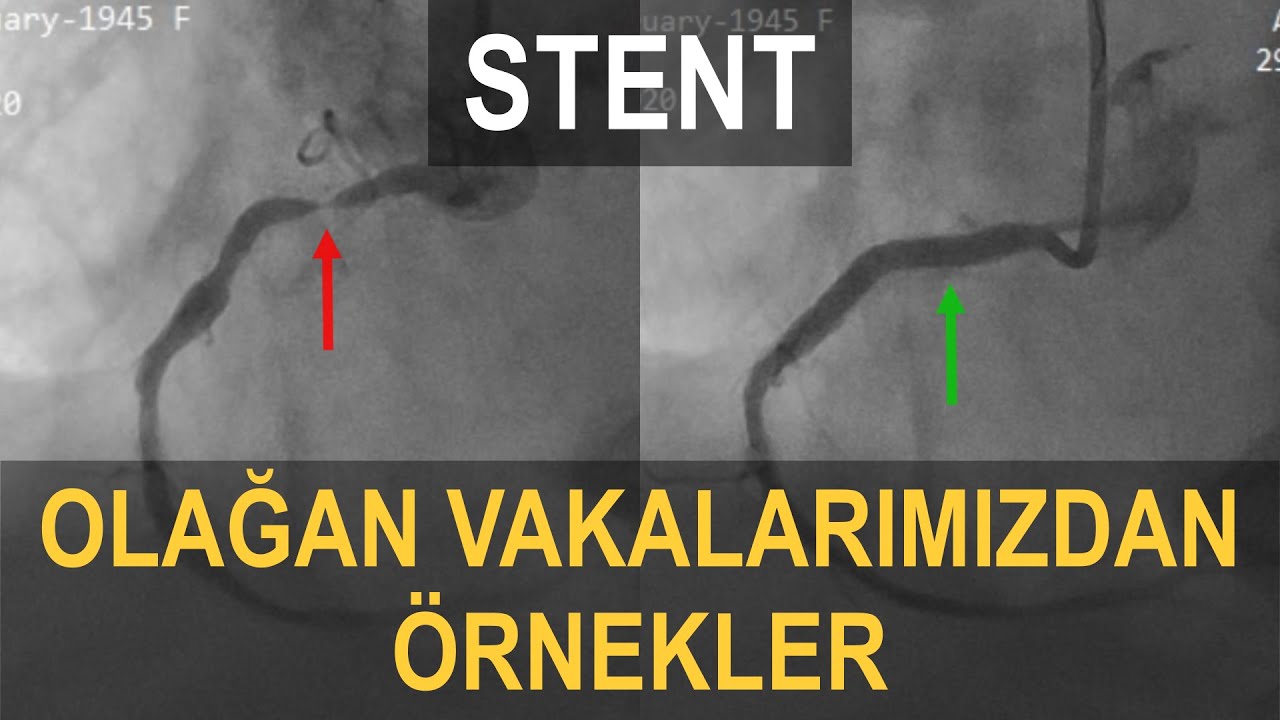
What is the probability of success for a stent procedure?
In general, the success rate is more than 90%. The probability of the procedure being successful decreases in the following situations: the patient being very elderly, the blockage having existed for a very long time (CTO), calcified or tortuous (curvy) vessel structure, chronic kidney failure, and inadequate interventional technique (lack of physician experience)… In summary, the success rate is different for every patient.
Will the patient’s condition worsen if the stent placement procedure fails?
In the event of failure, the condition of your vessel structure generally remains exactly as it was. Therefore, your complaints will not be worse than they were initially.
Is only one stent implanted at a time?
If there are problems in multiple vessels or in multiple locations within the same vessel, multiple stents can be placed in the same session. However, if the procedure has taken a long time, we may have to terminate it at that point to avoid using excessive amounts of dye and increasing the risk of kidney damage, and to minimize radiation exposure for both you and the doctors. We will complete the remaining part in a separate session.
What is the maximum number of stents that can be implanted in the heart?
Many people believe that only a specific number of stents can be placed in the heart—for instance, thinking that “no more than 5 stents can be implanted.” This belief is incorrect. While it is true that implanting a high number of stents increases the cumulative risks associated with each one, a cardiologist following current scientific data will always strive to resolve the issues using the minimum number of stents necessary. The real questions that should be asked are: “Is it truly necessary to implant this many stents?”, “Would medical therapy be sufficient?”, or “Could bypass surgery be a more appropriate option?” If these questions have been addressed and one of those alternatives is deemed more suitable, then implanting a large number of stents would indeed be the wrong choice. However, if those options are clinically inappropriate or technically unfeasible, the focus shifts from the number of stents to the indication (necessity) for the procedure. For example, consider a patient with complex narrowings in multiple areas of the three main heart vessels who suffers from chest pain even during light activity, despite taking numerous medications. Normally, bypass surgery would likely be the best choice for such a patient. But suppose this same patient also has severe lung disease (e.g., COPD) and it is predicted that they likely would not be able to be weaned off a ventilator after surgery. In this case, the vascular problems may necessarily be resolved with a high number of stents.
What is a drug-eluting stent?
Drug-eluting stents (DES) are stents that contain medication on their metal components. These drugs control the proliferation of vascular cells in the vessel wall where the stent makes contact, thereby preventing excessive tissue growth. This reduces the frequency of narrowing within the stent (ISR: In-stent restenosis). However, the development of in-stent narrowing is not solely dependent on whether the stent is drug-eluting or not. The patient’s genetic predisposition and technical inadequacies during the placement of the stent can also cause this.


Which is better: a drug-eluting stent or a non-drug-eluting stent? Which is the best stent?
In almost every case, drug-eluting stents are superior to bare-metal (non-medicated) stents. Depending on the patient’s clinical condition and vascular structure, on average, in-stent narrowing (ISR: In-stent restenosis) due to excessive tissue growth occurs in 15 out of every 100 people with bare-metal stents, compared to 5 out of every 100 people with drug-eluting stents. However, if we read the same data the other way: no problems occur in 85 out of every 100 people with bare-metal stents, and in 95 out of every 100 with drug-eluting stents. Today, bare-metal stents are almost never preferred. Speaking for myself (Dr. Şükrü Akyüz), I haven’t used them at all for years. Drug-eluting stents have also evolved significantly with technology. The latest generation of drug-eluting stents is better than the previous generations. However, “being better” does not mean there are “massive differences” between them. For instance, while the probability of re-narrowing in a top-quality, latest-release stent is 3% (in 3 out of 100 people), the rate for the previous generation of the same brand is around 5%. As you can see, there is a difference, but it is not as pronounced as the difference between drug-eluting and bare-metal stents.
What is a European stent?
Although the term “European stent” is frequently used among patients in daily life, this is actually an incorrect expression. What is meant is a drug-eluting stent. Drug-eluting stents are not only produced in Europe; they are manufactured in many countries, primarily the USA. There are also drug-eluting stent brands produced in Turkey.
What is a biodegradable stent?
While the idea of a stent dissolving and disappearing over time may seem logical, recent scientific research has proven that bioresorbable stents do not provide additional benefits to the patient compared to metallic ones. In fact, it was discovered that these stents carry higher risks, as certain parts may not dissolve properly and can cause blood clots within the vessel. For this reason, bioresorbable stents have currently been withdrawn from the market worldwide. Until improved versions are produced, the use of these stents is no longer an option at this time. One should not confuse “bioresorbable” (dissolving) stents with “bioabsorbable polymer” stents. Bioresorbable stents are those that disappear completely. In stents with bioabsorbable polymers, however, the part that dissolves is only the polymer layer on the metal surface that carries the medication; the metal scaffold remains without dissolving. Stents with bioabsorbable polymers are currently in use. However, the most important point that determines the quality of a stent is not whether it has a polymer or not, but rather the clinical results obtained in high-quality comparative scientific studies.
What is a drug-eluting balloon?
Balloons used to open vessels are called “drug-coated balloons (DCB)” if their outer surface is coated with a special medication. These drugs penetrate the vessel wall when the balloon is inflated, preventing excessive tissue growth. We do not yet have sufficient scientific data to prove they are as effective and safe as drug-eluting stents in large, main vessels. For this reason, they are currently generally preferred for narrow-diameter vessel blockages. For more detailed information about these balloons, you can visit our page titled “Drug-Coated Balloon.”

Is it better to insert a stent through the wrist or the groin?
In most patients, a stent can be inserted via both the wrist and the groin. The details are as follows:
- The most common complication in a stenting procedure is bleeding at the vascular entry site. This occurs less frequently at the wrist entry site compared to the groin, and the likelihood of it being serious is also lower. Even if it does occur, it can be easily controlled with manual pressure.
- The wrist route is more comfortable for the patient compared to the leg. The groin route, however, is more comfortable for the doctor.
- In the wrist route, there is no requirement to lie on your back for 8-12 hours after the procedure. Actually, if the groin entry site is closed with special closure devices rather than manual pressure, the requirement to lie on one’s back for a long duration is also eliminated for the groin route.
- Since the wrist artery has a small diameter, the probability of blockage is much higher than that of the groin artery; a blockage develops in 1 out of every 10 patients. However, because there is an additional (backup) artery in the wrist, even if the primary wrist artery is blocked by a clot, no problem develops thanks to the backup vessel; or rather, it is extremely rare. The probability of the groin artery becoming blocked is lower, but since it is the only artery leading to the leg, if it does become blocked, emergency stenting or surgery may be required.
- The wrist artery is more prone to catheter-induced spasms (contraction). Contraction can cause the vessel to squeeze the catheter, which in some patients may lead to difficulty in removing the catheter and severe pain during the process.
- The probability of developing an infection at the wrist entry site is much lower than at the groin. If an infection develops in the groin, it can sometimes lead to very serious consequences.
- Not every procedure and every patient is technically suitable for the wrist approach. Both the wrist anatomy must be appropriate (for example, the wrist artery should not be too thin or tortuous) and the doctor must be experienced in wrist procedures.
- In some patients, it may be necessary to use the groin route or the wrist route due to clinical and anatomical reasons.
- Whether it is the groin route or the wrist route, the procedure applied to the heart is the same.
In conclusion, the wrist should be preferred if possible. The most important reason for recommending the wrist is that bleeding—the most common complication—occurs less frequently and with less severity compared to the groin route. However, due to the details mentioned above, it is best to leave the final decision to the physician performing the procedure.
What precautions should be taken after stent placement?
You should inform your doctor if the following occur at the procedure site (groin or wrist):
- Bleeding (In such a case, you should apply manual pressure to the bleeding area and call 112)
- A gradually enlarging swelling (A swelling that does not exceed the size of a hazelnut is normal)
- Increasing redness (Slight redness, swelling, bruising, or tenderness is normal)
- Inflammatory discharge (Small amounts of transparent discharge from time to time is normal)
- Excessive pain (If your pain decreases over time, this is normal)
- Persistent numbness in the leg or wrist
- Fever
- If your complaints from before the stent—such as chest pain or shortness of breath—recur, rest for a few minutes or take sublingual medication. If your chest pain does not subside despite resting or taking sublingual medication, go to the nearest emergency department or call 112.
- Quit smoking; do not settle for just reducing it.
- Do not consume alcohol; at least reduce it (In the past, it was thought that consuming small amounts of alcohol, especially wine, could be beneficial for the heart. However, according to new scientific data, it is likely best not to consume alcohol at all. This is the recommendation of the latest European Society of Cardiology “Guidelines on Cardiovascular Disease Prevention”).
- Do not gain weight; if you are overweight, reduce your weight through a healthy diet and exercise program.
- Keep your cholesterol levels under control (by paying attention to what you eat and using medication).
- If you have diabetes or hypertension, keep them under control.
- Exercise regularly; at least avoid elevators, driving everywhere, and sitting constantly.
- Use your heart medications (especially blood thinners) regularly.
- Pay attention to what you eat (Details are mentioned below).

How should a patient who has had a stent implanted eat?
Remember that the Mediterranean-style diet recommended by international guidelines actually applies to everyone, whether they have cardiovascular problems or not. The difference for a patient with a stent is the necessity to adhere to these rules more strictly (See References).
- Eat a diet rich in vegetables and fruits. Ensure they are fresh and in season.
- Consume more nuts such as walnuts, hazelnuts, and almonds (unsalted and raw), fish, legumes (dried beans, kidney beans, chickpeas, lentils), and high-fiber foods.
- Do not eat too much bread. However, it is not correct to eat no bread at all. Prefer whole-wheat bread over white bread.
- Reduce sweets and sugary drinks (cola, soda, fruit juices, etc.); if possible, remove them from your life. Ask for water or mineral water with your meals.
- Stay away from processed meats (sausages, sucuk, salami, etc.). In fact, stay away from everything processed.
- Use less salt; do not exceed 5 grams per day.
- Stay away from fast-food products and snacks like chips and biscuits.
- Prefer low-fat or non-fat dairy products.
- Do not use trans fats like margarine. Cook your meals with healthier oils like olive oil or sunflower oil.
- Do not consume too much animal fat (saturated fats) like butter. Actually, this subject has become somewhat controversial with new data. That is, consuming none at all is likely not correct. For example, you can consume butter at breakfast. There is also no harm in eating eggs.
- You can eat up to 500 grams of lean red meat per week. However, we do not recommend eating offal (organ meats).
- You can also drink herbal teas, black tea, and coffee up to twice a day; however, excessive amounts may cause palpitations.
- Although plant-based nutrition is generally considered healthier, do not fall into the misconception that every plant-based food is beneficial and every animal-based food is harmful. For example, remember that white flour and refined sugar, which are known to be harmful, are plant-based; while fish, which is known to be beneficial, is an animal-based food.
- We also recommend reading our article titled “Can herbal treatment open blood vessels?“
Can stents prevent heart attacks?
We now clearly know that the stent procedure is life-saving when applied in emergency situations such as a heart attack. However, the stent procedure is often applied following the investigation of chronic complaints such as chest pain and shortness of breath, which are not emergencies but are bothersome to the patient. In these cases, the primary role of the stent is to relieve symptoms. The success of a stent in preventing a heart attack is actually similar to medication use alone in most cases. However, narrowings in the initial segments of large main vessels (for example, a narrowing in the vessel called the LMCA) are exceptions. In these areas, placing a stent is more successful in preventing heart attacks compared to medication use alone.
How long does a stent last? Can a stent become blocked?
After a technically successful stent procedure, the patient’s regular use of medications, control of risk factors such as high blood pressure and diabetes, and implementation of a healthy lifestyle significantly reduce the likelihood of the stent narrowing or becoming blocked. In complex cases, there are usually issues in more locations, and therefore, more stents are required. The greater the number and length of the stents implanted, the higher the probability of narrowing within the stent (in-stent restenosis) developing due to excessive tissue growth (a narrowing that reaches 100% of the vessel diameter and completely blocks blood flow is called an “occlusion”). However, this should not be interpreted as meaning that stents will likely narrow. Within 10 years, narrowing in the stent is seen in only 1 out of every 10 non-complex (routine) cases, while it occurs in 2 out of every 10 complex cases. Read the other way, narrowing does not develop in 90% of non-complex cases and 80% of complex cases. If narrowing is to develop, it occurs within the first year in most cases. Furthermore, in those who do develop a narrowing, a second procedure solves the problem in about half of the cases, and narrowing does not recur. The sudden blockage of a stent with a clot leading to a heart attack is a scenario seen in only 1 out of every 100 people. Although there are many reasons for this, the most common reason is the patient’s failure to use their blood-thinning medications. In summary, stents do not have a specific lifespan; in most patients, stents remain open for a lifetime.
How is stent blockage treated?
The first solution for in-stent narrowing or blockage is to insert another stent inside the existing one or to dilate the narrowing with a drug-coated balloon. The probability of re-narrowing is significantly reduced with this intervention. Very rarely, bypass surgery may be required for patients who experience recurrent in-stent narrowing problems.
How many years do patients live after receiving a stent?
Stents do not have a specific lifespan. It is not possible to know exactly how many years a patient receiving a stent will live. Estimated percentages can only be given by looking at the statistics of previous patients with similar characteristics. The most important factors negatively affecting these statistics are: technical inadequacies during the stenting procedure, advanced age of the patient, heart failure, heart valve disease, the presence of serious diseases in other organs, hypertension, diabetes, high cholesterol, smoking, non-compliance with medication use, and lack of social support.
Stent or bypass?
Cardiac surgeons and interventional cardiologists are two different groups of doctors who treat vascular problems. While cardiac surgeons resolve vascular issues through surgery (bypass), interventional cardiologists solve the same problems using non-surgical methods (complex stent procedures). For this important topic, we recommend that you read our detailed article titled “Stent or Bypass?“ and watch our sample case videos on the same page.

Prof. Dr. Şükrü Akyüz is an interventional cardiologist. His professional area of interest is the treatment of heart diseases using non-surgical methods. This includes the non-surgical opening of complex vascular occlusions using specialized stenting techniques.
References
5. Libby P, Bonow RO, and Mann DL, eds. Braunwald’s heart disease: A textbook of cardiovascular medicine, 12th ed. Philadelphia PA: Elsevier; 2022.
6. Brilakis E. Manual of chronic total occlusion percutaneous coronary interventions: A step-by-step approach, 3rd ed. Philadelphia PA: Elsevier; 2023.
7. Brilakis E. Manual of percutaneous coronary interventions: A step-by-step approach, 1st ed. Philadelphia PA: Elsevier; 2021.