

What is a heart spasm?
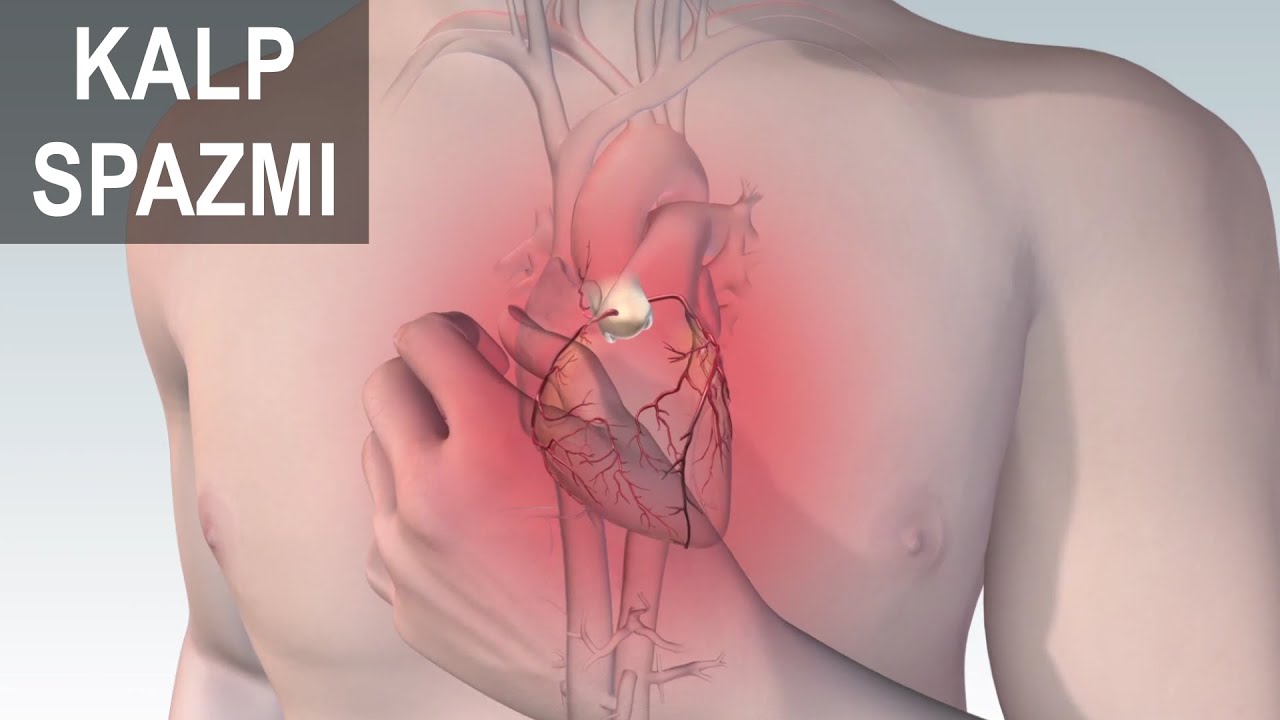
In some people, the blood vessels in the heart suddenly constrict. As a result, a narrowing develops in the vessel. This narrowing obstructs blood flow, and the heart tissue beyond the narrowing cannot receive sufficient oxygen. As a result, sudden chest pain occurs. This condition is called a heart spasm. Normally, blood vessels have the ability to widen when there is an increased need for blood flow and return to their original state once the need subsides. This is made possible by the muscle cells in the vessel walls. These cells allow the vessel diameter to change by contracting and relaxing. However, in some people, certain chemical substances in the blood—which bind to these cells and have a stimulating effect—cause them to contract unnecessarily, leading to vessel constriction and, consequently, temporary narrowing. In medical terms, “spasm” means “contraction.” A spasm may be triggered by factors such as stress, anxiety, or the use of stimulant medications, or it may occur spontaneously, particularly in the early morning hours. In such cases, the patient presents to the emergency room with sudden chest pain similar to that experienced during a heart attack.
How is a heart spasm diagnosed?
ECG is quite important in diagnosis. While findings indicating vessel narrowing are detected on the ECG while the patient has chest pain, it is observed that the ECG returns to normal once the chest pain subsides spontaneously or with medication. However, it is still necessary to prove that a classic heart attack is not present via an urgent angiography. While the cause of vessel occlusion in a heart attack is a clot, in heart spasm, it is constriction. Narrowing of the vessel is also detected during angiography in heart spasm. However, this narrowing resolves immediately with vasodilator drugs (e.g., nitroglycerin) administered directly into the coronary artery; that is, the vessel dilates. Conversely, narrowings developed due to fat accumulation (plaque) or clots in the vessel wall are not affected by these drugs. With this distinction, the diagnosis of heart spasm, or more accurately coronary vasospasm, is confirmed. Sometimes, the patient’s chest pain subsides spontaneously before an ECG can be taken, and therefore the ECG remains normal. In this case, if the doctor suspects heart spasm based on the nature of the patient’s complaints, they may request additional tests. For example, a 24-72 hour rhythm Holter device can be applied. This device continuously records the ECG. If chest pain occurs while the patient is wearing the device, it is seen that the ECG recording at that moment also deteriorates, and the diagnosis of spasm is made. Rarely, the diagnosis may not have been established up to this point, but suspicion still persists. In that case, the patient is taken for angiography, and a vasoconstrictor substance (acetylcholine) is administered directly into the coronary arteries. While normal vessels constrict partially and slightly, a vessel with a predisposition to spasm constricts excessively. In this way, the diagnosis becomes definitive.
How is a heart spasm treated?
In treatment; quitting smoking and alcohol, which are known to be triggers, avoiding stimulants such as excessive coffee and strong tea, and stress management are highly important. The use of anti-anxiety medications may be necessary for stress management. Most patients also require lifelong vasodilator drug therapy. These are medications known as nitrates and calcium channel blockers. These drugs bind to the sites where chemical substances would attach (cell receptors) and block them. Consequently, these chemical substances cannot find a place to bind and therefore cannot constrict the vessels.
References
- Byrne RA, Rossello X, Coughlan JJ, et al. ESC Guidelines for the management of acute coronary syndromes. Eur Heart J. 2023 Oct 12;44(38):3720-3826.
- Rao, S, O’Donoghue, M, Ruel, M. et al. ACC/AHA/ACEP/NAEMSP/SCAI Guideline for the management of patients with acute coronary syndromes. JACC. 2025;85 (22):2135–2237.