

Table of Contents
- What is a heart attack?
- What are the symptoms of a heart attack?
- What are the causes of a heart attack?
- What are the factors (risk factors) that increase the risk of heart attack?
- How to treat a heart attack?
- How is a heart attack diagnosed?
- How is a heart attack treated?
- Does a heart attack recur?
- Does the heart regenerate after a heart attack?
- Why did I have a heart attack when I was doing sports and eating healthy?
- What should I watch out for after a heart attack?
- References
What is a heart attack?
A heart attack is when a certain part of the heart is suddenly deprived of blood supply and is damaged by being deprived of oxygen. There are many reasons for the interruption of blood flow, but the most common cause is a sudden blockage of a heart vessel by a clot.
What are the symptoms of a heart attack?
The signs (symptoms) of a heart attack vary from person to person. Some people have very severe symptoms, others have severe symptoms. Some people have no symptoms at all; it is only much later that it is discovered by chance that the patient has had a heart attack in the past. Bn many people, symptoms that come and go for hours, days or weeks can be precursors to a heart attack. Sometimes there are no precursor symptoms at all. Most often the symptoms of a heart attack are as follows:
- There may be a feeling of discomfort, pain, pressure, burning or tightness in the center or left side of the chest. These are usually not felt in one spot, but in a more diffuse area. These symptoms can be felt in the shoulder, arm, back, neck, jaw or upper abdomen in addition to or without the chest.
- Cold, cold sweating, dizziness, fainting
- Indigestion, nausea, vomiting
- Severe weakness, fatigue, shortness of breath
- Fast, slow or irregular heartbeat
- Anxiety and fear of death
What are the causes of a heart attack?
- The heart does not get the oxygen it needs from the blood in its cavities, but through its own special vessels. However, in some people, the walls of these vessels gradually accumulate fat over the years. In some people, these weak places called plaques suddenly crack. The body's mechanisms immediately kick in and recognize this crack as a "wound" and try to repair it by closing it with a clot. However, either because the clot is too large or because of chronic stenosis in the cracked area, it may inadvertently completely can block it. Her 19 out of 20 heart attacks are caused by this mechanism. Since the heart tissue beyond the blocked area suddenly receives no oxygen, the tissues in that area if the vessel is not opened urgently begin to die and permanent damage develops. If the tissues die, the electrical balance cannot be restored rhythm disturbances can occur. Moreover, the heart's pumping power may decrease heart failure may develop. All of this can be fatal. In summary, sudden blockage of a heart vessel by a clot is by far the most common cause.
- Sudden and severe constriction of the heart vessels
- A clot in the heart vessels from elsewhere
- Congenital abnormal structure of the heart vessels
- Spontaneous rupture of heart vessels
What are the factors (risk factors) that increase the risk of heart attack?
- Advanced age (Heart attacks can occur at any age, but heart attacks are more common as we get older.
- Family history of heart attack (genetic predisposition)
- Hypertension
- High cholesterol
- Diabetes (Diabetes)
- Obesity
- Sedentary lifestyle
- Unhealthy eating habits
- Intense stress
- Cigarette addiction
- Substance abuse (cocaine and amphetamines etc.)
- Other rare causes
How to treat a heart attack?
- Call 112 immediately.
- Give aspirin (250-300 mg). Chewing the medicine allows it to pass more quickly into the bloodstream through the sublingual veins. Aspirin reduces the risk of dying from a heart attack due to its blood-thinning effect.
- If the patient is unconscious and you think they are having a heart attack, check if they are breathing and have a pulse. If the patient is not breathing or you cannot feel a pulse, start CPR. If you are not trained in CPR, it may be helpful to just press the chest 100-120 times per minute (2 times per second), even if you are not breathing into the patient.
How is a heart attack diagnosed?
When a patient presents to the emergency department with complaints suggestive of a heart attack, the first test performed is ECG (electrocardiography). The damaged area that cannot maintain its electrical balance usually shows up on the ECG. But sometimes the ECG does not show problems. So, a normal ECG can indicate a heart attack. is not does not mean In this case, a blood test is done. Some substances (troponin) escape from the damaged cells and enter the bloodstream, where they are detected in the blood test. Most patients are diagnosed at this stage. Sometimes it takes some time for these substances to reach a detectable level in the blood. Therefore, even if the first blood test is normal, the blood test is repeated a few hours later. During this whole process, if possible, an ECHO (echocardiography heart ultrasound) is also performed. ECHO can sometimes show that the heart tissue supplied by the blocked blood vessel has lost movement.
Isn't it too late to treat a heart attack while waiting for the results of a blood test?
Let us explain the logic behind the answer to this frequently asked question as follows: Let 100 people come to the emergency room with an important complaint such as chest pain. Of these In fact 20% are heart attacks; 80% are not. Most of these 80 people do not actually have a major problem (for example, muscle pain), but some of them may have another fatal illness (stomach perforation, ruptured aorta, lung clot, etc.). So, not every chest pain is a heart attack. Thanks to the above diagnostic approach, we will not accidentally, unnecessarily and perhaps harmfully perform emergency angiography and start the wrong treatment for 80 people who may have a similar complaint but have a problem other than a heart attack; we will also not miss those diseases.
Remember, during this waiting period, the patient is still being monitored in the hospital, i.e. in a safe environment where emergency intervention can be carried out. In fact, 15 out of 20 people who have a heart attack are diagnosed with a heart attack immediately after the first ECG. In order to prevent the remaining 5 people, who do not yet have ECG findings, but who are actually having a heart attack, from being sent home with the false assurance that “You are fine”, blood is taken immediately. This first blood test soon reveals that 4 of these 5 people are having a heart attack. The second blood test is done to make sure that the last 1 person, whose ECG, ECHO and first blood test are normal, but who is actually having a heart attack, is not overlooked. In summary, the key point in applying this approach is that it is not just a question of whether a heart attack is present or not, but also different emergencies causing the same complaint should be considered in the differential diagnosis. Because the treatment of each disease is very different and the basic principle of not giving the wrong treatment is a systematic approach.
How is a heart attack treated?
The treatment of a heart attack is to open the blood vessel as soon as possible to restore blood flow and, therefore, blood flow.without damage to the buyer is to deliver oxygen to the heart tissue. Therefore, emergency angioplasty and stent procedure is required. The angiogram identifies the blood vessel blocked by the clot, usually by inflating a balloon to break up the clot, and then a stent is inserted. The stent is a thin wire tube that acts as a scaffold to keep the vessel open. Today, this is the main treatment for a heart attack. However, stenting is not always possible or successful. In this case, emergency bypass surgery may be necessary. The longer it takes to treat a heart attack, the greater the damage. In settlements where emergency angioplasty and stenting are not available, strong clot-dissolving drugs (fibrinolytics) are administered intravenously to prevent damage to the heart until the patient is transferred. As a result, the patient gains time for the main treatment, a stent.
In the final drug treatment, two blood thinners are used in combination to prevent the stent from clotting. One of these is low-dose aspirin and the other is one of the drugs whose active ingredients are clopidogrel, ticagrelor or prasugrel. Cholesterol-lowering drugs (statins) are also started to reduce the accumulation of fat in the heart vessels and to reduce the risk of developing new stenoses. Heart failure, Hypertension and rhythm disturbances their own special medicines, if any, are added.
Does a heart attack recur?
Yes, this possibility exists. 1 in 5 people who have a heart attack will have a second one within 5 years. However, if you read it in reverse, many people will not have another heart attack. Improving lifestyle and keeping up with medications are very important in reducing this risk.
Does the heart regenerate after a heart attack?
Unfortunately, no. If treatment after an attack is delayed and heart cells are damaged, new heart muscle cells cannot replace the dead cells. Connective tissue cells repair the damage. However, unlike heart muscle cells, connective tissue cells cannot contract and contribute to pumping blood. Therefore, the remaining intact part of the heart has to work harder to maintain its pumping function. If there is a lot of dying tissue, this becomes harder to accomplish, resulting in heart failure develops. Starting treatment early is the most important step to prevent this.
Why did I have a heart attack when I was doing sports and eating healthy?
Heart attacks do not occur for a single reason. Many factors play a role, including your genetic predisposition, chronic stress and hypertension. It is true that exercising and eating a healthy diet can reduce the risk of heart attack, but it does not mean that the risk is "zero". Think of it this way: If you had not paid attention to leading a healthy life, you would probably have had a heart attack many years ago, not now. So, by paying attention to these things, you have postponed your heart attack for many years.
What should I watch out for after a heart attack?
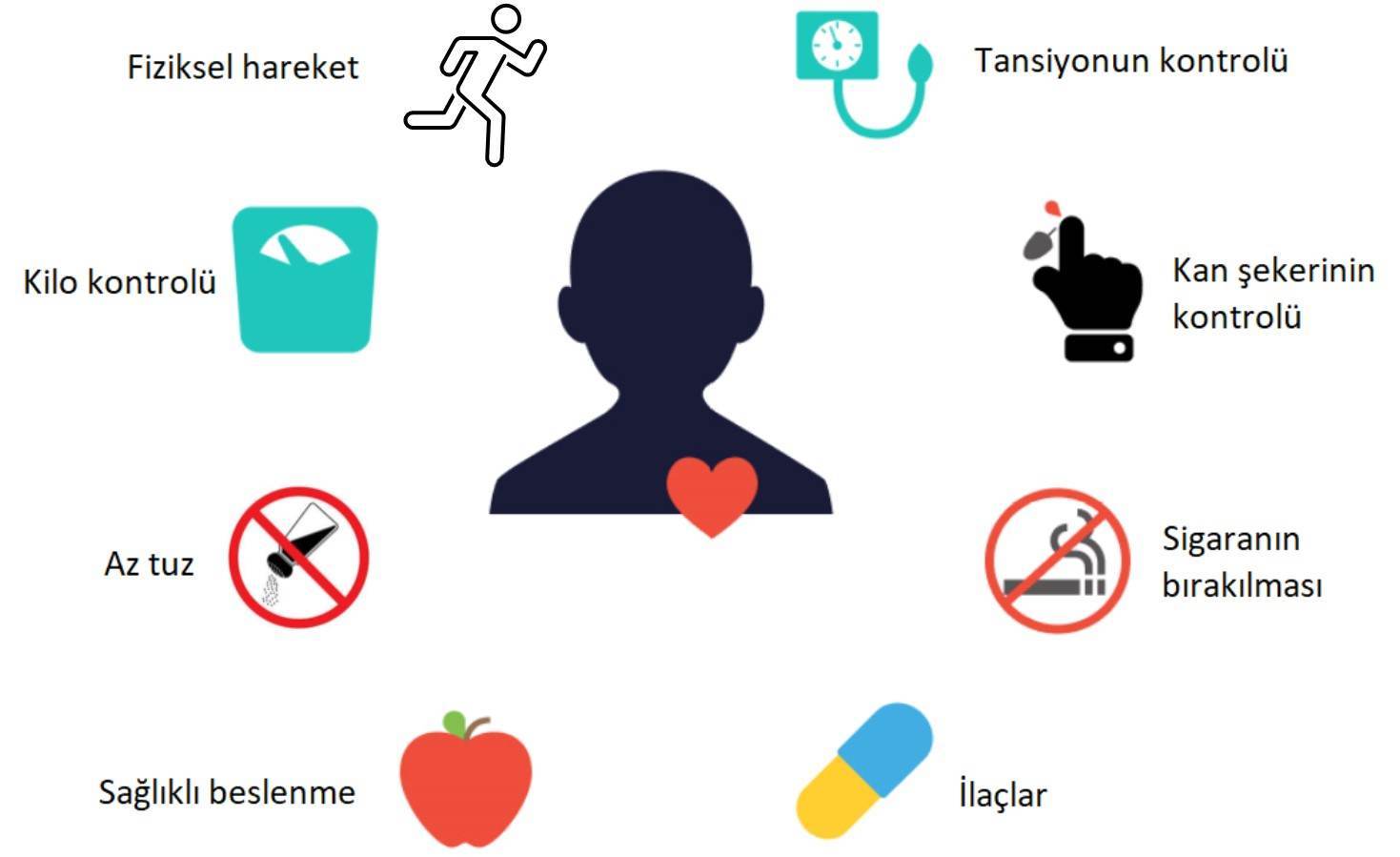
- If you have chest pain or a complaint similar to the chest pain or complaint you had when you had a heart attack a few minutes rest or take sublingual medication. If your chest pain does not go away despite rest or sublingual medication, go to the nearest emergency room or call 112.
- Stop smoking; don't just cut down.
- Don't drink alcohol; at least cut down (It used to be thought that drinking small amounts of alcohol, especially wine, could be good for the heart. However, new scientific evidence suggests that it is probably best not to drink alcohol at all. This is the recommendation of the latest European Society of Cardiology "Guidelines on Cardiovascular Disease Prevention").
- Do not gain weight; if you are overweight, reduce your weight with a healthy diet and exercise program.
- Keep your cholesterol levels under control (by watching what you eat and taking medication).
- Keep diabetes and hypertension under control.
- Exercise regularly; at the very least, avoid elevators, driving everywhere and sitting all the time.
- Take your heart medicines (especially blood thinners) regularly.
- Watch what you eat (more details below).
How should a heart attack patient eat?
Recommended by international guidelines Mediterranean style Remember that this way of eating applies to everyone, whether they have cardiovascular problems or not. The difference in a patient who has had a heart attack tighter to comply with the law (See. References).
- Eat a diet based on vegetables and fruits. Make sure they are fresh and in season.
- Eat more nuts such as walnuts, hazelnuts and almonds (unsalted and raw), fish, legumes (dried beans, kidney beans, chickpeas, lentils) and fiber.
- Don't eat too much bread. But, ever It is not right not to eat bread. Choose whole wheat bread instead of white bread.
- Cut down on sweets and sugary drinks (cola, soda, fruit juices, etc.); if possible, eliminate them from your life. Ask for water or mineral water with your meals.
- Avoid processed meats (sausages, pepperoni, salami, etc.). In fact, avoid everything processed.
- Use less salt; no more than 5 grams per day.
- Avoid snacks such as fast food, chips and biscuits.
- Choose low-fat or fat-free dairy products.
- Avoid trans fats such as margarine. Cook with healthier fats such as olive oil or sunflower oil.
- Do not consume too much animal fats (saturated fats) such as butter. In fact, with the new data, this issue has become somewhat controversial. Namely, ever It is probably not right not to consume it. For example, you can eat butter for breakfast. It is also okay to eat eggs.
- You can eat up to 500 grams of lean red meat per week. However, we do not recommend eating offal.
- You can also drink herbal teas, black tea and coffee twice a day, but too much can cause palpitations.
- Although a plant-based diet is generally considered to be healthier, do not be under the misconception that all plant foods are beneficial and all animal foods are harmful. For example, remember that white flour and refined sugar, which are known to be harmful, are plant foods, while fish, which is known to be beneficial, is an animal food.
- “Can veins be opened with herbal treatment?", which we recommend you also read.
References
- Byrne RA, Rossello X, Coughlan JJ, et al. ESC Guidelines for the management of acute coronary syndromes. Eur Heart J. 2023 Oct 12;44(38):3720-3826.
- Rao, S, O'Donoghue, M, Ruel, M. et al. ACC/AHA/ACEP/NAEMSP/SCAI Guideline for the management of patients with acute coronary syndromes. JACC. 2025;85 (22):2135-2237.
- Visseren FLJ, Mach F, Smulders YM, et al. ESC Guidelines on cardiovascular disease prevention in clinical practice. Eur Heart J. 2021 Sep 7;42(34):3227-3337.
- Arnett DK, Blumenthal RS, Albert MA, et al. ACC/AHA Guideline on the primary prevention of cardiovascular disease. Circulation. 2019 Sep 10;140(11):e596-e646.