

Table of Contents
- What is an aortic valve?
- What is aortic valve stenosis?
- What happens in aortic valve stenosis?
- What are the symptoms of aortic valve stenosis?
- What are the causes of aortic valve stenosis?
- Aort kapak darlığı kimlerde olur?
- How is aortic valve stenosis diagnosed?
- How fast does aortic valve stenosis progress?
- Can aortic valve stenosis be prevented?
- How is aortic valve stenosis treated?
- References
What is an aortic valve?
The aortic valve is the valve through which blood is pumped from the heart to the body. It is called the "aortic valve" because it is connected to the aorta, the largest vessel in the body. The function of the aortic valve is to allow the blood to pass into the aorta, but not to allow the blood to escape back into the heart.
What is aortic valve stenosis?
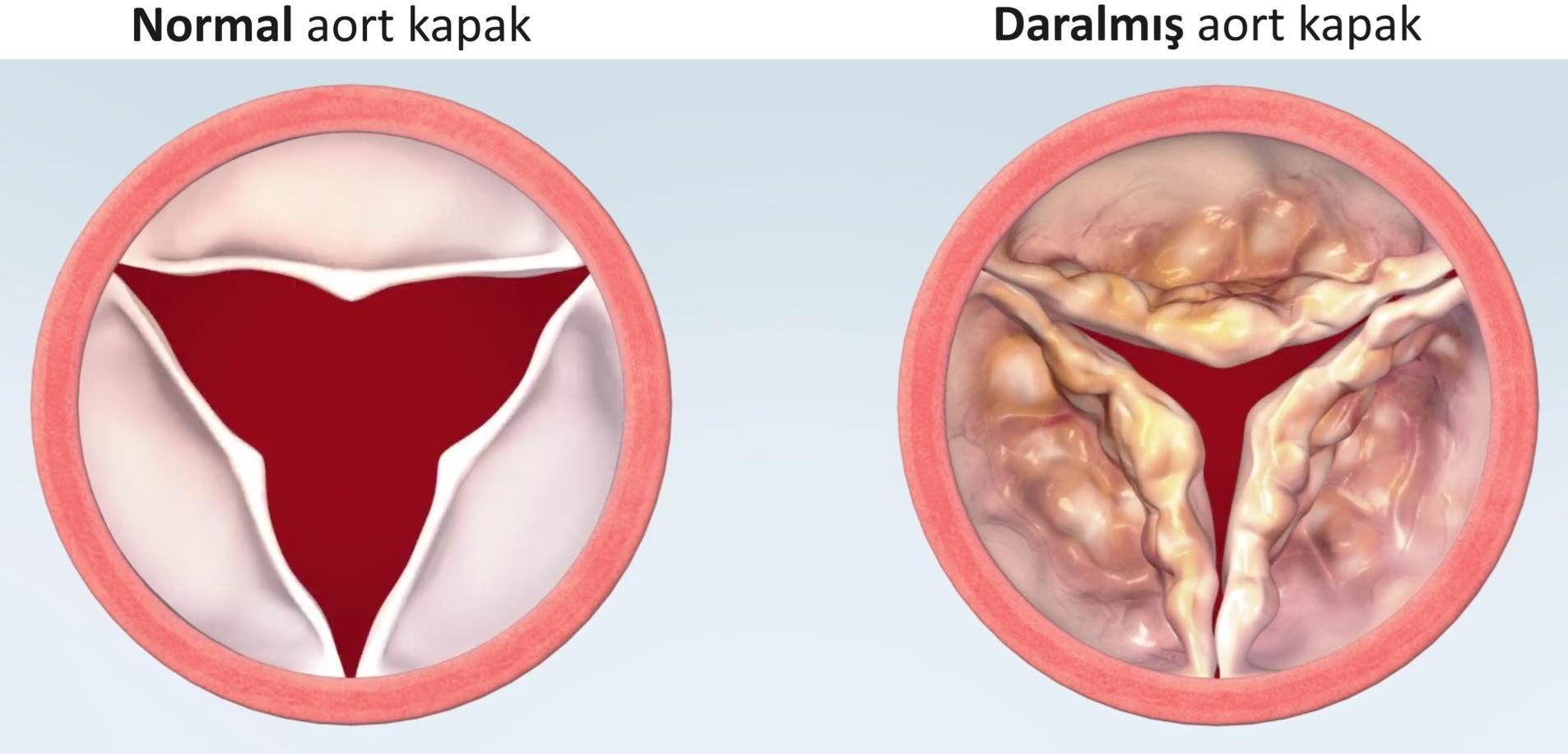
A problem with the opening of the aortic valve leads to a narrowing of the area through which blood passes, i.e. the valve area. This is called "aortic valve stenosis". In short, it can also be called "aortic stenosis" or "aortic stenosis".
What happens in aortic valve stenosis?
When the aortic valve is narrowed, up to a certain point, the blood can pass through the stenosis at the same rate. However, after a certain point, when the stenosis becomes too great, the blood cannot pass through the stenosis in sufficient quantity even if it increases its speed. This causes the main pumping chamber of the heart, the left ventricle, to exert more effort, which in turn causes the left ventricle to thicken and become less powerful. Eventually, over time, the heart wall hardens and heart failure (insufficiency) develops.
What are the symptoms of aortic valve stenosis?
Patients most often complain of the following complaints (signs, symptoms):
- Quick fatigue
- Shortness of breath
- Chest pain
- Palpitations
- Dizziness
- Fainting
In mild or moderate stenosis, no complaints are expected. The stenosis must reach an advanced (severe) stage for the patient to complain. The severity of these symptoms can be very mild or very pronounced. Not every patient has to feel all of the symptoms listed above; each patient may suffer from a different symptom. Sometimes, aSome patients with mid-valve stenosis feel no symptoms or are unable to recognize and identify it, even though the condition is serious. If advanced aortic valve stenosis is left untreated, heart failure will develop and symptoms and signs of heart failure will be added to the picture.
What are the causes of aortic valve stenosis?
- Kcalcification of the apex With age, the aortic valve becomes calcified (degenerated). In fact, just as it is considered normal for hair to turn gray with age, it is also normal to have some calcification of the valve with age. But, unfortunately, some people have too much calcification. Sometimes calcification is caused by chronic kidney failure or uncontrolled Hypertension In most cases, it is not clear why some people develop arthritis more often than others, although it may be due to an obvious problem such as arthritis.
- Congenital abnormalities: The aortic valve is normally made up of three parts. In some people congenital abnormally consists of two parts. This is called a "bicuspid aortic valve". Bicuspid aortic valve is the most common congenital heart disease. On average, it is present in one in every 100 people. The bicuspid valve can have problems both in opening and closing. Unlike calcification, it shows symptoms at a relatively younger age (in the 40s and 50s).
- Damage caused by infections: Microorganisms, especially bacteria, can be either direct (infective endocarditis) or indirect (romatismal fever) can damage the heart valves. Aortic valve stenosis due to rheumatic fever develops when a childhood pharyngitis or tonsil infection infects the heart valves due to a problem with the immune system. This stenosis develops years later and patients almost always have mitral valve stenosis is also available.
- Other reasons: Other rare conditions such as chronic kidney failure, autoimmune diseases such as SLE (Lupus), radiotherapy (radiation therapy) to the chest area can also cause aortic stenosis.
Aort kapak darlığı kimlerde olur?
Aortic valve stenosis is most common in the elderly. Especially after the age of 70, the incidence increases exponentially. Aortic stenosis can also accompany other diseases, in which case younger people are affected. Rarely, babies can also be born with defects in aortic valve development.
How is aortic valve stenosis diagnosed?
The most striking finding on cardiac examination is the presence of a murmur (blowing sound) when listening to heart sounds. A murmur does not always mean stenosis, but it is a reason to suspect stenosis. In this case, doctors will order the following tests:
- ECG (Electrocardiography): It measures the electrical activity of the heart. This can detect rhythm disturbances caused by valve stenosis and indirectly show thickening of the heart wall.
- ECHO (Echocardiography; ultrasound of the heart): It is a film of the heart using sound waves. It is the main test in the diagnosis of aortic valve stenosis. Both the narrowing of the valve is seen directly and the severity of the stenosis is calculated by determining that blood passes through the narrow area faster. Sometimes, when a good image cannot be obtained with a classical (superficial) ECHO, it can be performed through the esophagus. ECHO (TEE) may be necessary.
- Chest X-ray The heart may appear abnormally enlarged due to aortic valve stenosis. It may also be found that the aortic vessel is dilated due to the effect of the stenosis. Basically, it is useful in differentiating other diseases such as lung disease.
- CT (Computed tomography): In some patients who are difficult to diagnose by ECHO, the degree of stenosis can be estimated by looking at the amount of calcium in the valve.
- MRI (Magnetic resonance imaging; MRI): It is used to detect aortic valve stenosis and its degree when ECHO does not provide a good quality image or when there is a discrepancy between ECHO and symptoms.
- Cardiac catheterization: When quality images cannot be obtained on ECHO or when there is a discrepancy between ECHO and patient complaints, aortic valve stenosis can be detected by taking measurements with catheters passing through the valve.
- Effort test (treadmill): Some patients become so accustomed to the negative effects of a gradually worsening (narrowing) valve that they unknowingly limit their physical movements in their daily lives. When asked "Do you have any complaints?" "No, I am fine". However, ECHO may reveal severe aortic stenosis. In this case, doctors may want to rush the patient, push the heart and assess more objectively whether the patient's complaints are really there. Some patients who claim to have no complaints are actually found to tire very quickly on a stress test. Thus, it is not mistakenly assumed that the patient has no complaints and the time to intervene on the valve is not delayed.
How fast does aortic valve stenosis progress?
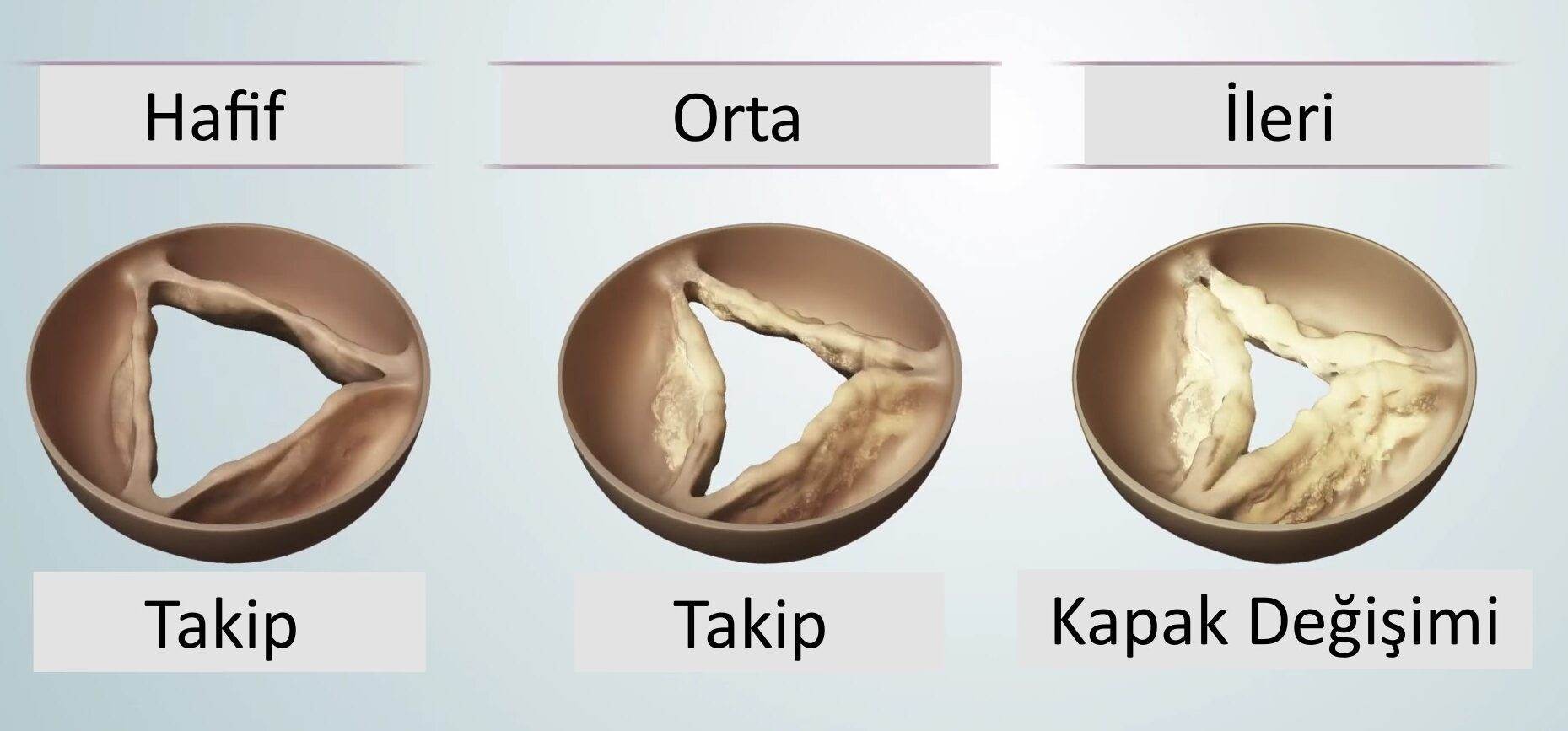
Aort kapak darlığı hafif ya da orta derecede ise hastada şikayete neden olmaz; hayati sorunlarla da karşılaşılmaz. Bu tür hastaları belli aralıklarla darlığın ilerleyip ilerlemediğini kontrol etmek için EKO ile takibe almak yeterlidir. İleri derecedeki darlıkta ise tedavi gerekir; çünkü, tedavi edilmediğinde hayati risk taşır.
İlerleme hızı kişiden kişiye değişir. In some people, aortic valve stenosis progresses very slowly and it takes many years for symptoms to appear. In others, the process is very rapid; the stenosis to a serious level in a few months ulaşabilir.
Can aortic valve stenosis be prevented?
Unfortunately, it cannot be prevented. Although measures such as a healthy diet, lifestyle changes and medication can help protect the heart vessels, they cannot prevent aortic valve stenosis from progressing. A method to reduce calcification has not yet been found.
How is aortic valve stenosis treated?
Since aortic valve stenosis is a mechanical problem, the valve heart surgery ile ya da ameliyatsız yöntem (TAVI) with It needs to be replaced by installing an artificial cover.
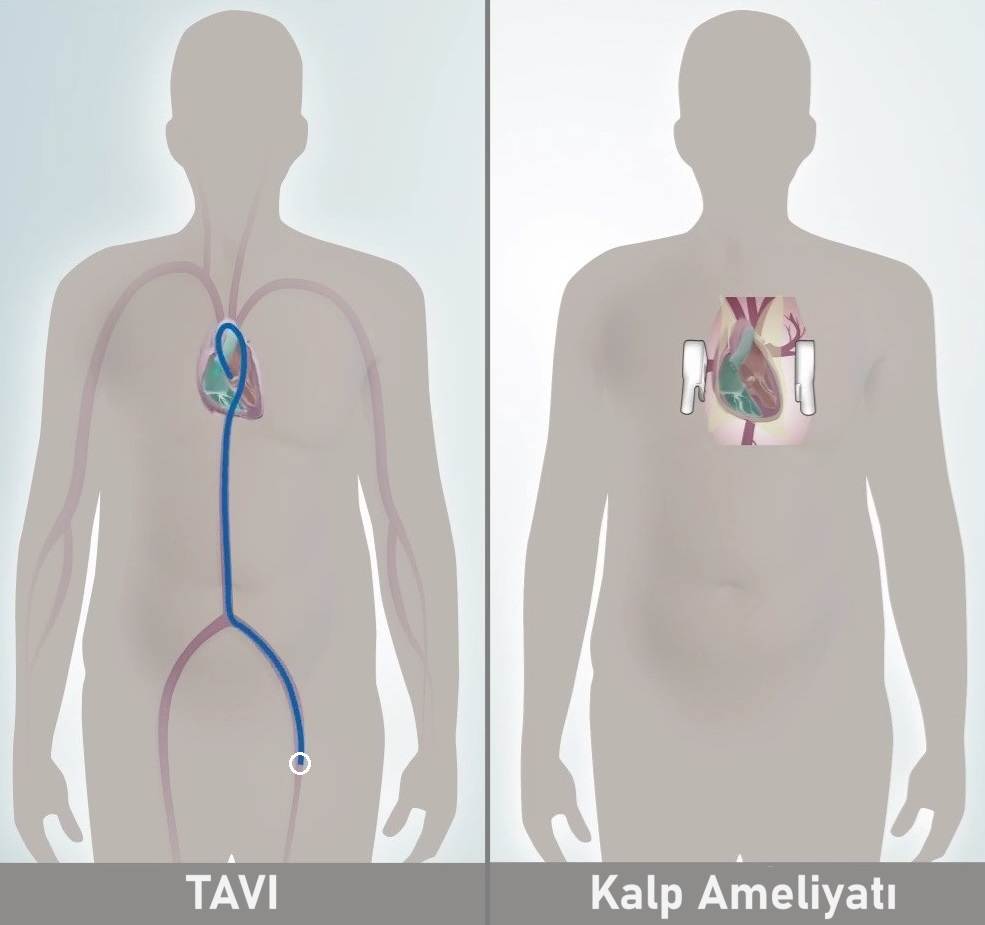
- Heart valve surgery: In this operation, the narrowed aortic valve is removed and replaced with an artificial heart valve. Klasik kapak surgery involves a full (long) incision in the chest, whereas the newer (alternative) methods involve a half incision (small incision). Small incisions are also called "minimally invasive" or "closed" (in fact, they are not "closed"; after all, there is an "incision" in the chest, albeit a small one). In robotic surgery, only holes are made in the chest rather than incisions. But, in all cases, the heart is stopped. When the heart is stopped, a device called a heart-lung pump is used to send blood to the body. For more detailed information about heart valve surgery, please contact to our article you can also take a look.
- TAVI (Kalp kapağının ameliyatsız yöntemle değiştirilmesi): Eskiden kapak değişimi sadece ameliyatla yapılırdı. Gelişen teknoloji sayesinde artık bacak (kasık) damarı yoluyla ameliyatsız yöntemle de aort kapak değiştirilebilmektedir. Buna TAVI yöntemi denilmektedir. TAVI yöntemi hakkında daha detaylı bilgi için ilgili to our article you can also take a look.

Prof. Dr. Şükrü Akyüz, girişimsel kardiyologdur. Uzmanlık alanı, kalp hastalıklarının ameliyatsız yöntemler ile tedavisidir. TAVI dahil olmak üzere yapısal kalp hastalıkları işlemlerinin proctor (eğitmen) ve konsultanıdır.
- Balloon valve expansion: It is performed non-surgically with balloon catheters sent to the heart through a leg vein. It is called "balloon valvuloplasty". It is based on the principle that the area of stenosis in the valve is widened by the tearing effect by inflating a balloon set at the level of the narrowed valve. No artificial valve is inserted. This method is often preferred in children because if the valve is replaced, the artificial valve will not grow as the child grows and will be too small for the patient in adulthood. Unfortunately, the beneficial effect of the balloon does not last long and needs to be repeated from time to time. Valve replacement after ballooning in adults very quickly tekrar daraldığının fark edilmesi nedeniyle artık çok nadiren uygulanmaktadır; yerini TAVI’ye bırakmıştır. Bazen yetişkinlerde acil durumlarda hastada geçici bir rahatlama sağlamak için yapılır. Sonuçta, asıl tedavi kapak değişimidir.
- Medication BlessI'm sorry to say that patients unfortunately they carry a very high risk ve TAVI yöntemine bile uygun değildirler. In this case, medicines are used (palliative care). İDrugs kcannot prevent the progression of stenosis of the apex, but at least they provide symptom relief. Other conditions that are common in patients with aortic valve stenosis, such as hypertension and heart rhythm disorders, also need to be treated with their own medication. This is because these conditions increase the negative effects of aortic valve stenosis.
Biyolojik kapak mı, metal kapak mı daha iyidir?
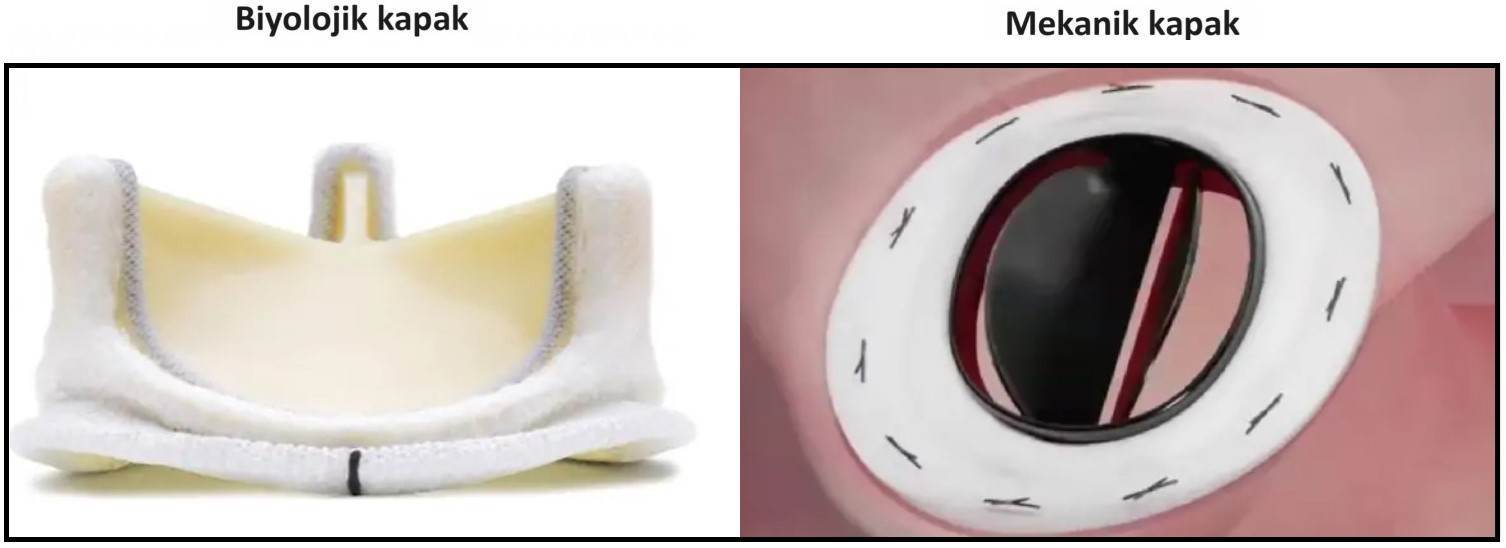
There are two types of artificial heart valves: Mechanical valves and biological valves. Mechanical valves are hinge-like structures (Instead of "metal" cover, it is more correct to use the term "mechanical" cover). Pıhtı kapmaya eğilimli olduklarından varfarin adlı güçlü bir kan sulandırıcı ilacın for life kullanılması zorundadır. Bt is a difficult medicine to use, often interacting with other medicines and some foods. Mechanical caps are very durable. They do not deteriorate easily and work for a very long time; the need for a second replacement is lower than with biological valves. Therefore, they are often preferred in relatively younger patients (<50 years).
Biological valves are made from the heart membrane of pigs or cattle. They do not clot easily; therefore, warfarin is not required. This provides considerable comfort to the patient. However, the disadvantage of these valves is that they fail relatively earlier than mechanical valves. Therefore, they are often preferred in older patients (>65 years) or in cases where warfarin use is risky (e.g. pregnancy).
50 ila 65 yaş arası hastalarda duruma göre biyolojik kapak da mekanik kapak da tercih edilebilir. Ama, burada yazdıklarımızdan çok daha fazla detay bulunur ve nihai kapak tercihi doktorla hasta arasında her iki kapak türünün artıları ve eksileri detaylıca konuşularak verilir.
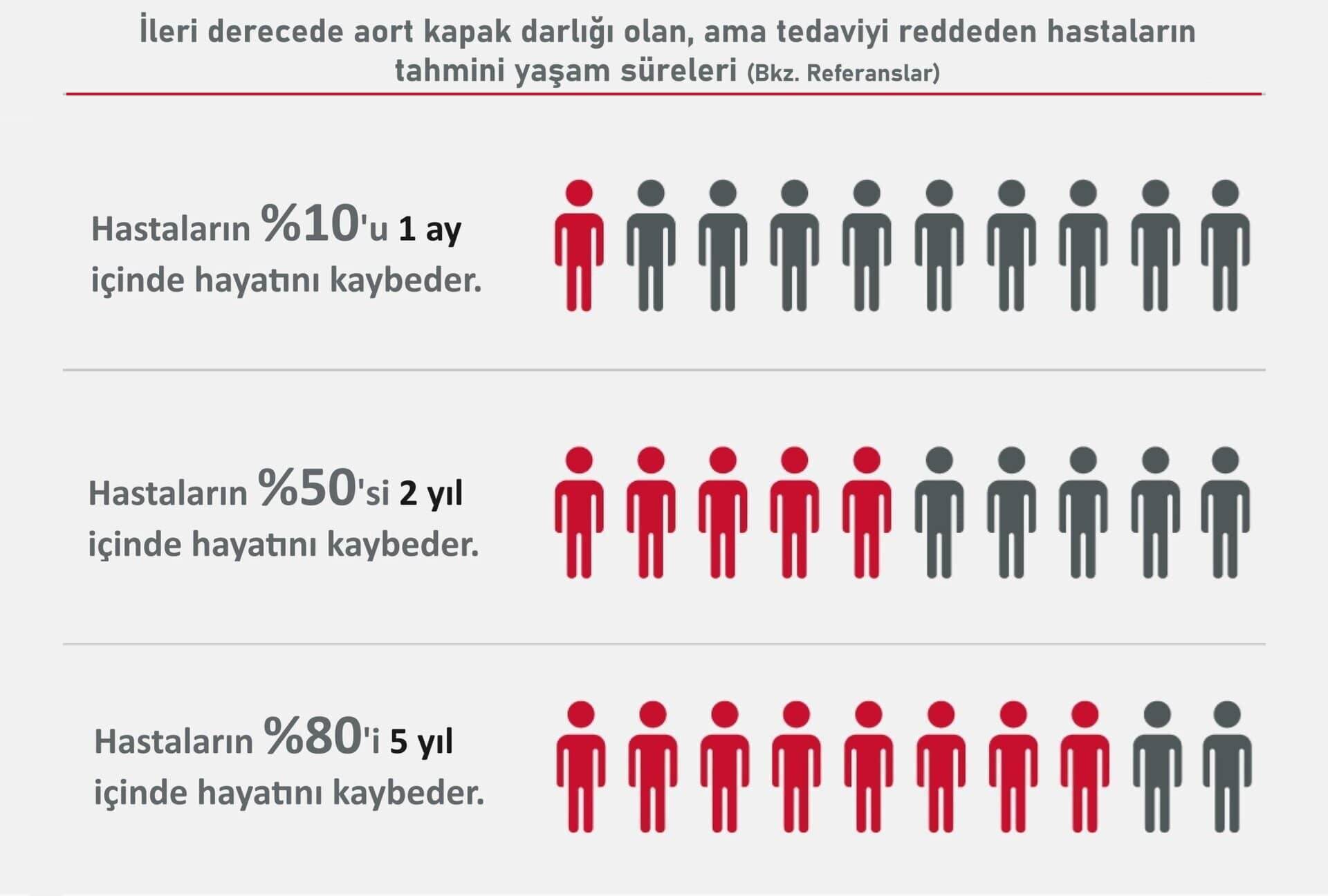
Ciddi aort kapak darlığı tedavi edilmezse hastaya ne olur?
Ciddi aort kapak darlığının tek tedavisi kapağın yenilenmesidir. İlaçlar sadece belli bir süreliğine nefes darlığı gibi belirtileri gidermeye yardımcı olurlar; ama ana sorun giderek kötüleşmeye devam eder.
Aort kapak ameliyatı kaç saat sürer? TAVI kaç saat sürer?
Açık kalp ameliyatları genellikle 4 saat; TAVİ ise ortalama 1 saat sürer. Hastadan hastaya klinik ve anatomik özellikler değişebileceğinden bu süreler daha kısa ya da daha uzun olabilir.
Aort kapak ameliyatından ve TAVI'den sonra iyileşme süresi ne kadardır?
İyileşme süreci uygulanan yönteme göre değişir. Ameliyat olan hastalar genellikle birkaç gün hastanede kalır ve tam iyileşme birkaç hafta sürer. TAVI’de ise genellikle operasyondan sonra ertesi gün hasta taburcu edilir ve iyileşme süresi çok daha kısadır.
Aort kapak ameliyatı ve TAVI'nin riskleri nelerdir?
Her açık kalp ameliyatında olduğu gibi ciddi riskler (komplikasyonlar) söz konusu olabilir. Bu risklerin çoğu, TAVI’de de görülebilir. Riskler hakkında daha detaylı bilgi için heart valve surgery and TAVI You can also take a look at our sections.
- Blood leakage around the artificial valve (paravalvular leak)
- Permanent pacemaker the need for
- Serious bleeding
- Heart rhythm disorders
- Infection
- Acute renal failure
- Heart failure
- Inflammation of the pericardium
- Paralysis (stroke)
- Death
References
- Otto CM, Nishimura RA, Bonow RO, et al. ACC/AHA Guideline for the management of patients with valvular heart disease. J Am Coll Cardiol. 2021 Feb 2;77(4):e25-e197.
- Vahanian A, Beyersdorf F, Praz F, et al. ESC/EACTS Guidelines for the management of valvular heart disease. Eur Heart J. 2022;43(7):561-632.
- Baron SJ, Magnuson EA, Lu M, et al. Health status after transcatheter versus surgical aortic valve replacement in low-risk patients with aortic stenosis. J Am Coll Cardiol. 2019;74(23):2833-2842.
- Leon MB, Mack MJ, Hahn RT, et al. Outcomes 2 years after transcatheter aortic valve replacement in patients at low surgical risk. J Am Coll Cardiol. 2021;77(9):1149-1161.
- Baron SJ, Ryan MP, Chikermane SG, et al. Long-term risk of reintervention after transcatheter aortic valve replacement. Am Heart J. 2024;267:44-51.
- Otto CM. Timing of aortic valve surgery. Heart. 2000;84(2):211-218.
- Malaisrie SC, McDonald E, Kruse J, et al. Mortality while waiting for aortic valve replacement. Ann Thorac Surg. 2014;98(5):1564-1571.