
What is mitral valve stenosis?
Heart valves are a type of door that allows blood to pass in only one direction. The mitral valve is one of the four valves of the heart. Mitral valve stenosis is the narrowing of the valve that controls the blood flow between the left atrium and the left ventricle of the heart. Mitral valve stenosis is also briefly called mitral stenosis (MS). Mitral stenosis prevents blood from passing easily from the left atrium to the left ventricle. Over time, this can cause heart rhythm disturbances, heart failure, stroke due to blood clots (embolism), and death.


Who is affected by mitral valve stenosis?
Mitral valve stenosis is much more common in women than in men. In developed countries, mitral valve stenosis is frequently seen at advanced ages (the 50s and 60s). In economically disadvantaged countries, however, it appears at much younger ages.
What are the causes of mitral valve stenosis?
- Rheumatic fever: This is the most common cause. This condition is also referred to as rheumatic mitral stenosis. It is colloquially known as a “throat infection hitting the heart.” During a bacterial (not viral) tonsillitis or pharyngitis infection experienced in childhood, immune system cells become activated to destroy the bacteria. However, a protein identical to one found in bacteria is also present in the structure of some people’s heart valves. The defense cells cannot distinguish this protein from the bacterial protein, and while attacking them, they accidentally attack the heart valve tissue as well. Although the valve tissue, which becomes inflamed as a result of the attack, begins to heal, its structure deteriorates and hardens over months or years. Stenosis, and sometimes leakage, develops in the valve whose elasticity is impaired. This entire process can take many years, and as a result, the patient may only feel their first symptoms years later.
- Age-related calcification: These types of stenoses are caused by the accumulation of calcium on the valve. Treating this type of stenosis, even with surgery, is quite difficult. Fortunately, in most people, it only causes mild or moderate stenosis and often does not require treatment.
- Congenital (Birth-related): Generally identified during infancy.
- Radiation therapy: Radiation therapy applied for certain types of cancer in the chest area can also damage the mitral valve, causing it to thicken and harden. Typically, it manifests itself 20 to 30 years after the radiation treatment.
What are the symptoms of mitral valve stenosis?
Mitral valve stenosis progresses gradually. It does not produce any symptoms for years when it is mild or moderate. Symptoms usually appear when the valve area through which blood passes falls to a critical level, i.e., smaller than 1.5 cm². The most common symptoms are as follows:
- Easy fatigue and shortness of breath: These are the most common symptoms. They usually occur while working or climbing a hill. In advanced stenosis, shortness of breath may occur even at rest.
- Palpitations: Because less blood passes through the narrow opening, the heart has to work faster to send the same amount of blood to the body. This can cause a feeling of palpitations in the patient.
- Stroke (Paralysis): Due to the stenosis, pressure increases in the left atrium of the heart, the atrium enlarges, and sometimes a rhythm disorder called atrial fibrillation (AF) develops. This can lead to the formation of a clot in the heart, which can then break loose and travel to the brain via the bloodstream, causing a stroke.
- Coughing up blood (Hemoptysis): Blood may appear during coughing as a result of the increased pressure in the left atrium also being reflected in the pulmonary (lung) vessels.
- Swelling in the abdomen or legs (edema)
How is mitral valve stenosis diagnosed?
- ECHO (Echocardiography; heart ultrasound): It is the most important test used in diagnosis. With this device, which works using sound waves, images of the heart are obtained, and whether the valve is narrow can be easily understood. Sometimes, in order to obtain a clearer image, an ECHO through the esophagus (transesophageal echocardiography; TEE) may be required.
- ECG (Electrocardiography): ECG measures the electrical activity of the heart. It is used to detect rhythm disturbances related to mitral stenosis. Electrical changes due to the enlargement of the left atrium can also be noticed.
- Chest X-ray: It shows the condition of the heart and lungs. Enlargement of the atria can be detected.
- CT (Computed tomography)
- MRI (Magnetic resonance imaging)
- Cardiac catheterization
Can mitral valve stenosis be cured?
Mitral valve stenosis does not heal on its own; in fact, it is a disease that progresses over time.
Can someone with mitral stenosis experience problems during pregnancy?
If a woman with mitral valve stenosis wishes to become pregnant, she should first consult with her doctor and be informed about the risks. This is because pregnancy causes the heart to work much harder. How the heart handles this additional load in those with mitral valve stenosis depends on the severity of the stenosis and the heart’s pumping power. In cases of critical valve stenosis, pregnancy can be quite problematic and may pose a life-threatening risk to both the mother and the baby.
How is mitral valve stenosis treated?
Medications can help alleviate symptoms, but they do not correct the underlying valve disease. Diuretics (heart medications known as water pills) may be used to reduce fluid accumulation in the lungs, blood thinners to prevent clot formation, or drugs used to control heart rhythm. The narrowing of the mitral valve can be treated through surgery or a non-surgical method (mitral balloon). The choice of treatment method depends on the cause of the mitral stenosis, the stiffness of the valve, and the surgical risk.
What is mitral balloon treatment?
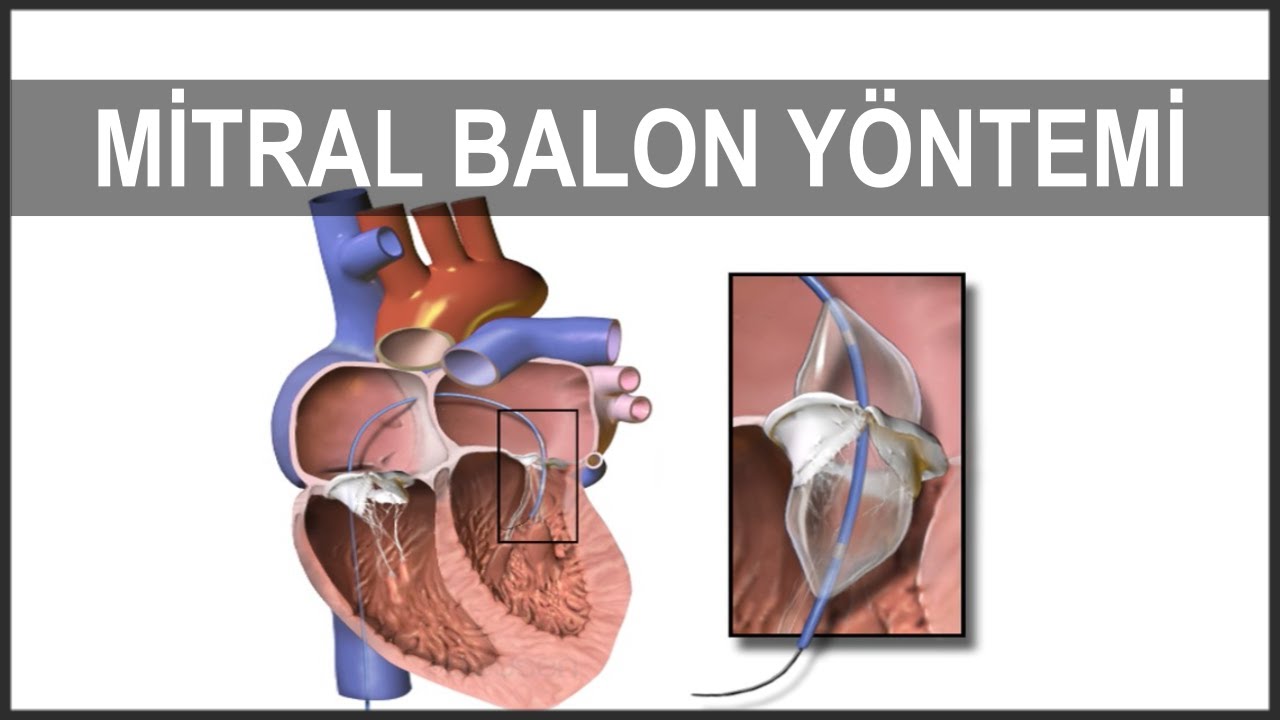
A balloon is sent to the heart through a vessel in the groin. The balloon is aligned exactly where the narrowing is located and then inflated. The inflating balloon tears the adhesions causing the narrowing, thereby widening the valve area. As the blood flow increases, the patient’s symptoms improve. In this method, there is no need to cut the chest cage or stop the heart. However, it is not a suitable treatment method for everyone. In such cases, surgery is often required. In surgery, valve replacement (implanting an artificial valve) is the preferred method rather than repair.

Prof. Dr. Şükrü Akyüz is an interventional cardiologist. His area of expertise is the non-surgical treatment of heart diseases, including mitral balloon procedures.
How long does recovery take after treatment, whether surgical or non-surgical?
Full recovery after surgery takes several weeks. In the non-surgical method, however, most patients are discharged the next day, and a much faster recovery is achieved compared to surgery. In some cases where treatment is delayed, the increased pressure in the pulmonary artery (pulmonary hypertension) may have become permanent, and unfortunately, a full recovery may not be possible.

References
- Otto CM, Nishimura RA, Bonow RO, et al. ACC/AHA Guideline for the management of patients with valvular heart disease. J Am Coll Cardiol. 2021 Feb 2;77(4):e25-e197.
- Vahanian A, Beyersdorf F, Praz F, et al. ESC/EACTS Guidelines for the management of valvular heart disease. Eur Heart J. 2022;43(7):561-632.
- Libby P, Bonow RO, and Mann DL, eds. Braunwald’s heart disease: A textbook of cardiovascular medicine, 12th ed. Philadelphia PA: Elsevier; 2022.