Table of Contents
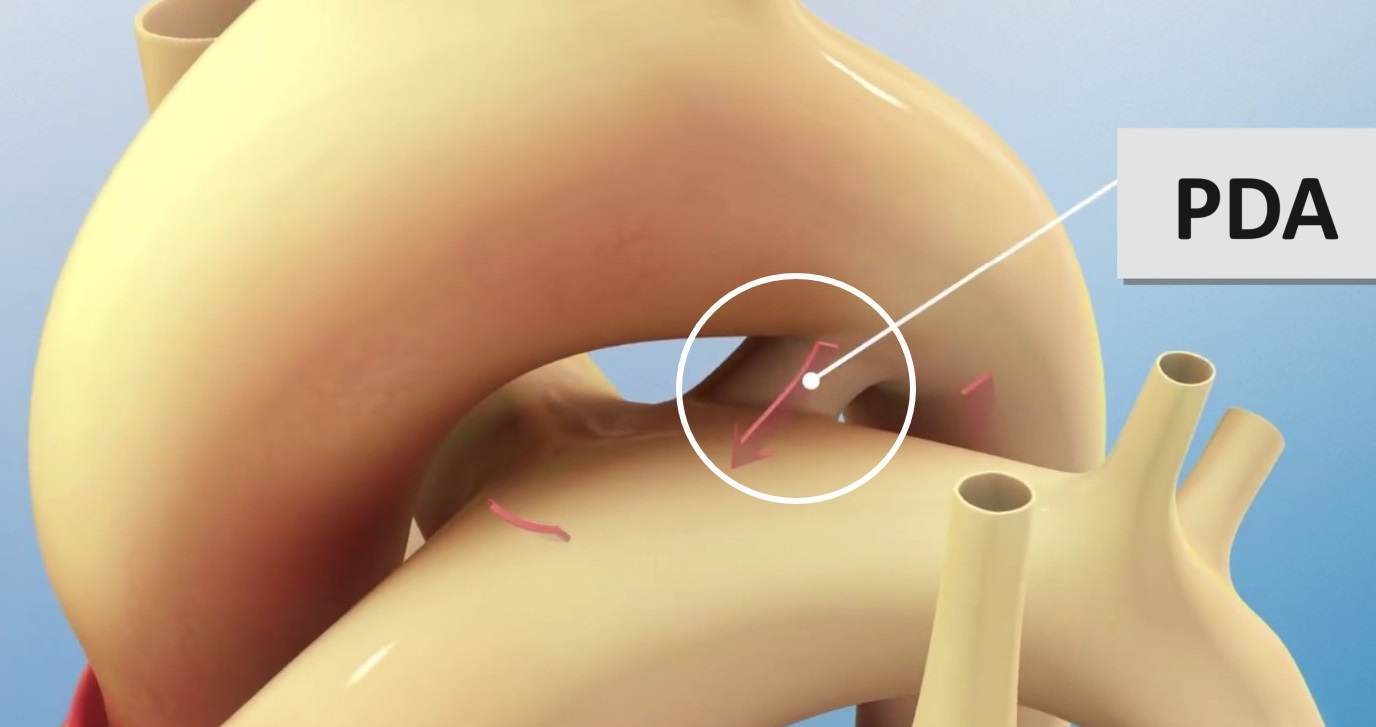
What is a PDA?
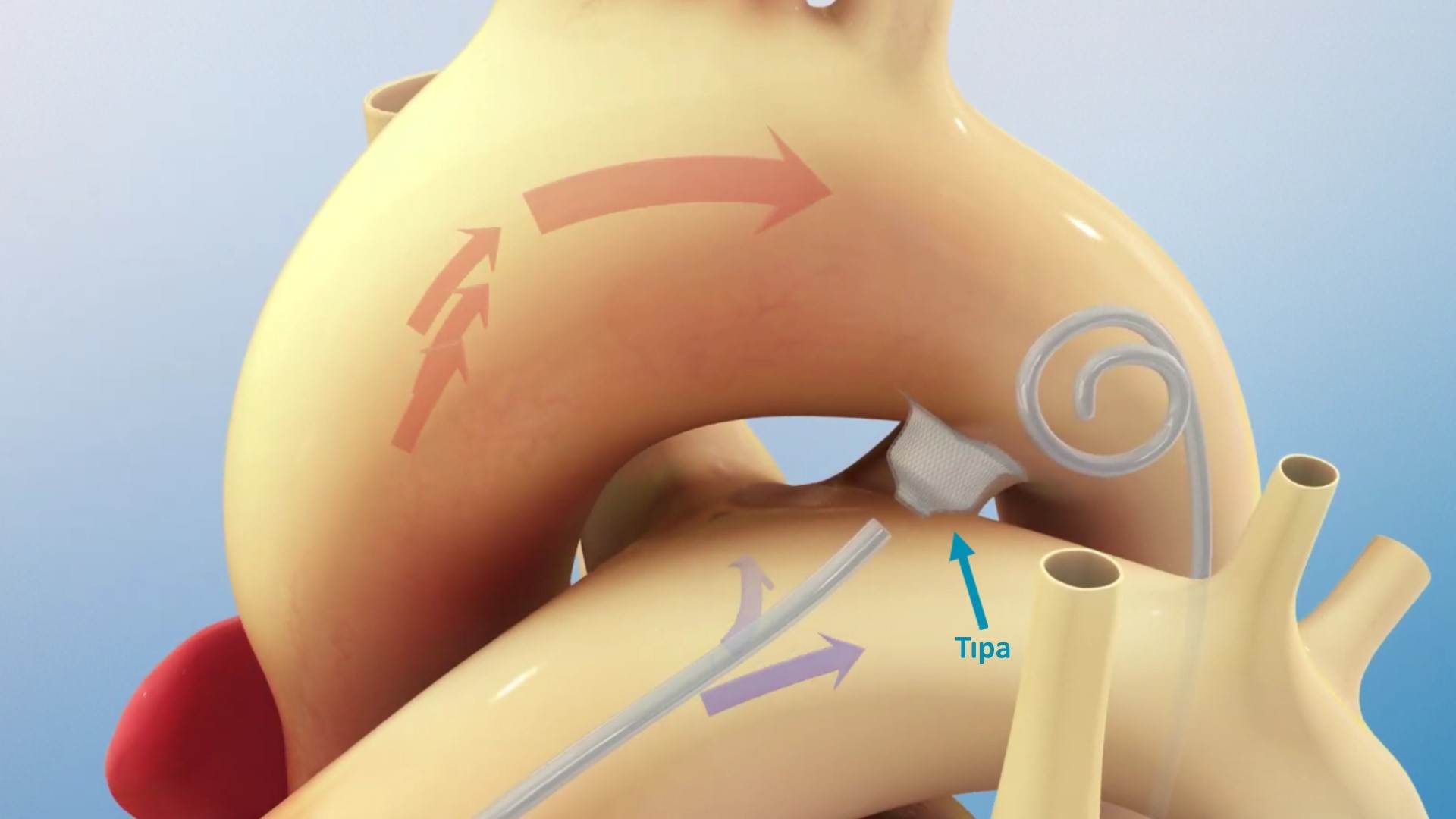
What is PDA shutdown?
Due to blood escaping through the PDA, the left side of the heart is filled with more blood than it should be and the left side of the heart can become enlarged over time. If the heart has enlarged, the PDA should be closed. However, in very advanced cases, closing the ASD is unfortunately not beneficial; it may even cause harm. If the PDA is very small, i.e. the amount of blood that escapes is so small that it does not cause any complaints and the heart is of normal size, there is no need to close the PDA.
What is the success rate of non-surgical PDA closure?
Genel olarak, teknik başarı oranı >%95’tir.
What are the risks of PDA closure?
As with any interventional procedure, there are risks involved. Major complications such as dislocation of the device acting as a stopper or clot formation on the device occur in 3 out of every 100 people; death occurs in 1 out of every 1000 people.
You may be right to be concerned about these risks, but remember: These complications rarely develop. The important question is whether the procedure is really necessary. If it is decided in accordance with current scientific data and guidelines, it is actually better to avoid the procedure yourself. heart failure means that you are exposing yourself much more to risk.
Which tests are performed before PDA closure and for what purpose?
- Blood test For the control of other diseases such as anemia, kidney failure and infection.
- ECHO (Heart ultrasound): To confirm the presence of PDA and to determine if there is any additional heart disease.
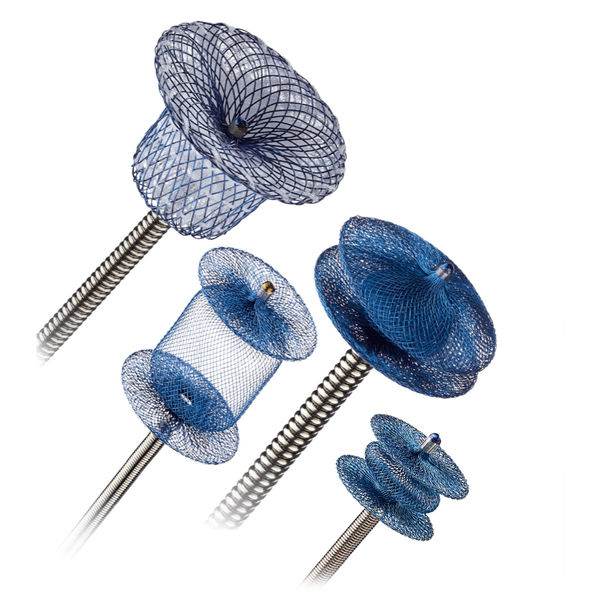
- CT (Computed tomography): To plan the technique to be applied in the procedure and to determine the type of device to be used.
How long does the procedure take?
Usually 1 hour. However, this may be shorter or longer depending on the anatomical features of the PDA.
Is the procedure performed by stopping the heart, as in heart surgery?
No, it is not. It's done when the heart is working.
Is there pain during PDA closure?
No. The vascular access site is anesthetized and the patient remains awake throughout the procedure. Relaxing medication may be given to relieve stress.
When will I be discharged after the procedure?
Most patients are discharged the next day.
Will the PDA shutdown device later move?
Although there are reports in the literature of cases where it appears to have moved afterwards, this is very rare. It is not possible for the device to move after it is covered with tissue within a few months.
Can the device be felt in the body after the procedure?
No.
Will the device stay in the body for life?
Yes. It is not possible to remove the device back.
Will blood thinners be used after PDA closure?
Yes. Usually, low dose Aspirin is used for 6 months. After 6 months, there is no need to use blood thinners.
References
- Stout KK, Daniels CJ, Aboulhosn JA, et al. AHA/ACC Guideline for the management of adults with congenital heart disease. Circulation. 2019 Apr 2;139(14):e698-e800.
- Baumgartner H, De Backer J, Babu-Narayan SV, et al. ESC Guidelines for the management of adult congenital heart disease. Eur Heart J. 2021 Feb 11;42(6):563-645.