

Table of Contents
- Which vein is the jugular vein?
- What is jugular vein stenosis?
- Why is jugular vein stenosis important?
- What are the symptoms of carotid artery stenosis?
- Felç geçirmekte olan birine nasıl müdahale edilir?
- How is jugular vein stenosis diagnosed?
- Şah damarındaki "darlık" ile "tıkanıklık" arasındaki fark nedir?
- How is jugular vein stenosis treated?
- How is carotid artery occlusion treated?
- Does stenosis of the carotid artery go away on its own?
- What happens if the stenosis in the carotid artery does not open?
- Şah damarı hastaları nasıl beslenmelidir?
- Şah damarı stentleme vakalarımızdan örnekler
- References
Which vein is the jugular vein?
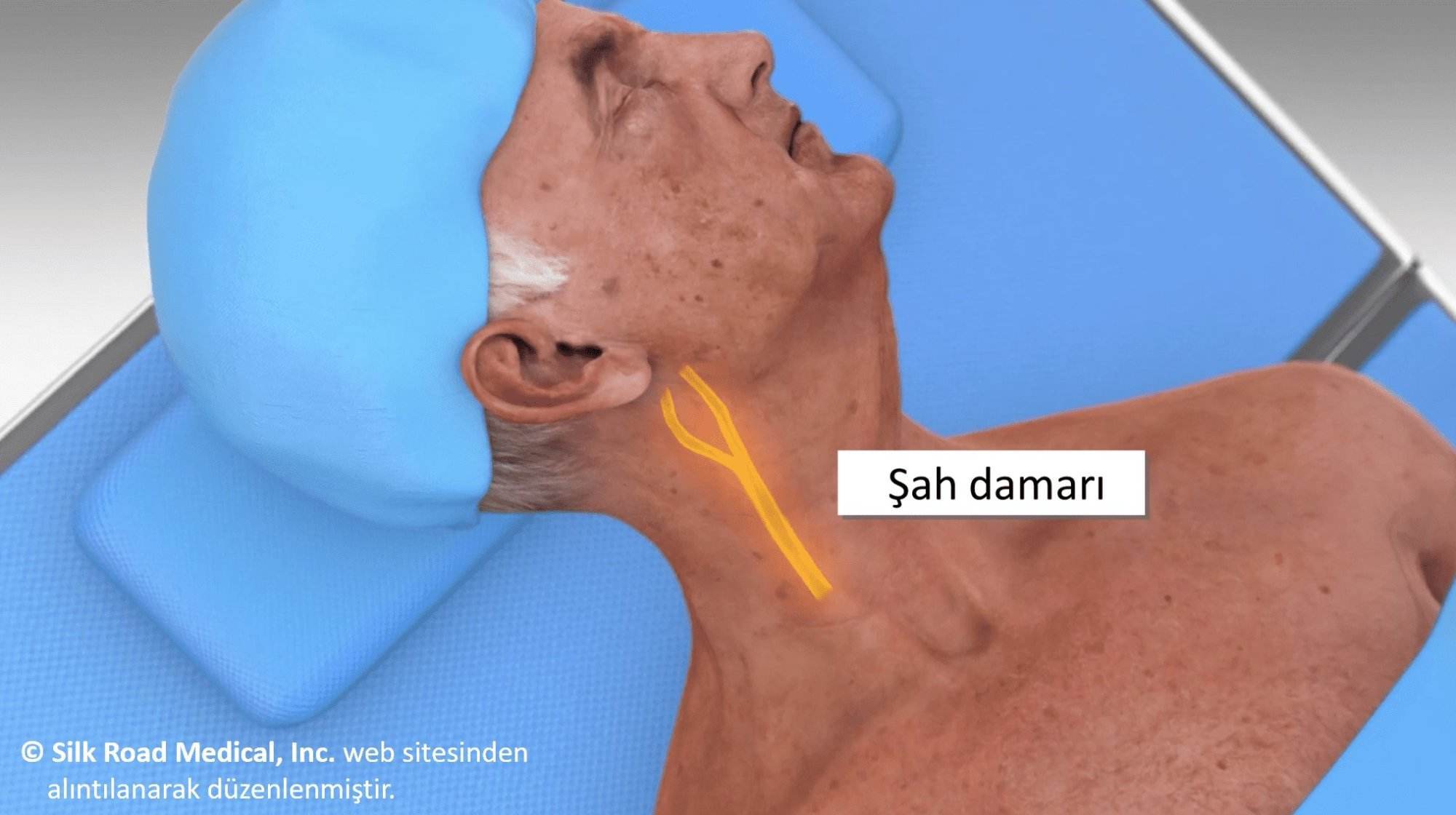
The carotid arteries are the largest vessels supplying blood to the brain. Its medical name is "carotid artery". There are two carotid arteries, one on the right and one on the left side of the neck. Bthe pulses of the veins, a few cm below the earlobe, on the side-back of the neck can be easily felt. For this reason, they are also colloquially referred to as "neck veins".
What is jugular vein stenosis?
In some people, fat and lime build up on the walls of the carotid arteries over the years. This causes the artery cavity to bulge inwards and, after a certain level, the area where blood can flow freely narrows. This condition is called "carotid artery stenosis", medically known as "carotid artery stenosis".
Why is jugular vein stenosis important?
Severe stenosis of the carotid artery, temporary or permanent felce (stroke) can be caused. Strokes can occur for many reasons, such as bleeding due to high blood pressure or a clot in the heart, but the most common underlying cause of stroke is stenosis of the carotid artery.
Felç (inme) nedir?
Felç, kalp krizindekine benzer bir mekanizmayla, yani damarın aniden pıhtıyla tıkanması sonucu beynin ilgili bölgesinin oksijensiz kalması sonucu hasar görmesidir. Felç ve inme eş anlamlıdır. Şah damarında darlığa neden olan çıkıntılı alan değişik nedenlerle aniden çatlayabilir. Vücut mekanizmaları da bu çatlağı bir yara olarak tanır ve burayı pıhtı oluşturarak kapatmaya ve tamir etmeye çalışır. Ancak, çatlayan alanın içindeki yağ parçaları ve oluşan pıhtılar kan akımına kapılarak beyne kaçabilir ve beyin damarlarının inceldiği yerde takılarak onu tıkayabilir. Oksijensizliğe tahammülü çok sınırlı olan beyin hücreleri de eğer yedek damar sistemi yoksa ve damar hızlıca açılmazsa görev yapamaz ve ilgili beyin bölgesinin idare ettiği vücut kısımları çalışmaz. Yani, ani damar tıkanıklığı kalp damarında olursa “kalp krizi”; beyin damarında olursa “felç” adını alır. Dolayısıyla, felç bir nevi “beyin krizi”dir.
Geçici iskemik atak (TIA) nedir?
Felç, birkaç dakika ya da birkaç saat sürüp tamamen düzelirse “geçici iskemik atak” (TIA: Transient Ischemic Attack) adını alır. TIA geçirmiş birinin kalıcı felç geçirme ihtimali TIA geçirmeyen birine kıyasla 10 kat fazladır
What are the symptoms of carotid artery stenosis?
Stenosis of the carotid artery progresses slowly and unless temporary or permanent paralysis develops Unfortunately usually causes no symptoms. Suddenly The most common of these developing symptoms are the following:
- One-sided numbness or weakness in the face, arms and/or legs (e.g. loss of strength in the right arm and right leg while the left side is normal)
- Inability to speak
- Failure to Understand
- Blindness
- Loss of balance
Felç geçirmekte olan birine nasıl müdahale edilir?
- Ask the person to raise both arms at the same time; does one arm fall down?
- Ask him to make a smile gesture; does one side of his face pull away?
- Ask him to repeat a simple sentence; does his speech sound strange or lisp compared to normal?
If you have such symptoms, over time Don't wait to see if it passes; call 112 immediately. Because the later treatment is delayed, the greater the risk of brain damage and ultimately disability.
How is jugular vein stenosis diagnosed?
- Doppler ultrasound: It is a device that extracts images using sound waves. It is usually used as a screening method. If a stenosis is detected by ultrasound, it must be confirmed by one of the other tests below, which have a higher accuracy rate.
- Magnetic resonance imaging (MRI; Emar): It is a device that produces images using the magnetic field principle. It is mainly used to examine brain tissue because of its power to detect even minor damage to the brain.
- Computed tomographic angiography (CT): It works using radiation (X-rays). Its ability to produce clear images is better than ultrasound and MRI (MRI).
- Classic angioplasty: Carotid angiography provides the clearest images. However, it is done by inserting a catheter into the patient's body (at the entrance to the jugular veins), which means it is more risky than other tests. It is mainly used to plan the procedure for stenting a carotid artery stenosis.
Şah damarındaki "darlık" ile "tıkanıklık" arasındaki fark nedir?
Bir damarda darlık varsa damar içinde kanın az da olsa geçebileceği küçük bir açıklık yine de vardır (En fazla %99). Tıkanıklıkta ise damar tamamen kapalıdır (%100). Instead of the colloquial word "narrowness", although it is not very accurate “the word "congestion often kullanılmaktadır. Oysa, şah damarı sorunlarında bu fark önemlidir; çünkü bu iki durumda tedavi yaklaşımı aşağıda okuyacağınız üzere farklıdır.
Jugular vein stenosis How is it treated?
Anyone who has a problem with the carotid artery, whether mild or serious, should first of all adopt a healthy lifestyle. These are summarized in the figure below:
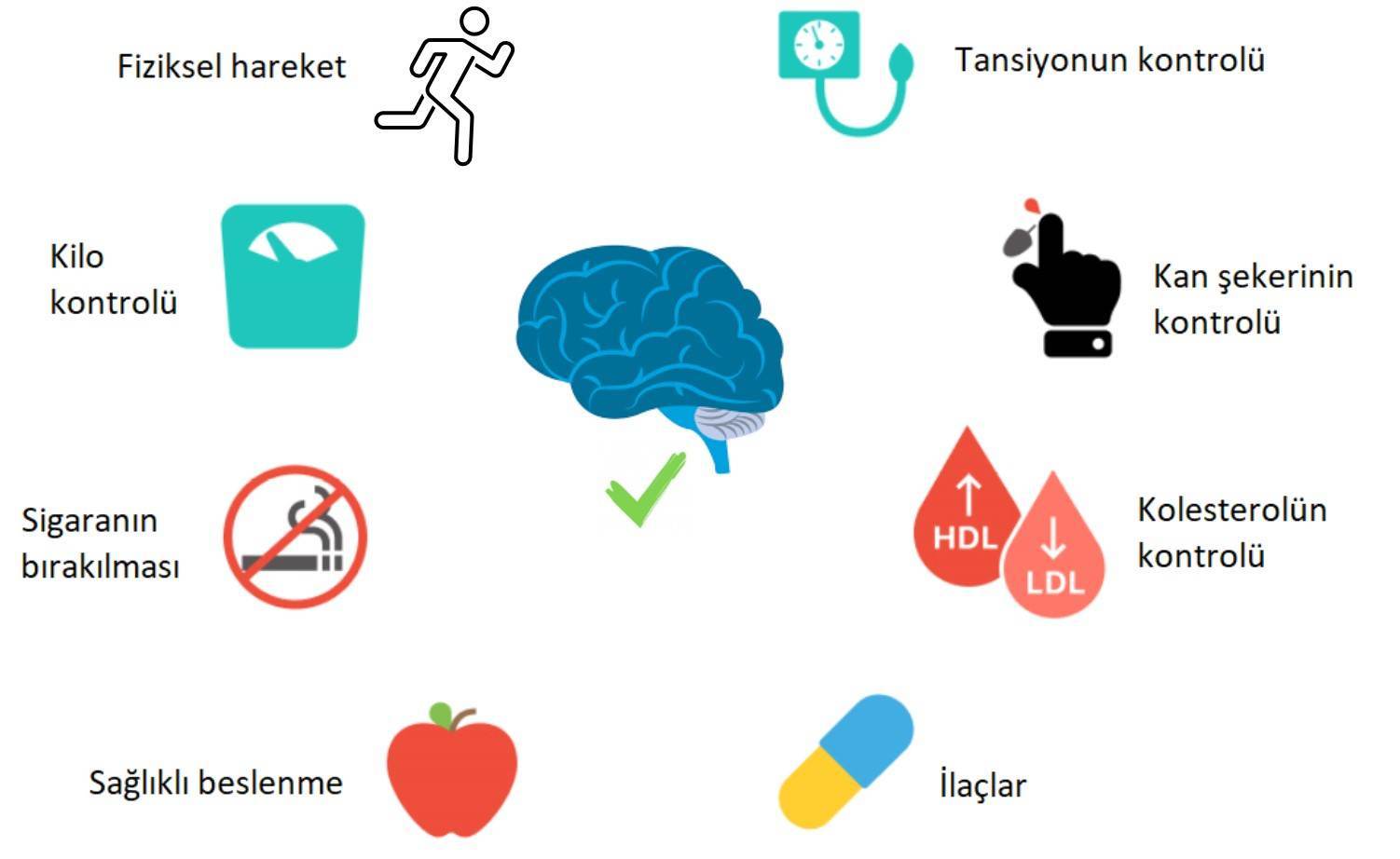
Healthy living recommendations in any case After emphasizing that it should be applied, the answer to the following question is sought: "Is it enough to just give medication, or In addition Should we open the vessel with surgery or a stent?" %50’sinden daha azının daralmış olduğu damarların açılmasının hastaya bir faydası yoktur; ilaç tedavisi yeterlidir. Çünkü, %50’den az olan darlıkların sorun çıkarma olasılığı, damarı açmak için yapılan ameliyat ya da stent işleminde sorun çıkma (örneğin; pıhtı atma) olasılığından daha azdır. Yani, aslında risk-fayda analizi yapılır ve daha az riskli olan seçenek seçilmiş olur. Doktorlar, %50 ila %99 arası darlıkların açılıp açılmaması kararını ise according to the patient's specific clinical situation.
- Medicines Regardless of the level of stenosis in the carotid artery, most patients are started on a low-dose blood thinner (examples: Coraspin 100 mg, Ecopirin 100 mg or Plavix 75 mg, etc.) and a cholesterol-lowering drug (atorvastatin, rosuvastatin, pitavastatin, etc.). The blood thinners are used to reduce the risk of clot formation and the cholesterol medication is used to reduce the accumulation of fat in the vessel wall and thus the possibility of further stenosis.
- Surgery: Vascular surgeons perform carotid artery surgery. The operation can be performed under general anesthesia or by numbing only the neck area. The surgeon makes an incision in the patient's neck, cuts the blood flow before and after the stenosis with the help of pliers-like instruments, opens the vessel wall where the fat has accumulated, temporarily inserts a tube to ensure blood flow to the brain (which is not always necessary), then removes the fatty tissue that narrows the vessel from the inside, removes the tube, sews a patch if necessary and finally closes the incisions.
- Non-Surgical Method (Stent): Şah damarının ameliyatsız yöntemle, yani stentle açılması işlemini girişimsel radyologlar ya da girişimsel kardiyologlar yapar. İşlem kateter laboratuvarında bacak (kasık) ya da el bileği yoluyla yapılabilir. İşlemde önce bir tel şah damarındaki darlıktan geçirilir; darlığın ötesine de bir filtre yerleştirilir. Bu filtre bir çeşit ağdır ve darlığa müdahale ederken (özellikle, balon uygulaması sırasında) kopan yağ parçacıklarını yakalayarak beyne kaçma olasılığını ve dolayısıyla işlem sırasında felç geçirme riskini azaltır (İşlem sırasında felç geçirme riski ortalama %3’dür). Sonra, telin üzerinden bir balon kaydırılarak ilerletilir ve darlık hizasında şişirilir. Böylece, darlık kısmen açılır. Balonu çıkardıktan sonra stent yerleştirilir. StentThe nitinol is a special metal mesh which, when removed from the tip of the catheter, automatically expands until it touches the vessel wall and keeps the vessel open. Finally, the necessary checks are made, the filter and catheters are removed and the procedure is finished.
Prof. Dr. Şükrü Akyüz, girişimsel kardiyologdur. Uzmanlık alanlarından biri de şah damarı darlığını stent ile ameliyatsız açmaktır (Karotis stentleme).
Jugular vein congestion How is it treated?
Şah damarında en fazla %99’a kadar olan surgery or stenting of strictures may be considered (%99 dahil). %100 olanlarda, yani tıkanıklıklarda tek seçenek ilaç tedavisidir. Bilimsel çalışmalar the opening of the carotid artery, which is completely blocked by surgery or stenting. no benefit at all. Possible reasons for this; beynin o bölgesinin tıkanıklık nedeniyle kan alamamasına bağlı zaten kalıcı olarak hasar almış olması ya da damar açma operasyonu/işlemi sırasında technical reasons for obstruction compared to stenosis the likelihood of complications is very high.
Does stenosis of the carotid artery go away on its own?
Unfortunately, it doesn't go away on its own.
What happens if the stenosis in the carotid artery does not open?
If you do not receive treatment after a temporary or permanent stroke 1 out of every 4 people in two years he will have another stroke. This is a high probability. A patient without a history of stroke but with a stenosis in the carotid artery has a lower risk. However, the risk increases as the percentage of stenosis increases.
Şah damarı hastaları nasıl beslenmelidir?
Recommended by international guidelines Mediterranean style beslenme tarzının, damar problemi olsun olmasın, aslında herkes için geçerli olduğunu unutmayın. Şah damarı hastasındaki fark, bu kurallara tighter to comply with the law (See. References).
- Eat a diet based on vegetables and fruits. Make sure they are fresh and in season.
- Eat more nuts such as walnuts, hazelnuts and almonds (unsalted and raw), fish, legumes (dried beans, kidney beans, chickpeas, lentils) and fiber.
- Don't eat too much bread. But, ever It is not right not to eat bread. Choose whole wheat bread instead of white bread.
- Cut down on sweets and sugary drinks (cola, soda, fruit juices, etc.); if possible, eliminate them from your life. Ask for water or mineral water with your meals.
- Avoid processed meats (sausages, pepperoni, salami, etc.). In fact, avoid everything processed.
- Use less salt; no more than 5 grams per day.
- Avoid snacks such as fast food, chips and biscuits.
- Choose low-fat or fat-free dairy products.
- Avoid trans fats such as margarine. Cook with healthier fats such as olive oil or sunflower oil.
- Do not consume too much animal fats (saturated fats) such as butter. In fact, with the new data, this issue has become somewhat controversial. Namely, ever It is probably not right not to consume it. For example, you can eat butter for breakfast. It is also okay to eat eggs.
- Haftada 500 grama kadar yağsız kırmızı et yiyebilirsiniz. Ama, sakatat yemeyin.
- You can also drink herbal teas, black tea and coffee twice a day, but too much can cause palpitations.
- Although a plant-based diet is generally considered to be healthier, do not be under the misconception that all plant foods are beneficial and all animal foods are harmful. For example, remember that white flour and refined sugar, which are known to be harmful, are plant foods, while fish, which is known to be beneficial, is an animal food.
- “Can veins be opened with herbal treatment?", which we recommend you also read.
Şah damarı stentleme vakalarımızdan örnekler
References
- Mazzolai L, Teixido-Tura G, Lanzi S, et al. ESC Guidelines for the management of peripheral arterial and aortic diseases. Eur Heart J. 2024 Sep 29;45(36):3538-3700.
- Libby P, Bonow RO, and Mann DL, eds. Braunwald's heart disease: A textbook of cardiovascular medicine, 12th ed. Philadelphia PA: Elsevier; 2022.