

The blood exerts a certain amount of pressure on the vessel wall. This pressure provides the necessary driving force for the flow of blood. When the heart contracts to pump the blood, the vascular width increases as the pressure increases, and when the heart relaxes, the vascular width decreases and is restored. This is high blood pressure, or in medical terms Hypertensionis the name given to this pressure exerted on the vessel wall that is higher than normal. Among non-medical people, it is often blood pressure is also called.
Two numbers are used to express blood pressure: The first number is always greater than the second number, hence the so-called large blood pressure (systolic blood pressure). This is the value when the heart is pumping the blood, when vascular pressure increases temporarily. The second number is the value when the heart relaxes and is called small blood pressure (diastolic blood pressure); it indicates the basal pressure inside the vessel. Technically, for example, it is said to be 110/80 mmHg, but in everyday use it can also be shortened to "11/8".
Büyük tansiyonun 13’ten veya küçük tansiyonun 8’den büyük olması kan basıncının yüksek olduğunu gösterir. Eskiden, 14/9 sınırı daha çok kabul edilen sınırdı; yani, sınır değerler artık değişti.
In some people, hypertension is caused by causes such as stenosis of the renal arteries, hormonal disorders and severe stress. However, in most people, the exact cause is not clear. It is thought to be caused by the interaction of genetic and environmental factors.
In hypertension, either the blood vessel contracts due to certain chemically active substances and the pressure increases because it compresses the blood inside, or the pressure increases because the blood volume inside the vessel is too large even if the vessel is of normal width. Usually, these two mechanisms work together.
Why is hypertension important?
- If hypertension is not controlled, over the years organs are exposed to high blood pressure and suffer damage. For example, the heart builds muscle and thickens its walls in order to overcome the high pressure in order to send the blood through. Unfortunately, this adaptation, which works initially, in the long term hardens the heart, impairs its relaxation and reduces the volume of the left ventricle that can be filled with blood. At the most advanced stage, the heart becomes tired, weak and enlarged, resulting in heart failure develops.
- Hypertension also predisposes to the accumulation of fat in the vessel walls. Therefore, hypertension vascular stenosis is an important risk factor for heart disease. Stenosis can occur anywhere, not only in the heart but also in the legs.
- It can also cause cracks in the blood vessels and lead to sudden blockages. If this is in the heart heart attack, in the brain paralysis in the heart. Hypertension can cause atrial fibrillation (AF) This can lead to a rhythm disorder called arrhythmia, which can indirectly cause a stroke. In some patients, the clot that forms in the heart in this arrhythmia can escape through the bloodstream into the brain vessels and block them.
- Hypertension can also cause aneurysms (ballooning) to form in the brain vessels or burst if the ballooning is already present. This is an important cause of cerebral hemorrhage. This type of aneurysm It can also be in the aorta. If this gets too big, it can burst and can be fatal.
- Hypertension can damage the blood vessels of the eyes and kidneys and impair the function of these organs.
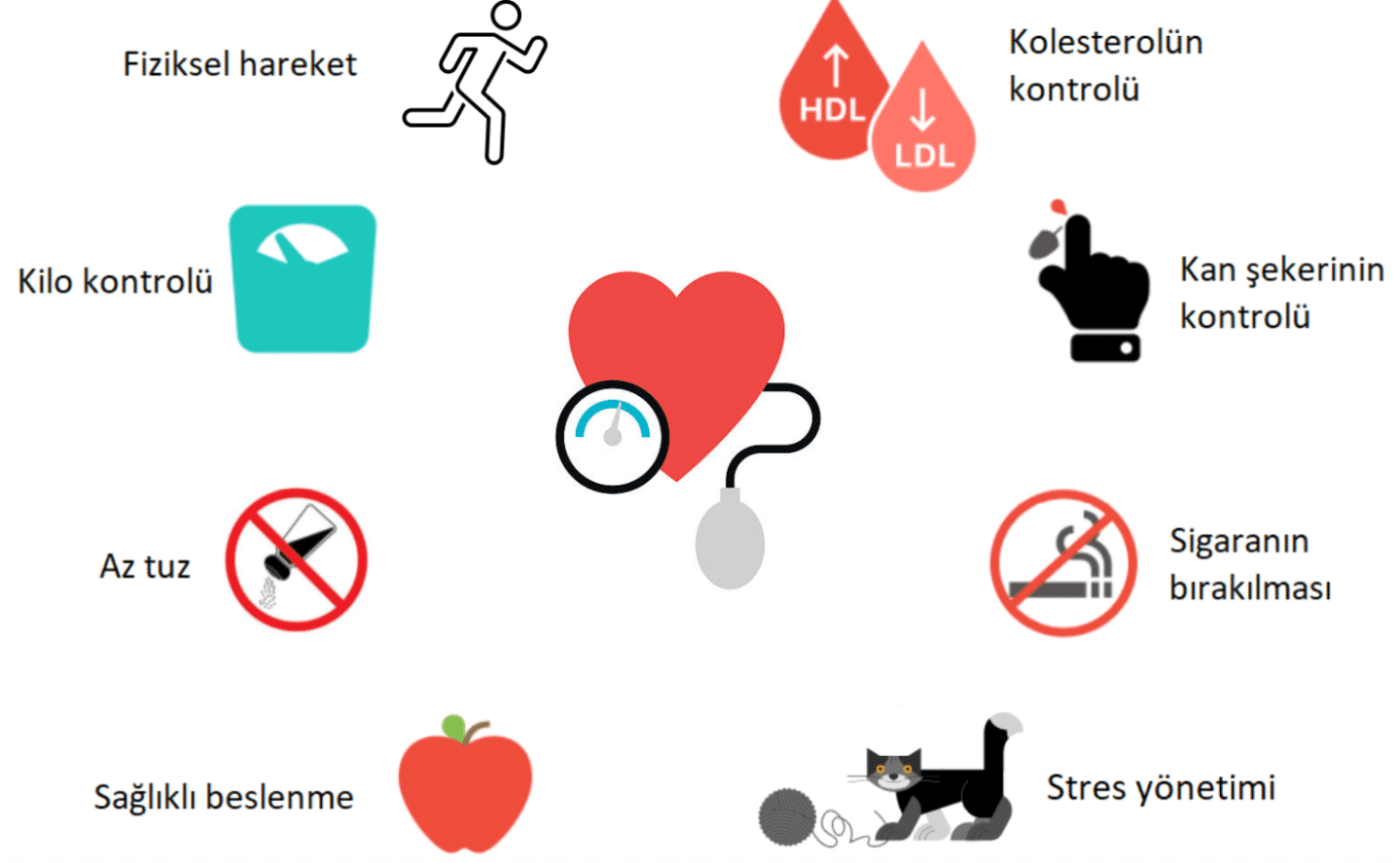
How to recognize high blood pressure?
When your blood pressure rises, symptoms such as headache, dizziness, fatigue, chest pain, shortness of breath and irregular heartbeat may occur. However, most people with high blood pressure do not actually have any symptoms. So, the absence of symptoms does not mean that blood pressure is normal. The definitive way to determine whether blood pressure is high or not is to measure it with a blood pressure monitor.
Tansiyon aniden kaça çıkarsa tehlikelidir?
Tansiyon aniden yükselmişse ölçümde çıkan değerin kaç olduğu acil servise gitmenin temel kriteri değildir. Daha önemli olan ve tehlikeyi belirleyen etken, o anda hipertansiyona eşlik eden bir şikayetin olup olmamasıdır. Tansiyon normal sınır değeri aşmışsa ve aynı zamanda aşağıdakilerden herhangi biri mevcutsa beklemeden acil servise gidilmelidir:
- Chest pain
- Shortness of breath
- Visual impairment
- Speech impairment
- Severe headache
- Loss of balance
- Numbness, loss of sensation or strength in the limbs
- Fainting
Is blood pressure measured on the left or right arm?
What should be considered when measuring blood pressure?
- Devices that measure at the wrist are more likely to be inaccurate. Therefore, opt for automatic devices that measure from the upper arm.
- If you are stressed, anxious, in pain or need to use the toilet, your blood pressure may be temporarily high. When this passes, repeat the blood pressure measurement.
- Do not exercise, smoke, drink caffeine-containing drinks such as tea and coffee before the measurement.
- Do not measure in a dress that is too tight on your arm.
- Rest for a few minutes before the measurement.
- Sit comfortably with your back leaning back.
- Place your arm freely on an object such as a coffee table so that the cuff of the sphygmomanometer (the part that wraps around the arm and inflates) is level with your heart.
- Do not talk while measuring.
- En az iki ölçüm yapın; bu ikisinin ortalamasını alın. Eğer, kaygılı bir kişiliğiniz varsa ilk ölçüm stresten dolayı çok yüksek çıkabilir. Bu durumda 2. ve 3. ölçümün ortalamasını dikkate alın. Ölçümler arasında 1-2 dakika ara verin.
References
- Jones DW, Ferdinand KC, Taler SJ, et al. 2025 AHA/ACC/AANP/AAPA/ABC/ACCP/ACPM/AGS/AMA/ASPC/NMA/PCNA/SGIM Guideline for the prevention, detection, evaluation and management of high blood pressure in adults. Hypertension. 2025 Oct;82(10):e212-e316.
- McEvoy JW, McCarthy CP, Bruno RM, et al. ESC Guidelines for the management of elevated blood pressure and hypertension. Eur Heart J. 2024 Oct 7;45(38):3912-4018.
- Libby P, Bonow RO, and Mann DL, eds. Braunwald's heart disease: A textbook of cardiovascular medicine, 12th ed. Philadelphia PA: Elsevier; 2022.