

Table of Contents
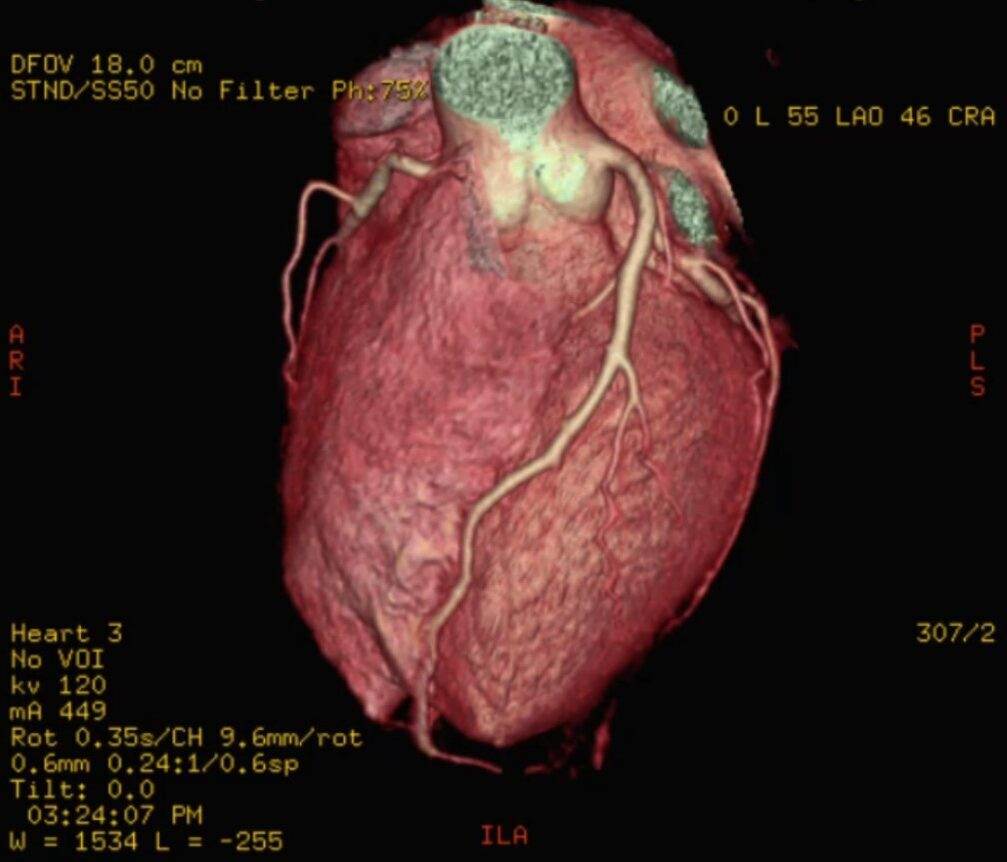
- What is virtual angiography?
- What is CT angiography?
- What is the difference between CT angiography and conventional angiography?
- What is the difference between CT angiography and cardiac tomography?
- Where is virtual angiography performed?
- How to prepare for virtual angiography?
- How is virtual angiography performed?
- How long does a virtual angioplasty take?
- What are the benefits of virtual angiography?
- Is virtual angiography risky?
- Is virtual angiography accurate?
- References
What is virtual angiography?
Virtual angiography (virtual angiography), computed tomography (BT/CT) is the visualization of the veins with the device.
What is CT angiography?
CT angiography is synonymous with virtual angiography. CT angiography can be performed on any vessel in the body. AHowever, when we refer to “CT angiography” in this article, we mean the visualization of the heart vessels, i.e. “CT angiography".oroner” We mean CT angiography. In CT angiography, it is X-rays, a type of radiation, that allows us to obtain images. A dye is also injected into the vein (contrast agent) X-rays make it possible to see vessels that are normally invisible.
What is the difference between CT angiography and conventional angiography?
Virtual angiography and classic angioplasty Both are procedures to visualize the vessels of the heart. In a conventional angiogram, a long, flexible tube (catheter) is sent from an artery in the groin (leg) or wrist to the heart. Dye is then injected through the catheter directly into the heart vessels. In a virtual angioplasty, no catheter is sent to the heart and the dye is not injected directly into the heart vessels, but into a vein in the arm or the back of the hand, from where it reaches the heart.
What is the difference between CT angiography and cardiac tomography?
Computed tomography is one of the devices used in the diagnosis and treatment planning of many diseases such as heart vessels, valves, membrane and congenital abnormalities. The general name for all of them is “cardiac tomography”. Coronary CT angiography is the specific name for cardiac tomography for the heart vessels.
Where is virtual angiography performed?
Virtual angiography is performed in imaging centers or radiology departments of hospitals. Under the supervision of a radiology specialist (radiologist) radiology technician shooting and then interpreted by radiologists. The images are then processed with specialized software and interpreted by radiologists. Prepared images are also interpreted by cardiologists.
How to prepare for virtual angiography?
A 4-hour fast is usually required before shooting. However, pure water can be drunk until the last 2 hours. Caffeinated drinks (tea, coffee, etc.) should not be drunk on the day of the scan because they can increase the heart rate. At a high heart rate, the images will not be clear and the reliability of the test will be reduced. To prevent this, it may be necessary to use one of the drugs called beta-blockers (Beloc ZOK, Saneloc, Concor, Vasoxen, etc.) to slow down your pulse (more precisely, to bring it back to a normal rate; 50-70/min). These drugs can also be given directly intravenously if necessary. Also, bSome patients are very anxious and their heart rate increases a lot during the shoot because they are very stressed. In this case, the temporary use of anti-anxiety medication is very useful in controlling the heart rate. However, as the number of slices of the device increases, the likelihood of being affected by heart rate decreases, resulting in better image quality. For example, a device with 1152 slices can produce very clear images even when the heart is beating relatively fast. However, in many patients, clear images can be obtained without such a high-slice device.
How is virtual angiography performed?
One from the back of the hand or arm vascular access (intravenous route) is opened. The dye is introduced into your body through this vein. Then you lie on a stretcher-like table in front of the device. During the imaging, you are asked to remain still and hold your breath from time to time to reduce heart activity. When the dye reaches the heart, the device sends X-rays to the heart and obtains images of the blood vessels.
How long does a virtual angioplasty take?
Although the whole process takes about 15 minutes, the active shooting time is actually 10-15 seconds. In case of problems related to rapid heartbeat, this may take up to 1-2 hours.
What are the benefits of virtual angiography?
- Although the image quality is not as good as that of conventional angiography, it is quite high. For this reason, it has now replaced the stress test (treadmill) for cardiovascular occlusion screening (check-up) in most hospitals.
- Congenital heart diseasesIt shows anatomy and abnormal vascular connections quite well.
- It is an examination that patients tolerate better because it takes a very short time and does not have the problems of long duration, noise and a more enclosed space like an MRI.
- The likelihood of complications is much lower than with conventional angiography, as there is no catheter insertion into the heart vessels and no arterial access to perform the procedure.
Is virtual angiography risky?
Virtual angiography is a safe procedure for most people. However, patient it still exposes you to some radiation. Pregnant women should not have virtual angiography because of the possibility of harming the baby in the womb (fetus). Also, some people may have an allergic reaction to the dye used. Those with known allergies may be given a steroid (cortisol) medication hours before the procedure to reduce the risk of a reaction. In addition to allergies, the dye can rarely temporarily impair kidney function. Therefore, drinking plenty of water before and after the procedure is important to protect the kidneys. The kidneys of patients with chronic renal failure are more sensitive to the dye. It is recommended that these patients are evaluated by a nephrologist before the procedure and receive continuous intravenous fluids hours before the procedure.
Is virtual angiography accurate?
BT anjiyo sonucunda kalp damarlarında “sorun çıkmazsa” doğruluk oranı %100’e yakındır, yani oldukça güvenilirdir. Bu durumu doğrulamak için klasik anjiyo yapılmasına gerek duyulmaz. Ancak, bir sorun saptanırsa testin doğruluk oranı kısmen düşer (%80-90 doğruluk oranı). Özellikle, kalp hızı yeterince düşürülmeden yapılan çekimlerde yanılma payı artar. Bu durumlarda, damarda görülen darlığın gerçekten dar olduğu için mi öyle gözüktüğü, yoksa çekim hatasına bağlı bulanık çıkan görüntü nedeniyle yanlışlıkla mı dar gözüktüğü ayırt edilemeyebilir. Açığa kavuşturmak için doğruluk oranı en yüksek tetkik olan klasik anjiyonun yapılması gerekebilir. Ancak, kalp doktorunuz sadece rapora yazılanlara dayanarak değil de kendisi bizzat görüntülere bakarak yanıt vermişse ve görüntülerin çok net olduğundan eminse testin yanılma olasılığı oldukça düşüktür. Usually, CT angiography is misleading by "overestimating" the degree of stenosis. ÖFor example, gerçekte %30-40 olan darlığı, yanlışlıkla %70-80 olarak gösterebilir. Tersi, nadirdir. Bu nedenledir ki; %50’den az bir darlık saptandığında ileri tetkike genellikle ihtiyaç duyulmaz. Bazı görüntüleme merkezlerinde CT-FFR denilen ilave bir özelliğin kullanılmasıyla sadece anatomik değil, fizyolojik değerlendirme de yapılmış olur. Yani, görsel olarak damarda %40 ila %70 arası (orta derecede) bir darlık söz konusu ise CT-FFR yöntemi, darlıktan yeterli kan geçip geçmediğini belirleyebilir. Bu sayede, testin doğruluk oranı oldukça artar.
Stent stuck or bypass surgery in patients who have had a stroke, the margin of error is higher than the margin of error in other patient groups. In most of these patients, it is actually still accurate. However, under X-rays, there is usually interference in the stents and if the stent diameter is <3 mm, the in-stent areas It may not look clear; in other words, even if the stent is open, it may look as if it is blocked. Similarly, sometimes the image quality may not be good at the sutured junctions of the bypass vessels. In these cases, another imaging method (cardiac scintigraphy or conventional angiography) may be needed.
Ultimately, it is important that the imaging center performing the CT angiography is an experienced center that performs coronary CT angiography frequently, that the interpreting radiologist is particularly experienced in cardiac radiology, and that the acquisition is performed with a good device with at least 128 slices. In this way, the sCT angiography, performed and interpreted in accordance with the standards, should be followed by exercise test, cardiac scintigraphy (SPECT or PET) and stress echo‘(of which the stress test is the most likely to be inaccurate). For this reason, the European (ESC) and American (ACC) cardiology guidelinesmost patients with suspected alpine vascular occlusion as a screening test CT angiography recommends.
References
- Virani SS, Newby LK, Arnold SV, et al. AHA/ACC/ACCP/ASPC/NLA/PCNA Guideline for the management of patients with chronic coronary disease. Circulation. 2023 Aug 29;148(9):e9-e119.
- Vrints C, Andreotti F, Koskinas KC, et al. ESC Guidelines for the management of chronic coronary syndromes. Eur Heart J. 2024 Sep 29;45(36):3415-3537.