

Table of Contents
What does "fluid accumulation in the pericardium" mean?
The outer surface of the heart has a thin membrane made of two layers. Between these membranes is a slippery fluid that reduces friction when the heart is working. This fluid is normally very small. As a result of certain diseases, this fluid can increase abnormally and accumulate between the heart membranes. Medical name pericardial effusionStop.
Why does fluid build up in the pericardium?
Here are the causes of fluid accumulation in the pericardium:
- Pericardial infection (viral pericarditis, tuberculosis, etc.)
- Immune system disorders (Lupus, rheumatoid arthritis etc.)
- Heart attack (bleeding or inflammation)
- Heart surgery after (bleeding or inflammation)
- Kidney failure (accumulation of toxic substances)
- Cancer (spread of a tumor to the lining of the heart)
- Hypothyroidism (underactive thyroid gland)
- Accidents and injuries (blood pooling)
- Radiotherapy (radiation therapy) to the chest area
- Side effects of certain medications (phenytoin, warfarin, heparin, etc.)
- Other rare causes
What are the symptoms of fluid accumulation in the pericardium?
- Quick fatigue
- Chest pain
- Shortness of breath
- Cough
- Fire
- Palpitations
- Swelling in the legs
- Abdominal swelling
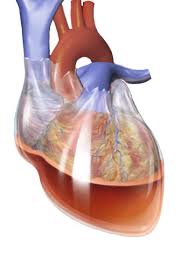
How to recognize fluid in the pericardium?
- Blood test
- Chest X-ray
- ECG
- EKO: Also known as heart ultrasound. It is the most important test; it is essential for a definitive diagnosis.
How is fluid accumulation in the pericardium treated?
Medicines can be therapeutic if inflammation is the cause of the fluid accumulation. Non-steroidal anti-inflammatory drugs such as ibuprofen and colchicine are the main drugs. With or without inflammation, if too much fluid has collected or is pressing on the heart, this can be life-threatening. In this case, the fluid must be drained mechanically. Drainage can be done with or without surgery.
Is surgery or non-surgical method better for fluid accumulation in the pericardium?
Pericardiocentesis The non-surgical method, which is done with the help of a needle, is the preferred method. However, not all patients are anatomically suitable for needle evacuation. In this case, surgery is required. In the operation, part of the heart membrane is removed and the fluid flows continuously into the chest cavity through the opening (window) in this part. From there, the fluid flows into the blood and from the blood to the kidneys, where it is excreted in the urine. Pericardial window This surgery can also be performed in patients in whom fluid builds up again, even after it has been successfully drained with a needle. Rarely, the entire heart lining may need to be removed by surgery (Pericardiectomy). In recent years, window opening can also be performed non-surgically by inflating a balloon. AIn the non-surgical method, two balloons, usually uninflated, are inserted into the pericardium through a small access hole rather than an incision and are aligned at the level of the pericardium. When the balloons are inflated, the pericardium ruptures and the resulting opening acts as a window. Balloon pericardiotomy Unlike surgery, this method does not require general anesthesia and does not leave a large scar. You can watch the video below to better understand how the non-surgical method is performed.
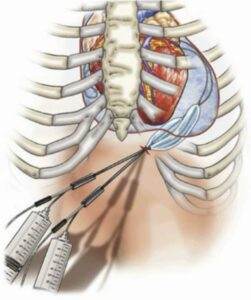
How is fluid accumulated in the pericardium drained non-surgically?
First, an ultrasound of the heart. EKO's images, we locate the area in the chest where the fluid can be drained most easily. After numbing this area so that the patient does not feel pain, we advance a needle through the chest wall towards the heart. When we come across fluid accumulated in the pericardium, we see that the fluid can be drawn out through this hollow needle. Then we remove the needle and replace it with a thin plastic tube, a catheter. With this catheter, we drain all the fluid. The catheter stays between the membranes of the heart for a few more days because of the possibility that fluid may continue to accumulate. On the day when we see that the fluid is no longer coming out, we remove the catheter. In most patients, the fluid does not accumulate again. However, in rare cases, fluid may build up again after a few weeks or a few months in some patients. In this case, it is necessary to make a hole in the heart membrane larger than a pinhole, i.e. a window.
References
- Wang TKM, Klein AL, Cremer PC, et al. An ACC expert consensus statement on the diagnosis and management of pericarditis. J Am Coll Cardiol. 2025 Dec 23;86(25):2691-2719.
- Schulz-Menger J, Collini V, Gröschel J, et al. 2025 ESC Guidelines for the management of myocarditis and pericarditis. Eur Heart J. 2025 Oct 22;46(40):3952-4041.
Libby P, Bonow RO, and Mann DL, eds. Braunwald's heart disease: A textbook of cardiovascular medicine, 12th ed. Philadelphia PA: Elsevier; 2022.
- Lasala JM, Rogers JH, eds. Interventional procedures for adult structural heart disease. Philadelphia PA: Elsevier; 2014.