

İçindekiler
- STENT OR BYPASS?
- RECOMMENDATIONS FOR PATIENTS AND THEIR FAMILIES
- FREQUENTLY ASKED QUESTIONS
- B How long do stents and bypass surgery take?
- Can’t I be treated with medication instead of a stent or bypass?
- What are the risks of stents and bypass surgery?
- Is a stent or a bypass better for the left main coronary artery (LMCA)
- If there is blockage in all three main arteries, is a stent or a bypass better?
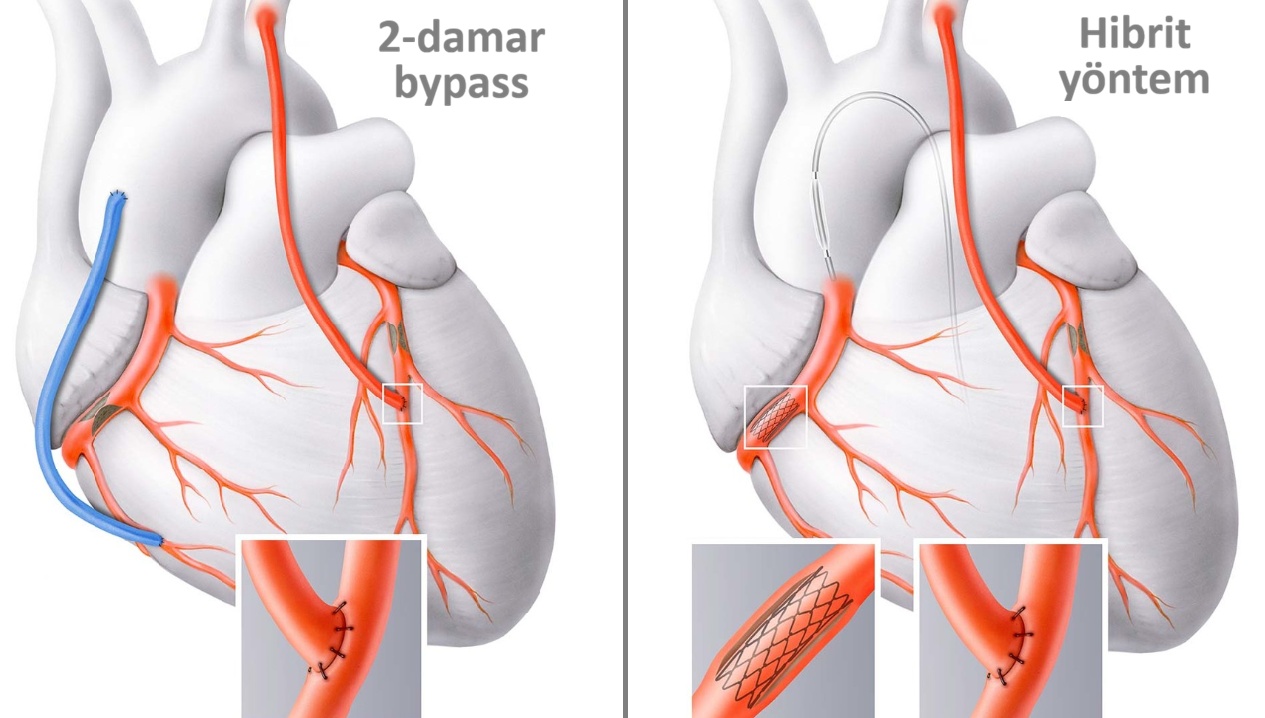
- What is the hybrid method?
- Can a drug-eluting balloon spare the patient from needing a stent or bypass surgery?
- How many years does a patient with a stent live?
- How many years does a patient who has had a bypass live?
- EXAMPLES FROM OUR COMPLEX STENT CASES
- REFERENCES
STENT OR BYPASS?
Which is better for the treatment of coronary artery disease: a stent or bypass surgery? This is a frequently asked question, and the answer varies for every patient. Because every individual is different, doctors consider numerous factors before deciding which option is best for you. In this article, I will summarize the general principles taken into account when making this decision.
Note: To better evaluate this article, I recommend reading my previous posts on “Stent” and “Bypass Surgery”.
Information you may have heard from friends, read on the internet, or watched from social media influencers and television morning shows regarding the treatment of heart diseases may unfortunately be outdated and inaccurate. My personal experience is that information on these platforms is often incorrect in terms of both currency and scientific basis. Therefore, when making a treatment decision regarding a vital organ like your heart, you must ensure whether the information provided has scientific references and whether the providing physician truly possesses up-to-date theoretical knowledge and clinical experience in that specific field. Ultimately, only doctors who understand your medical condition and follow current scientific data can make the most accurate decision for you.
Cardiac surgery and cardiology are two different medical branches that treat heart diseases. While cardiac surgeons solve heart problems through surgery (bypass), interventional cardiologists solve the same problems using non-surgical methods (stent). Both stenting and bypass surgery are effective methods used to open coronary artery blockages. Let’s elaborate on this; but first, let’s briefly mention what a stent and a bypass are:
A Stent is a tube-shaped scaffold used to open blockages in the arteries. Bypass surgery is a type of operation that restores blood flow by connecting an additional vessel beyond the blocked areas in the coronary arteries. For some patients, stenting is the only option, as bypass is unsuitable or unnecessary. For others, the opposite is true; bypass is the only option, and stenting is unsuitable or unnecessary. In these patient groups, cardiologists and cardiac surgeons generally agree. But what should you do if one doctor recommends a stent while another recommends bypass surgery? Naturally, you will be confused. In fact, for most patients, both can be preferred; meaning, neither is incorrect. This thought may contradict your intuition that “when it comes to human health, the correct approach should be clear-cut.” However, current scientific data show that in appropriate patients, both treatments are correct. Thus, the goal is to explain the scientific pros and cons of both methods to a patient who is clinically and anatomically suitable for either, in a way they can easily understand, and to ensure the patient plays an active role in the final decision.
When explaining why they recommend a stent or bypass, your doctor will discuss the following: the severity of your heart disease, additional issues in your other organs, and your general health status.
- Severity of your heart disease: Narrowing in the left main artery (LMCA: Left main coronary artery), completely blocked vessels (CTO: Chronic total occlusion), or the presence of blockages in multiple vessels mean the situation is “complex.” These are the primary reasons why bypass surgery is recommended to a patient.
- Additional issues in other organs: If there are serious problems in vital organs such as the lungs, liver, kidneys, and brain, the risk of bypass surgery increases. For example, even if the condition of the vessels in the angiogram suggests bypass is a better option, if you have severe lung disease such as COPD, stenting becomes a more accurate choice due to the risk of being unable to be disconnected from the ventilator after surgery. Conversely, even if a vessel problem initially thought to be solvable with a stent is detected along with heart valve issues that can only be resolved with valve surgery, bypass may be preferred; this way, both vessel and valve problems are resolved in a single operation.
- Your general health status: Some patients are unable to perform daily activities, such as going to the bathroom, without assistance—they are in a very frail state. These patients may not tolerate bypass surgery, and stenting may need to be preferred over bypass.
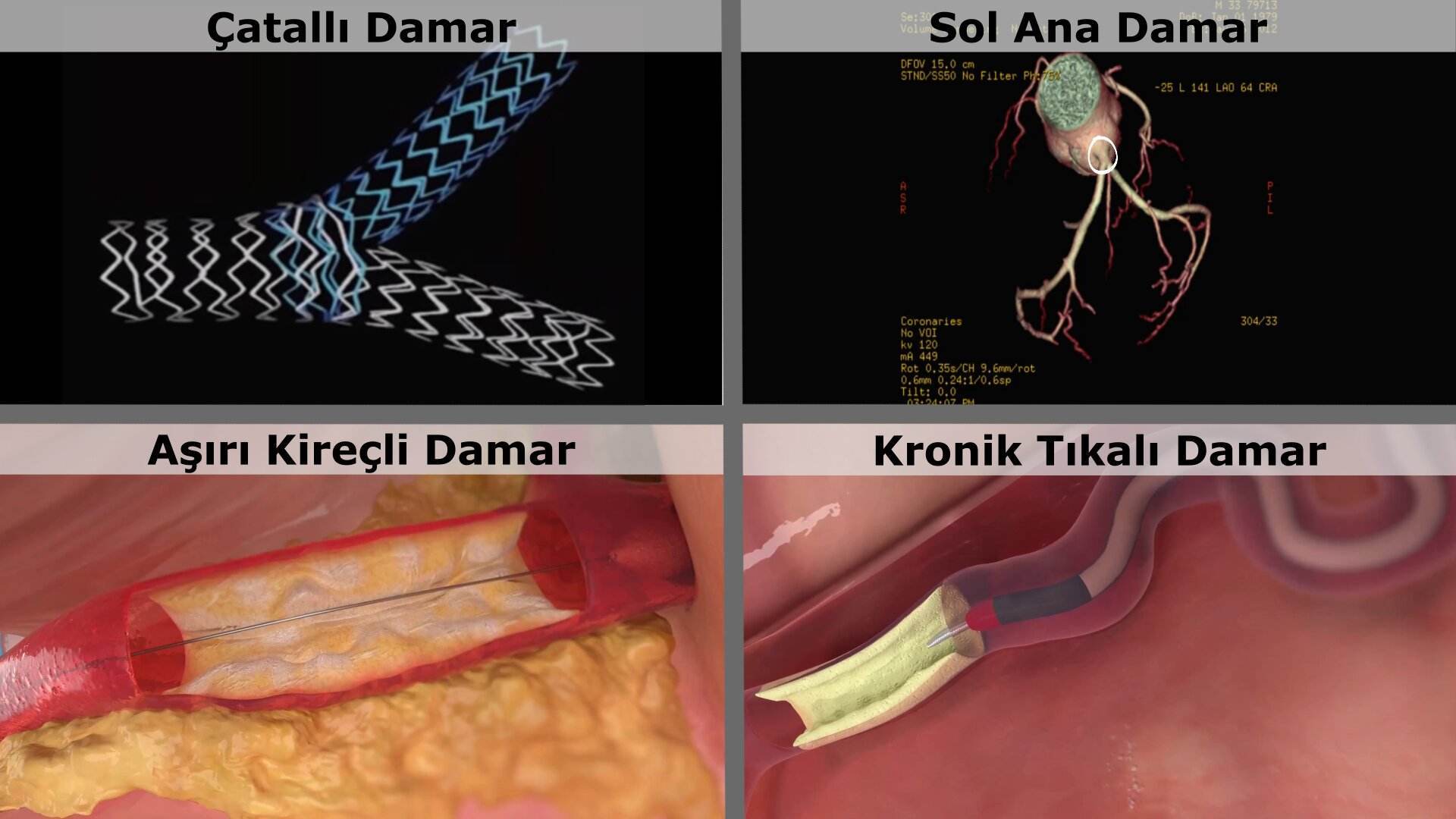

Thanks to advancing technology, today, an experienced interventional cardiologist whose professional interest is complex procedures can open complex blockages in the arteries using stents instead of bypass surgery. Stenting provides the same benefit as bypass surgery for the majority of patients for whom bypass was recommended. In other words, for these patients, both bypass surgery and stenting are equally effective; neither is incorrect. However, bypass surgery is still mandatory for some patients (See References).
RECOMMENDATIONS FOR PATIENTS AND THEIR FAMILIES
- If you consult a cardiac surgeon, the decision will likely lean towards bypass; if you consult an interventional cardiologist, it will likely lean towards stenting. This is due to natural professional instincts, and generally, neither choice is incorrect.
- For complex cases to be resolved with stenting, the field must be within the interventional cardiologist’s professional area of interest. Not every cardiologist prefers to handle complex cases, nor is there an obligation to do so. Above all, complex stenting procedures require an extensive training process spanning many years.
- Undergoing a second bypass surgery is highly risky. In these patients, stenting is usually the preferred option.
- In patients whose stent has narrowed or become blocked, the problem can be resolved by placing another stent inside the existing one. In many patients, narrowing does not recur within the stent. However, in rare cases, a second recurrence may develop. In such instances, stenting is generally no longer recommended; instead, medical therapy or bypass is preferred.
- In traditional bypass, large scars remain on the chest and the leg where the vessel was harvested. Permanent edema (swelling) may also occur in the legs. If these present a significant aesthetic concern for you, choose either alternative (modern) surgical methods (minimally invasive or robotic bypass) or stenting. The cardiac benefit (e.g., life expectancy) provided by minimally invasive or robotic bypass is identical to that of the traditional method. The primary advantages of these newer methods are a better aesthetic appearance and faster recovery due to the absence of a large incision.
- Drug-eluting stents are superior to bare-metal stents. Latest-generation drug-eluting stents are also generally better than previous generations. However, there is no significant quality difference among most drug-eluting stents produced in recent years.
- It is recommended that the vessels harvested for bypass be arteries rather than veins (legs) whenever possible. This increases the likelihood of the grafts remaining open for many years. For example, if clinically and anatomically suitable, using both the left (LIMA) and right internal mammary arteries (RIMA) is superior to using only the left internal mammary artery and saphenous veins from the leg for the remaining vessels.
- Having a bypass surgery generally does not prevent the placement of a stent in the future if needed. Similarly, having a stent placed usually does not prevent a subsequent bypass surgery.
- After bypass surgery, the patient stays in the hospital for several days, part of which is spent in the intensive care unit. After stenting, the patient is usually discharged the next day. Recovery takes several weeks for bypass and only a few days for stenting.
- For LMCA or multi-vessel blockages, either complex stenting or bypass surgery should be preferred. In these cases, applying only a drug-coated balloon—as shared on some websites or Instagram accounts—is a procedure whose efficacy and safety have not yet been proven, and recommending it is medically incorrect.
- Some people cannot overcome their fears and refuse to undergo bypass surgery. Therefore, your personality and psychological state are important factors in treatment selection.
For serious decisions such as treatment selection, we recommend seeking a second opinion from a different physician. It is important that you request the most up-to-date scientific evidence for the recommended treatment to be presented in an understandable language, along with its references.
Prof. Dr. Şükrü Akyüz is an interventional cardiologist. His professional area of interest is the treatment of heart diseases using non-surgical methods. This includes the non-surgical opening of complex arterial blockages utilizing specialized stenting techniques.
FREQUENTLY ASKED QUESTIONS
B How long do stents and bypass surgery take?
The duration of a stent procedure varies depending on the anatomical characteristics of the blood vessels and the number of vessels to be stented. In complex cases, it typically lasts 1.5 to 2 hours. Bypass surgery, on the other hand, usually takes 3 to 4 hours. The required duration depends on the type of bypass surgery (conventional, mini-incision, etc.) and the number of vessels to be bypassed.
Can’t I be treated with medication instead of a stent or bypass?
Although not always, in most cases medication alone may actually be preferred over a stent procedure. Today, thanks to medications that help the heart use oxygen more efficiently or dilate the coronary arteries to increase blood flow and oxygen delivery, similar benefits can be achieved without placing a stent at all. The main advantage of a stent over medication is that it relieves the patient’s symptoms more quickly (usually starting the very next day) and reduces the number of medications the patient will need to take for the rest of their life. In certain specific cases (such as LMCA stenoses, blockages at the origin of the left anterior descending artery, or blockages in multiple major arteries), a stent extends the patient’s life; emergency stenting performed in situations like a heart attack, however, saves lives. In these specific cases, treatment with medication alone cannot be as effective as a stent. Surgery, on the other hand, is primarily a treatment method used in these specific situations. If the arterial issues are severe enough to warrant a decision for surgery, relying solely on medication is insufficient.
What are the risks of stents and bypass surgery?
Like every procedure, both stent procedures and bypass surgery have risks. Risk actually varies from person to person. For example, procedures performed urgently during a heart attack are riskier. Procedures performed on patients with additional serious illnesses are riskier, even if performed by the most experienced physicians. Procedures performed in complex cases are also riskier. Common complications that can be seen in both methods are as follows:
- Vascular damage: In the stent procedure, it is normal to have slight bruising at the entry site. Serious bleeding or blockage may develop in the groin or wrist artery. Therefore, blood transfusion or emergency vascular surgery may rarely be required. In surgery, similar problems may occur at the neck line and other vascular entry sites opened for the administration of medication, blood, and fluids.
- Arrhythmia: Short-term heart rhythm disturbances that resolve spontaneously are common, but usually of no importance. Rarely, emergency situations requiring medication or electrical shock may develop.
- Kidney failure: The dye (contrast agent) that allows us to obtain images during the stent procedure impairs the kidneys in an average of 5 out of every 100 patients. The risk is even higher in those who already have kidney problems. For example, in advanced-stage kidney failure, the risk is 5 times higher. The developing kidney dysfunction is usually temporary; it recovers completely with intravenous fluid supplementation. Very rarely, temporary dialysis may be required. Kidney failure can also be seen in surgery due to the kidneys receiving less blood because the heart is stopped and the heart-lung pump is used.
- Allergy: Rarely, an allergy may develop due to the dye used in the stent procedure. Itchy rashes may occur on the skin; these are temporary. Very rarely, allergic reactions are serious enough to prevent breathing. Medications given for general anesthesia in surgery can also cause allergic problems.
- Heart attack: In the stent procedure, if the patient’s vessels are very delicate, catheters can damage these vessels. It is usually not possible to understand this risk in advance. This can rarely cause a heart attack and the patient may need to be taken for emergency heart surgery. If the surgery takes a long time, a part of the heart may lose its viability after the surgery and permanent damage (heart failure) may occur. Although rare, both stents and the vessels attached in bypass (grafts) can become blocked and cause a heart attack.
- Stroke: Small fats or clots broken off by the catheter touching the delicate areas of the vessels that allow us to reach the heart can escape into the brain vessels; temporary or permanent stroke (infarct) may develop. In surgery, a stroke can also develop due to fats in the vessel (aorta) where the heart-lung pump is connected or clots formed in the system.
- Coronary artery rupture, tearing, or perforation: These problems rarely develop in the stent procedure. In most cases, the problem is resolved with emergency interventions performed during the procedure. Very rarely, it may be necessary to enter the chest with a needle to drain the blood collected in the heart sac or emergency surgery may be required. In bypass, there may be blood leakage from the places where the vessels are sutured, and the patient’s rib cage may need to be opened again.
- Death: Rarely, the emergency interventions performed may not work and the patient may lose their life.
- Other: Additionally, the following may occur in surgery: infections in the skin where the incision is made in the chest, subcutaneous tissues, bone, or deep areas within the chest (mediastinitis), pneumonia, lung collapse (atelectasis), blood clot from the leg to the lungs (pulmonary embolism), inflammation of the heart sac (acute pericarditis or Dressler syndrome), hardening of the heart sac and squeezing the heart (constrictive pericarditis), loss of memory, and difficulty in clear thinking.
Is a stent or a bypass better for the left main coronary artery (LMCA)
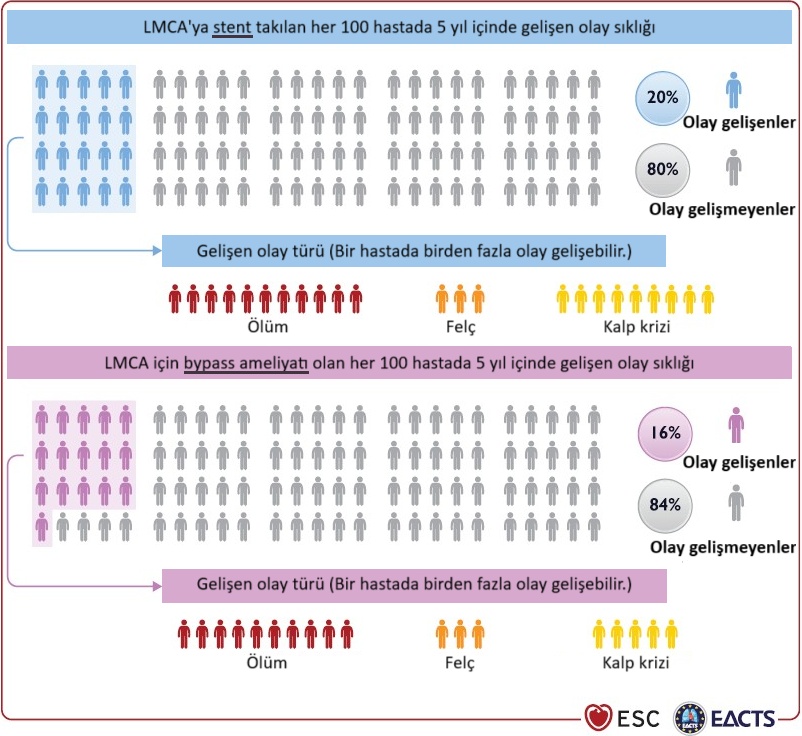
If there is blockage in all three main arteries, is a stent or a bypass better?
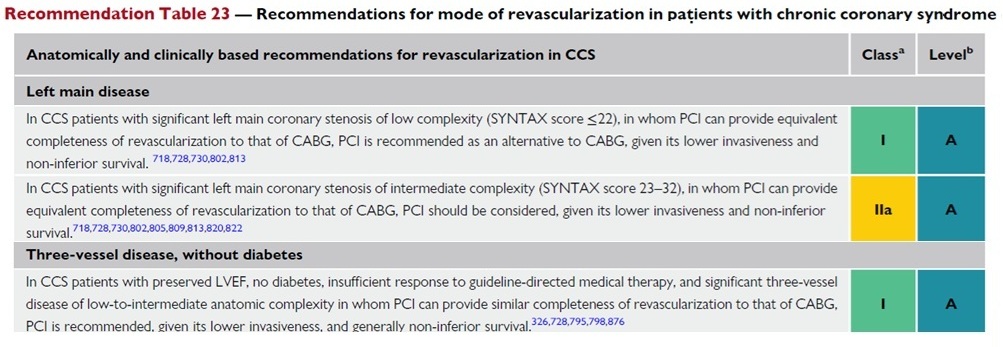
English translation of the table above:
2024 ESC Guidelines for the Treatment of Chronic Cardiovascular Disease
Prepared by the European Society of Cardiology (ESC) task force and endorsed by the European Association for Cardio-Thoracic Surgery (EACTS). Table 23 – Recommendations on the selection of revascularization methods in chronic cardiovascular disease Left main artery: – In the treatment of patients with left main artery stenosis of low complexity (Syntax score ≤22); if all stenoses can be opened with a stent equivalently to bypass surgery, the stent procedure is recommended as an alternative to bypass surgery. This is because, in this case, the intervention performed on the patient is less invasive with a stent, and a benefit equivalent to bypass surgery is provided on the patient’s survival time (Class IA). – In the treatment of patients with left main artery stenosis of moderate complexity (Syntax score: 23-32); if all stenoses can be opened with a stent equivalently to bypass surgery, the stent procedure should also be considered among the treatment options. This is because, in this case, the intervention performed on the patient is less invasive with a stent, and a benefit equivalent to bypass surgery is provided on the patient’s survival time (Class IIA). Three-vessel disease (No diabetes): – In the treatment of non-diabetic patients who have severe stenosis in all three main vessels and are anatomically of low or moderate complexity; if there is no response to guideline-directed medical therapy, if the heart’s pumping power is normal, and if all stenoses can be opened with a stent equivalently to bypass surgery, performing the stent procedure is recommended. This is because, in this case, the intervention performed on the patient is less invasive with a stent, and a benefit generally equivalent to bypass surgery is provided on the patient’s survival time (Class IA).What is the hybrid method?
Sometimes, there are cases where stenting and bypass surgery alone are not sufficient solutions; you must combine the two in a planned manner. Let’s consider an example:
A 68-year-old patient with chronic kidney disease has a narrowing in the left anterior descending artery (LAD) that is not suitable for stenting because the narrowing is very long and includes aneurysmal segments. Additionally, there are stenoses in the left circumflex artery (CX) and the right coronary artery (RCA). However, performing bypass surgery on these arteries is also not feasible. This is because, due to severe peripheral artery disease, a vessel (graft) cannot be harvested from the leg, and due to a dialysis fistula, one cannot be harvested from the right arm either. Furthermore, due to the calcified (porcelain) aorta, suturing these grafts into the aorta is also difficult. In this case, performing a bypass surgery on the LAD and subsequently placing stents in the RCA and CX would be the most appropriate approach. This way, all arteries are optimally opened, and the risk is reduced because the surgery time is shorter. Aside from this example, there are many situations where the hybrid approach may be preferred.
Can a drug-eluting balloon spare the patient from needing a stent or bypass surgery?
In LMCA or 3-main vessel occlusions, current scientific guidelines recommend bypass surgery or complex stenting. Drug-coated balloons generally open these vessels too; however, the issue is not just “opening the vessel.” Yes, when the vessel is opened with a balloon, even partially (for example; when a 90% stenosis regresses to 50%), blood flow will increase, so the patient’s complaints will initially disappear. But the question, “Will the vessel continue to stay open in the long term?” is much more important. However, unfortunately, albeit rarely, it is claimed on some social media accounts and websites that vessels are opened thanks to drug-coated balloons without even placing a stent, meaning without leaving metal behind, and thus patients are saved from complex stenting procedures or bypass surgery. This is contrary to scientific guideline recommendations and is medically incorrect; because it carries a potential risk of error. That is, are we sure that the fate of applying drug-coated balloons in these cases will not end in disappointment in the long run, like the fate of bioresorbable (dissolving) stents experienced in the past? If, in the future, high-quality comparative scientific studies prove that drug-coated balloons are as good as drug-eluting stents in complex cases, of course, most interventional cardiologists, including myself, will prefer drug-coated balloons over drug-eluting stents. Because applying a drug-coated balloon is a procedure many times easier than a complex stenting procedure. Ultimately, applying a balloon is basically the act of inflating a balloon; it is not as dependent on the doctor’s knowledge, experience, manual dexterity, and special equipment requirements as the stent procedure.
To get more detailed information about drug-coated balloons, you can read our related article.
Can a stent get clogged?
The fact that the interventional technique applied during stent placement meets the necessary minimum conditions is highly important in terms of stent occlusion. After a technically successful stent procedure, the patient’s regular use of their medications, control of risk factors such as high blood pressure and diabetes, quitting smoking, and starting to implement other healthy lifestyle changes significantly reduce the probability of the stent narrowing or becoming blocked over time due to excessive tissue growth (in-stent restenosis).
In complex cases, there are usually problems in more locations, and therefore, more stents are required. The greater the number and length of stents placed, the higher the probability of developing stenosis or occlusion within the stent due to excessive tissue growth. However, this should not be interpreted as meaning that the stents will most likely narrow. The development of stenosis in a stent within 10 years is seen in only 1 out of every 10 non-complex cases, while it is seen in 2 out of every 10 complex cases. Conversely, stenosis does not develop in the stents in 90% of non-complex cases and 80% of complex cases. If a problem is going to develop, in most cases it happens within the first year. Furthermore, in those who develop stenosis, the problem is resolved in approximately half of the cases with a second procedure, and stenosis does not develop again. Therefore, stents do not have a specific lifespan; it varies from person to person.
The sudden occlusion of the stent with a clot, leading to a heart attack, is a different issue from the development of stenosis within the stent due to excessive tissue growth, and it is seen in only 1 out of every 100 people. Although there are many reasons for this, the most common reason is the patient not using their blood-thinning medications. Not using blood-thinning medications after a stent is placed, especially in the first months, carries a life-threatening risk.
Do bypass arteries clog?
Unlike stents, the likelihood of narrowing or blockage in the blood vessels (grafts) implanted during bypass surgery gradually increases over the years. In 1 out of every 10 cases, grafts become blocked within 1 month. This is often due to technical inadequacies. The likelihood of blockage varies depending on the type of graft. Arterial grafts (taken from the chest and arm) become blocked in only 1 out of every 10 people within 10 years. In other words, arterial grafts function for at least 10 years in 90% of cases. In contrast, venous grafts (taken from the leg) become blocked in 5 out of every 10 people within 10 years; in fact, half of these blockages occur within the first year. In other words, using arterial grafts provides the best long-term results in terms of maintaining vascular patency. In summary, grafts do not have a fixed lifespan; in most patients, arterial grafts remain open for life (See References).
How many years does a patient with a stent live?
It is impossible to know exactly how many years a patient who is to receive a stent will live. Only estimated percentages can be provided based on statistics from previous patients with similar characteristics. The most significant factors that negatively impact this statistic are as follows: technical inadequacy during the stent procedure, the patient’s advanced age, heart failure, heart valve disease, the presence of serious diseases in other organs, hypertension, diabetes, high cholesterol, smoking, non-compliance with medication, and lack of social support.
How many years does a patient who has had a bypass live?
After bypass surgery, most patients feel better and experience no symptoms for years. However, over time, the newly implanted vessels may become blocked, requiring a stent or a second bypass surgery. It is difficult to predict how long a patient will live. This period can be as short as a few years in some patients (for example, those with serious problems in another vital organ), while in others, life expectancy is the same as that of healthy individuals. Similar to patients with stents, the factors I mentioned above that influence the statistics also play a role in patients who have undergone bypass surgery.
EXAMPLES FROM OUR COMPLEX STENT CASES
- Problem: There is a narrowing in the tortuous section of the heart’s main front artery (LAD).
- Decision at another hospital: Bypass surgery.
- Patient’s decision: The patient, who was informed in detail, did not want to have surgery due to anxieties.
- Final decision: Opening the vessel with complex stenting techniques.
- Interventional cardiologist: Prof. Dr. Şükrü Akyüz
- Result: Successful.
- Problem: There are narrowings in two different bifurcated sections of the heart’s main arteries.
- Decision at another hospital: Bypass surgery.
- Patient’s decision: The patient, who was informed in detail, did not want to have surgery due to anxieties.
- Final decision: Opening the vessel with complex stenting techniques.
- Interventional cardiologist: Prof. Dr. Şükrü Akyüz
- Result: Successful.
- Problem: There is a narrowing in the risky area where the heart’s left main artery (LMCA) bifurcates.
- Decision at another hospital: Since the patient also has serious lung and kidney problems, bypass surgery would be too risky; therefore, a risky stenting procedure was decided by a medical board.
- Patient’s decision: The patient approves the stenting procedure, even though it is risky.
- Final decision: Opening the vessel with complex stenting techniques.
- Interventional cardiologist: Prof. Dr. Şükrü Akyüz
- Result: Successful.
- Problem: The stent in the main artery on the side of the heart (CX) is completely blocked (CTO: Chronic Total Occlusion).
- Decision at another hospital: Medical follow-up, meaning a solution with medication.
- Patient’s decision: The patient confirms that they will use the medications as prescribed.
- Final decision: Although this decision was initially appropriate, the patient’s chest pain during walking persisted despite using numerous medications. Therefore, the final decision was to open the chronic total occlusion using complex stenting techniques. Bypass surgery was not an option for this side artery anyway.
- Interventional cardiologist: Prof. Dr. Şükrü Akyüz
- Result: Successful.
- Problem: In the bifurcated region where the heart’s main front artery (LAD) divides, there is both a narrowing and a CTO (chronic total occlusion).
- Patient’s decision: The anatomy is suitable for both surgery and stenting. Having been informed in detail, the patient prefers stenting.
- Decision: Opening the vessel with complex stenting techniques.
- Interventional cardiologist: Prof. Dr. Şükrü Akyüz
- Result: Successful.
REFERENCES
- Vrints C, Andreotti F, Koskinas KC, et al. ESC Guidelines for the management of chronic coronary syndromes. Eur Heart J. 2024 Sep 29;45(36):3415-3537.
- Lawton JS, Tamis-Holland JE, Bangalore S, et al. ACC/AHA/SCAI Guideline for coronary artery revascularization. J Am Coll Cardiol. 2022;79:e21-e129.
- Stefanini GG, Alfonso F, Barbato E, et al. Management of myocardial revascularisation failure: An expert consensus document of the EAPCI. EuroIntervention. 2020 Dec 4;16(11):e875-e890.
- Byrne RA, Rossello X, Coughlan JJ, et al. ESC Guidelines for the management of acute coronary syndromes. Eur Heart J. 2023 Oct 12;44(38):3720-3826.
- Rao, S, O’Donoghue, M, Ruel, M. et al. ACC/AHA/ACEP/NAEMSP/SCAI Guideline for the management of patients with acute coronary syndromes. JACC. 2025;85 (22):2135–2237.
- Byrne RA, Fremes S, Capodanno D, et al. 2022 Joint ESC/EACTS review of the 2018 guideline recommendations on the revascularization of left main coronary artery disease in patients at low surgical risk and anatomy suitable for PCI or CABG. Eur J Cardiothorac Surg 2023 Aug 1;64(2):ezad286.
- Brilakis E. Manual of chronic total occlusion percutaneous coronary interventions: A step-by-step approach, 3rd ed. Philadelphia PA: Elsevier; 2023.
- Brilakis E. Manual of percutaneous coronary interventions: A step-by-step approach, 1st ed. Philadelphia PA: Elsevier; 2021.